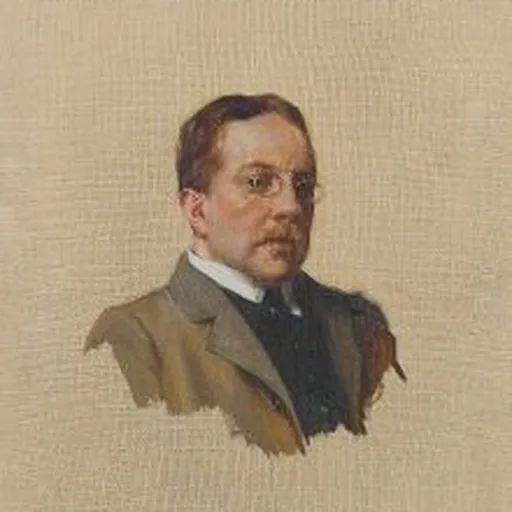
About Ernest William Hornung
Lived 1866 – 1921 (aged 54). Ernest William Hornung was a British novelist and writer.
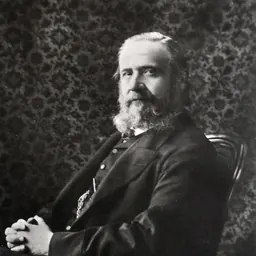
Ernest William Hornung (7 June 1866 – 22 March 1921) was an English author and poet known for writing the A. J. Raffles series of stories about a gentleman thief in late 19th-century London. Hornung was educated at Uppingham School; as a result of poor health he left the school in December 1883 to travel to Sydney, where he stayed for two years. He drew on his Australian experiences as a background when he began writing, initially short stories and later novels.
In 1898 he wrote "In the Chains of Crime", which introduced Raffles and his sidekick, Bunny Manders; the characters were based partly on his friends Oscar Wilde and Wilde's lover, Lord Alfred Douglas, and also on the characters of Sherlock Holmes and Dr. Watson, created by his brother-in-law, Arthur Conan Doyle. The series of Raffles short stories were collected for sale in book form in 1899, and two further books of Raffles short stories followed, as well as a poorly received novel. Aside from his Raffles stories, Hornung was a prodigious writer of fiction, publishing numerous books from 1890, with A Bride from the Bush to his 1914 novel The Crime Doctor.
The First World War brought an end to Hornung's fictional output. His son, Oscar, was killed at the Second Battle of Ypres in July 1915. Hornung joined the YMCA, initially in England, then in France, where he helped run a canteen and library. He published two collections of poetry during the war, and then, afterwards, one further volume of verse and an account of his time spent in France, Notes of a Camp-Follower on the Western Front. Hornung's fragile constitution was further weakened by the stress of his war work. To aid his recuperation, he and his wife visited the south of France in 1921. He fell ill from influenza on the journey, and died on 22 March 1921, aged 54.
Although much of Hornung's work has fallen into obscurity, his Raffles stories continued to be popular, and have formed numerous film and television adaptations. Hornung's stories dealt with a wider range of themes than crime: he examined scientific and medical developments, guilt, class and the unequal role played by women in society. Two threads that run through a sizeable proportion of his books are Australia and cricket; the latter was also a lifelong passion.
Biography
Early life: 1866–1886
Hornung was born Ernest William Hornung on 7 June 1866 at Cleveland Villas, Middlesbrough; he was nicknamed Willie from an early age. He was the third son, and youngest of eight children, of John Peter Hornung and his wife Harriet Armstrong. John was christened Johan Petrus Hornung in the Transylvania region of Hungary and, after working in Hamburg for a shipping firm, had moved to Britain in the 1840s as a coal and iron merchant. John married Harriet in March 1848, by which time he had anglicised his name. At the age of 13 Hornung joined St Ninian's Preparatory School in Moffat, Dumfriesshire, before enrolling at Uppingham School in 1880. Hornung was well liked at school, and developed a lifelong love of cricket despite limited skills at the game, which were further worsened by bad eyesight, asthma and, according to his biographer Peter Rowland, a permanent state of generally poor health.
When Hornung was 17 his health worsened; he left Uppingham and travelled to Australia, where it was hoped by his family that the climate would be beneficial. On his arrival he was employed as a tutor to the Parsons family in Mossgiel in the Riverina, south-western New South Wales. The sport also permeated his stories, with Raffles playing for the Gentlemen of England. Rance observes that Raffles compares law-breaking and cricket: "crime is reckoned as another and better sport".
Raffles does on occasion disparage his game, commenting to Manders in "Gentlemen and Players", "where's the satisfaction of taking a man's wicket when you want his spoons?" Valentine also considers the point, and sees Raffles's cricket as a front for his criminal activities, citing Raffles's praise for cricket for "the glorious protection it affords a person of my proclivities".
Watson examines Raffles's actions within the broader context of sportsmanship, with Raffles acting within his own moral code "of what is 'done' and 'not done'." Orwell, in his essay "Raffles and Miss Blandish", observes that when Raffles feels remorse, it "is almost purely social; he has disgraced 'the old school', he has lost his right to enter 'decent society', he has forfeited his amateur status and become a cad".
Notes and references
Don’t just read it —
keep it.
Full-length biographies made to live with: read them, listen on the way to work, watch them tonight.
- E-book
- Audio
- Video
Instant download · yours to keep · every purchase keeps this site free
Important facts
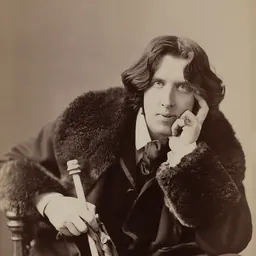
People in Ernest William Hornung's life
Named in this biography and alive at the same time




Related people
Same field, nearest in time

Contemporaries
People whose lives overlapped Ernest William Hornung's


Frequently asked questions
Who was Ernest William Hornung?
British writer (1866–1921)
When was Ernest William Hornung born?
Ernest William Hornung was born on 7 June 1866 in Middlesbrough.
When did Ernest William Hornung die?
Ernest William Hornung died on 22 March 1921 in France.
What was Ernest William Hornung's occupation?
Ernest William Hornung was a novelist and writer.
What nationality was Ernest William Hornung?
Ernest William Hornung was British.
Sources & further reading
· Wikipedia: Ernest William Hornung
Cite this page
APA: Biography.guide. (2026). Ernest William Hornung. https://biography.guide/ernest-william-hornung/
MLA: "Ernest William Hornung." Biography.guide, https://biography.guide/ernest-william-hornung/.
Chicago: "Ernest William Hornung." Biography.guide. https://biography.guide/ernest-william-hornung/.
Data last updated: 2026-09-22 · Spot an error? Report a correction.
Portrait: Wikimedia Commons · author & licence
Page generated 2026-09-27 05:04 UTC