
Ernest Perron
About Ernest Perron
Lived 1908 – 1961 (aged 52–53). Ernest Perron was a Swiss.
Ernest Perron (29 June 1908 – 1961) was a Swiss courtier in Iran during the reign of Shah Mohammad Reza Pahlavi.
Perron had been a servant in a college at Rolle, Switzerland, where he taught the future Shah to appreciate French literature. When Mohammad Reza returned to Iran, he took Perron with him, eventually appointing him as his private secretary, and they enjoyed an exceptionally close friendship, which puzzled and offended many. Perron aroused much enmity as an upstart servant with delusions of grandeur, as well as being overtly homosexual.
During the Abadan Crisis in 1953–1954, he was involved in negotiations as an agent for the Shah; he offered to bypass the cabinet and exclude the prime minister from the negotiations with the British; the offer was rejected, revealed by the British and led to his public dismissal.
Biography
Early life The son of a gardener and handyman Achille Perron, who worked at the Institut Le Rosey in Rolle, Switzerland, Perron first met the crown prince of Iran, Mohammad Reza, while the latter was a student there between 1931–36.
A "short and thin man, almost fragile", Perron lived in the servants' quarters of Le Rosey and fantasized about being a great poet, reciting his poetry at all times. ) and as Perron did nothing to hide his homosexuality he was often beaten up by the students in what might today be deemed gay-bashing. One day, Mohammad Reza came to his defense, and the two became best friends despite Perron being more than ten years the younger man's senior. Perron introduced Mohammad Reza to French poetry and as Mohammad Reza later recalled under his influence Chateaubriand and Rabelais "become my favorite French authors".
In 1935, the British Legation in Bern reported to London that Perron was "the most oddest young man...who appears to be the Prince's chief guide, philosopher and friend. He is apparently engaged as a sort of Super-Servant for the prince in Switzerland". Besides enjoying Persian cooking, Perron and Mohammad Reza spent hours at Sepahbodi's house listening to Persian and classical music with Mozart and Bach being particular favorites. Though the relationship between Mohammad Reza and Perron has caused much speculation, it seems that Mohammad Reza lost his virginity to a maid who worked at Le Rosey in 1935.
In a report from 1936, Perron was described by the British Embassy in Tehran as "a curious fellow...dressed like a musical comedy Bohemian who also writes characters from hand-writing and from the palm of your hand and makes the most surprising statements of the strength of it about your vie sexuelle!...It is rather alarming that such an odd specimen should have such a hold on the prince. The Belgian Charge here, a most sensible fellow, has said that he would not entrust any young man to Monsieur Perron, let alone a future monarch; and his description of him as un exalté, un illuminé, un mystique is just about right." In 1939, Perron started to write newspaper articles about Iran for Swiss newspapers and by 1941 was an "employee" of the crown prince, though he was unable to provide a job description to foreign diplomats about what he was actually doing. By 1942 he was working for the French embassy in Tehran as a translator. As private secretary, Perron controlled access to the Shah while also working as the court poet and philosopher. Ultimately, Princess Ashraf decided to marry Houshang Teymourtash, but he was then visited by Perron who had a message from the Shah. With that, Teymourtash ceased seeing Ashraf. Queen Soraya called Perron "a homosexual who detested women, all women", a "cunning, perfidious and Machiavellian" man who "roused hatred, stirred gossip, reveled in every intrigue". Much to her revulsion, Perron visited her one day in late 1951 and made a series of what she called very "lewd" remarks about her sex life with the Shah, intersected with equally vulgar questions, which led her to throw him out of the Marble Palace in her fury. A Freemason who belonged to the Pahlavi lodge, Perron was a friend of some of the most powerful men in Iran and sometimes passed on information to MI6, the British intelligence service. Britain had broken off diplomatic relations with Iran in 1951 during the Abadan Crisis. Wright refused those terms and informed General Zahedi of the Shah's attempts to bypass him, leading to an angry scene where Zahedi "berated" Mohammad Reza Shah for attempting to exclude him from talks with the British. Mohammad Reza Shah blamed Perron for this fiasco and fired him in January 1954.
Legacy After the Islamic Revolution, a best-selling book was published by the new regime, Ernest Perron, the Husband of the Shah of Iran by Mohammad Pourkian, alleging a homosexual relationship between the Shah and Perron, which remains the official interpretation in the Islamic Republic. In 1991, the newspaper Kayhan-e Hava'i published what were allegedly Fardoust's memoirs, which were summarized by the Iranian-American historian Ervand Abrahamian as: "These claimed that Perron had been planted by the British in Le Rosey to seduce the young shah; that Perron headed a homosexual clique among the courtiers and the Freemasons; and that he continued to work for MI6 until his death in 1961, when his espionage role was taken over by Dr. Ayadi, a Bahai veterinary surgeon who had cured the Shah of a psychosomatic ailment. Ayadi was described as the Rasputin of Iran.
These memoirs also elaborated on the theme that Mosaddeq was a British agent. They argued that Mosaddeq could not have attained high positions in the 1920s without London's support and that his close friend Alam was a "well-known" British agent. To top it all, the memoirs claimed that Mosaddeq, because of these foreign ties, had consciously helped MI6 and the CIA carry out the coup against himself". Abrahamian, citing Richard Hofstadter's 1964 essay The Paranoid Style in American Politics wrote that Iranian politics from the 19th century to this day was and is characterized by the "paranoid style" as Iranians have an astonishing capacity for inventing fanciful conspiracy theories to explain their history, and as such, the mysterious Perron often features as one of the players in these conspiracy theories. Daniela Meier wrote that there is a vast literature in Iran that depicts Perron as an American and/or British agent and the Shah as Perron's puppet, which she observed tended to exaggerate his power.
Endnotes
Don’t just read it —
keep it.
Full-length biographies made to live with: read them, listen on the way to work, watch them tonight.
- E-book
- Audio
- Video
Instant download · yours to keep · every purchase keeps this site free
Important facts
People in Ernest Perron's life
Named in this biography and alive at the same time
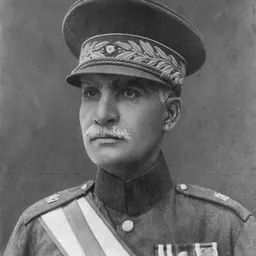


Contemporaries
People whose lives overlapped Ernest Perron's


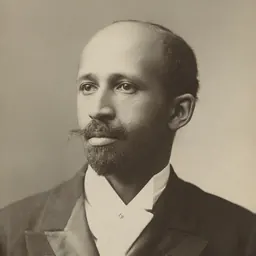

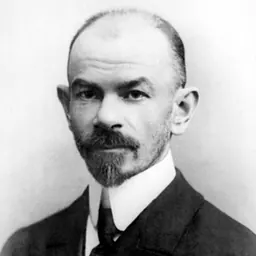
Frequently asked questions
Who was Ernest Perron?
(1908-1961)
When was Ernest Perron born?
Ernest Perron was born in 1908 in Geneva.
When did Ernest Perron die?
Ernest Perron died in 1961 in Beatenberg.
What nationality was Ernest Perron?
Ernest Perron was Swiss.
Sources & further reading
Cite this page
APA: Biography.guide. (2026). Ernest Perron. https://biography.guide/ernest-perron/
MLA: "Ernest Perron." Biography.guide, https://biography.guide/ernest-perron/.
Chicago: "Ernest Perron." Biography.guide. https://biography.guide/ernest-perron/.
Data last updated: 2026-09-20 · Spot an error? Report a correction.
Page generated 2026-09-27 05:18 UTC