
About Ernest N. Harmon
Lived 1894 – 1979 (aged 85). Ernest N. Harmon was an American modern pentathlete.
Major General Ernest Nason Harmon (February 26, 1894 – November 13, 1979) was a senior officer of the United States Army. He served in both World War I and World War II, and is best known for his actions in reorganizing the 1st Armored Division after the debacle in February 1943 at the Battle of Kasserine Pass during the Tunisian campaign. From January 1945, through the end of World War II, Harmon commanded XXII Corps (United States).
Early life Ernest Nason Harmon was born in Lowell, Massachusetts, the son of Ernest and Junietta (Spaulding) Harmon. He was orphaned at age ten, and was raised by relatives in the Newbury, Vermont village of West Newbury. He finished tied for 31st overall (out of 38 contestants), and athletes from Sweden claimed the first three places.
Harmon's subsequent assignments included the 6th Cavalry Regiment at Fort Oglethorpe, Georgia, and four years as Professor of Military Science and Commandant of Cadets at Norwich University. He then commanded a squadron of the 8th Cavalry Regiment at Fort Bliss, which was followed by four years in the logistics staff directorate (G4) on the War Department General Staff. On July 1, 1940, he was promoted to lieutenant colonel and then again to colonel in the Army of the United States (AUS) on November 4, 1941.
World War II The United States entered World War II shortly after Harmon's promotion in December 1941, after the Japanese attack on Pearl Harbor. For seven months, from July 1942 until February 1943, Harmon commanded the 2nd Armored Division and trained the division for eventual overseas service. During this time he was promoted twice, to brigadier general (AUS) on March 13, 1942, and to major general barely five months later, on August 9. His on-site reporting and interventions during the Kasserine Pass battles in February 1943 helped stabilize and reorganize the U.S. II Corps, which had been thrown into disorder after the initial German attack.
During the fighting, Harmon had opportunity to observe Major General Lloyd Fredendall, commander of II Corps, as well as his superior, the British Lieutenant General Kenneth Anderson, commander of the British First Army. Anderson was in overall control of the Allied front in eastern Algeria, commanding British, American, and French forces. Harmon noticed that the two generals rarely saw each other, and failed to properly coordinate and integrate forces under their command. Fredendall was barely on speaking terms with his 1st Armored Division commander, Major General Orlando Ward, who had repeatedly complained to his superiors of the dangers of separating his division into weaker combat commands for use in various sectors of the front. Harmon also noticed that Fredendall rarely left his command headquarters, a huge fortified bunker constructed a full 70 miles behind the front lines (the bunker took two hundred U.S. Army engineers three weeks to excavate, using hundreds of pounds of explosive to blast rooms out of solid rock).
While Harmon attributed the lion's share of the blame for the reversal to Fredendall, he also began to question Anderson's leadership abilities with respect to a large command. Anderson was partly to blame for the weakness of II Corps in southern area of the front. When Fredendall asked to retire to a defensible line after the initial assault in order to regroup his forces, Anderson rejected the request, allowing German panzer forces to overrun many of the American positions in the south. Anderson also weakened II Corps by parceling out portions of the 1st Armored Division into various combat commands sent to other sectors over the vehement objections of its commander, Major General Ward.
Major General Harmon had been in Thala on the Algerian border, witnessing the stubborn resistance of the British Nickforce, which held the vital road leading into the Kasserine Pass against the heavy pressure of the German 10th Panzer Division, which was under Rommel's direct command. Offered the command of II Corps in Fredendall's place, Harmon declined, as it would appear to others that Harmon was motivated by personal gain. Instead, in March, General Eisenhower appointed Patton, a colleague and friend of Harmon's, to replace Fredendall. Harmon later accepted command of the 1st Armored Division after the relief of Major General Ward in April.
Major General Ernest N. Harmon, pictured here sometime in 1944.
Harmon led the 1st Armored Division throughout the rest of the Tunisian campaign, which eventually came to an end in mid-May 1943, with the surrender of almost 250,000 German and Italian soldiers, who subsequently became prisoners of war (POWs).
Italy The division did not participate in the Allied invasion of Sicily (Operation Husky), although his old command, the 2nd Armored Division, now led by Major General Hugh Gaffey, did.
Harmon went on to lead the 1st Armored Division in the Italian Campaign, leading the division in terrain unsuitable for the employment of armor, until July 1944 when he returned to the United States. During the Italian campaign he and his division played a significant role in the Battle of Anzio.
Western Europe On 12 September 1944, Harmon returned to command his old division, the 2nd Armored, in succession to Major General Edward H. Brooks, who was promoted to command VI Corps. Harmon led the division on the Western Front, which played a large role in the Battle of the Bulge at the end of 1944. Harmon then assumed command of the XXII Corps, on 14 January 1945, and led the corps in the final stages of the war, participating in the Western Allied invasion of Germany. The end of World War II in Europe came soon after, on May 8, 1945, Victory in Europe Day.
During World War II, Harmon participated in a total of nine campaigns – two in North Africa, three in Italy, and four in France and Germany.
Post war Harmon remained in command of XXII Corps until it was deactivated in January 1946, shortly after his permanent rank was promoted from lieutenant colonel to colonel on December 28, 1945, According to a future historian who served under him, Harmon had referred to Black soldiers to his troops as "jigaboos" and "had warned the government not to send any Niggers. Now they were a bigger problem than the Germans."
He was interim commander of the Third Army from January to March 1947. He then served as deputy commander of Army Ground Forces before retiring from the U.S. Army in 1948, after a military career spanning over three decades and service in two world wars, with the permanent rank of major general. Grand Officer of the Order of Ouissam Alaouite (Morocco)
Foreign decorations Croix de Guerre 1939–1945 with palm (France) Belgian Croix de Guerre 1940–1945 (Belgium) Fourragère (Belgium) Silver Medal of Military Valor (Italy) Czechoslovak War Cross 1939-1945
Promotions
Don’t just read it —
keep it.
Full-length biographies made to live with: read them, listen on the way to work, watch them tonight.
- E-book
- Audio
- Video
Instant download · yours to keep · every purchase keeps this site free
Important facts
People in Ernest N. Harmon's life
Named in this biography and alive at the same time
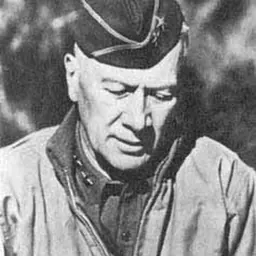


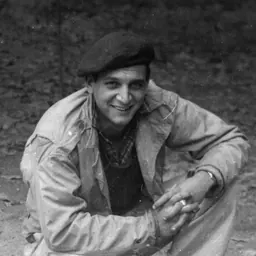
Related people
Same field, nearest in time
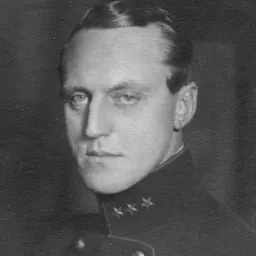
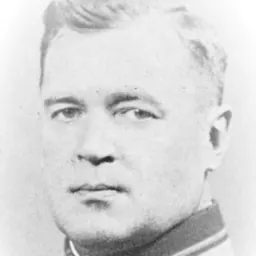
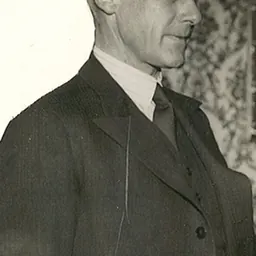

Contemporaries
People whose lives overlapped Ernest N. Harmon's


Frequently asked questions
Who was Ernest N. Harmon?
United States Army general
When was Ernest N. Harmon born?
Ernest N. Harmon was born on 26 February 1894 in Lowell.
When did Ernest N. Harmon die?
Ernest N. Harmon died on 13 November 1979 in White River Junction.
What was Ernest N. Harmon's occupation?
Ernest N. Harmon was a modern pentathlete.
What nationality was Ernest N. Harmon?
Ernest N. Harmon was American.
Sources & further reading
Cite this page
APA: Biography.guide. (2026). Ernest N. Harmon. https://biography.guide/ernest-n-harmon/
MLA: "Ernest N. Harmon." Biography.guide, https://biography.guide/ernest-n-harmon/.
Chicago: "Ernest N. Harmon." Biography.guide. https://biography.guide/ernest-n-harmon/.
Data last updated: 2026-09-20 · Spot an error? Report a correction.
Page generated 2026-09-27 05:27 UTC