
About Ernest Flagg
Lived 1857 – 1947 (aged 90). Ernest Flagg was an American architect.
Ernest Flagg (February 6, 1857 – April 10, 1947) was an American architect in the Beaux-Arts style. He was also an advocate for urban reform and architecture's social responsibility.
Early life and education
Flagg was born in Brooklyn, New York. His father Jared Bradley Flagg was an Episcopal priest and a notable painter. Ernest left school at 15 to work as an office boy on Wall Street. After working with his father and brothers in real estate for a few years, he designed duplex apartment plans in 1880 with the architect Philip Gengembre Hubert, for the co-operative apartment buildings Hubert was known.
Cornelius Vanderbilt II, Flagg's cousin through his marriage to Alice Claypoole Gwynne, was impressed by Flagg's work and sent him to study at the École des Beaux-Arts in Paris from 1889 to 1891, under his patronage.
Professional career In 1891, Flagg began his architectural practice in New York, greatly influenced by his knowledge of the French ideas of architectural design, such as structural rationalism.
During this time he joined with John Prentiss Benson to create Flagg & Benson, which later became Flagg, Benson & Brockway with the addition of Albert Leverett Brockway. FB&B designed St. Luke's Hospital in New York City.
In 1894, he established the architectural firm of Flagg & Chambers with Walter B. Chambers, whom he met in Paris. Usually Flagg alone is credited for some of the work he and Chambers worked on together, such as the Corcoran Gallery of Art, the U.S. Naval Academy, and Pomfret School in Connecticut which he saw as "part of the process of evolution that would contribute to the creation of a national style of architecture."
Louisa Flagg Scribner, Flagg's sister, was the wife of Charles Scribner II. Through this familial connection, Flagg designed six structures located in Manhattan for the publishing family, including at 153–157 Fifth Avenue and 597 Fifth Avenue.
Flagg also designed the Singer Building. Completed in 1897 and expanded in 1908, it was then the tallest office building in the world, at 612 feet. Faithful to his Beaux-Arts training, Flagg allowed space around the tall building for light to enter, which was unusual for the time.
His contributions to zoning and height regulations were essential to the 1916 Zoning Resolution, New York's first laws governing this aspect of the city's architecture. Flagg argued in favor of zoning laws which would regulate the height and setback of buildings, to allow light and air to reach the streets below them. He was a president of the New York Society of Beaux-Arts Architects. A small collection of Flagg's personal and professional papers is held in the Department of Drawings & Archives at Avery Architectural and Fine Arts Library at Columbia University.
Flagg System Homes The homes that Flagg designed are modest, low to the ground, with stone walls, and often with steep roofs, distinctive ridge dormers, and round-capped chimneys. Their styles suggest Tudor Revival, Cotswold Cottage, or French Provincial to various extents. Flagg generally considered surface decoration "sham", and preferred to suggest styles with the general form of the building, adding interest with chimneys and dormers.
As mentioned above, Flagg aimed to make attractive homes affordable to average families, and he did this by the following means: The houses are generally somewhat small in scale compared to their contemporaries. This cut costs and gives them an intimate cottage feel.
In 1912, Flagg and his wife were on their way to a party held by Stowe Phelps, a fellow architect, when their limousine struck and killed a boy (James McNamara) who had suddenly skated in front of the car. The couple drove the boy to the hospital but he died en route.
Projects
Scribner Building, Manhattan, New York, 1893 Unused plan for the Washington State Capitol at Olympia, Washington, 1893 Pomfret School campus plan, School House and dormitories, early 1900s, and the school's Clark Memorial Chapel, 1908 Pomfret, Connecticut. Gov. Samuel J. Tilden Monument, New Lebanon, New York, 1895–1896 St. Nicholas Rink, 69 West 66th Street, Manhattan, New York, 1896 St. Luke's Hospital, Manhattan, New York, 1896 Mills House No. 1, Manhattan, New York, 1896 Mills House No. 2, Manhattan, New York, 1897 Singer Building, Manhattan, New York, 1897, expanded 1908, demolished 1968 Corcoran Gallery of Art, Washington, D.C., 1897 Indian Neck Hall, estate of Frederick Gilbert Bourne, Oakdale, New York, 1897 Engine Co. No. 33, Manhattan, New York, 1898 Oliver Gould Jennings House, Manhattan, New York, 1898 First National Bank Building, Hartford, Connecticut, 1899 Ernest Flagg residence, gatehouse and gate, Staten Island, New York, 1900 Armenian General Benevolent Union of America, Manhattan, New York, Charlesbank Apartments, Boston, Massachusetts, , demolished Sheldon Library (now admissions office), St. Paul's School, Concord, New Hampshire, 1901
Lawrence Library, Pepperell, Massachusetts, 1901 Regency Whist Club, Manhattan, New York, 1904 The Towers, a "castle" on Dark Island, St. Lawrence Seaway, 1905 Buildings at the United States Naval Academy, Annapolis, Maryland, including Bancroft Hall (1901–1906), the Naval Academy Chapel (1908), Mahan Hall, Maury Hall, Sampson Hall, and the Superintendent's residence "Little" Singer Building, Manhattan, New York, 1907 311 West 43rd Street, Manhattan, New York (Originally the Charles Scribner's Sons printing plant), 1908 Princeton University Press building, Princeton, NJ, 1911 Charles Scribner Residence, later Polish Delegation to the United Nations, Manhattan, New York, 1912 Charles Scribner's Sons Building, Manhattan, New York, 1913 Gwynne Building, Cincinnati, Ohio, 1913 Rufus Arndt House, Whitefish Bay, Wisconsin, 1925 Celtic Park apartments, Queens, New York, 1930 Flagg Court housing development, Brooklyn, New York, 1933–36
Selected writings Small Houses: Their Economic Design and Construction (1922) Le Naos du Parthenon (1928)
Don’t just read it —
keep it.
Full-length biographies made to live with: read them, listen on the way to work, watch them tonight.
- E-book
- Audio
- Video
Instant download · yours to keep · every purchase keeps this site free
Important facts
People in Ernest Flagg's life
Named in this biography and alive at the same time



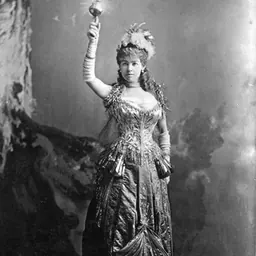



Related people
Same field, nearest in time



Contemporaries
People whose lives overlapped Ernest Flagg's


Frequently asked questions
Who was Ernest Flagg?
American architect (1857–1947)
When was Ernest Flagg born?
Ernest Flagg was born on 6 February 1857 in Brooklyn.
When did Ernest Flagg die?
Ernest Flagg died on 10 April 1947 in New York City.
What was Ernest Flagg's occupation?
Ernest Flagg was an architect.
What nationality was Ernest Flagg?
Ernest Flagg was American.
Sources & further reading
Cite this page
APA: Biography.guide. (2026). Ernest Flagg. https://biography.guide/ernest-flagg/
MLA: "Ernest Flagg." Biography.guide, https://biography.guide/ernest-flagg/.
Chicago: "Ernest Flagg." Biography.guide. https://biography.guide/ernest-flagg/.
Data last updated: 2026-09-20 · Spot an error? Report a correction.
Page generated 2026-09-27 05:28 UTC