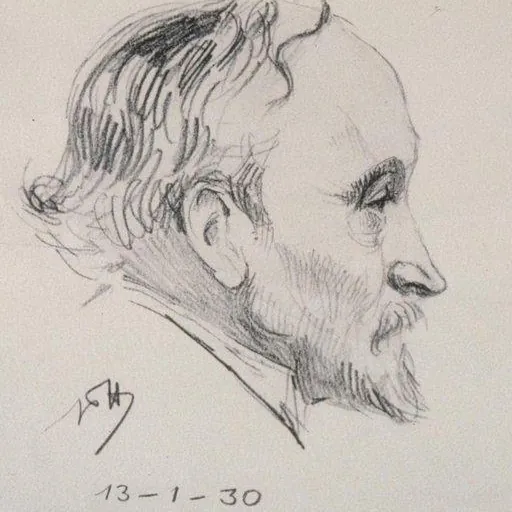
Ernest Esclangon
French astronomer and mathematician
About Ernest Esclangon
Lived 1876 – 1954 (aged 77). Ernest Esclangon was a French mathematician, astronomer and university teacher.
Ernest Benjamin Esclangon (17 March 1876 – 28 January 1954) was a French astronomer and mathematician.
Biography Born in Mison, Alpes-de-Haute-Provence, in 1895 he started to study mathematics at the École normale supérieure, graduating in 1898. Looking for some means of financial support while he completed his doctorate on quasi-periodic functions, he took a post at the Bordeaux Observatory, teaching some mathematics at the University of Bordeaux.
During World War I, he worked on ballistics and developed a novel method for precisely locating enemy artillery. When a gun is fired, it initiates a spherical shock wave but the projectile also generates a conical wave. By using the sound of distant guns to compare the two waves, Escaglon was able to make accurate predictions of gun locations.
After the armistice in 1919, Esclangon became director of the Strasbourg Observatory and professor of astronomy at the university the following year. In 1929, he was appointed director of the Paris Observatory and of the International Time Bureau, and elected to the Bureau des Longitudes in 1932. He is perhaps best remembered for initiating in 1933 the first speaking clock service, reportedly to relieve the observatory staff from the numerous telephone calls requesting the exact time. He was elected to the Académie des Sciences in 1939.
His doctoral students include Daniel Barbier, Édmée Chandon, Louis Couffignal, André-Louis Danjon, and Nicolas Stoyko.
Esclangon was the President of the Société astronomique de France (SAF), the French astronomical society, from 1933–1935.
Serving as director of the Paris Observatory throughout World War II and the German occupation of Paris, he retired in 1944. He died in Eyrenville, France.
Honours In 1935, he received the Prix Jules Janssen, the highest award of the Société astronomique de France.
The binary asteroid 1509 Esclangona is named after him.
The lunar crater Esclangon is named after him.
Don’t just read it —
keep it.
Full-length biographies made to live with: read them, listen on the way to work, watch them tonight.
- E-book
- Audio
- Video
Instant download · yours to keep · every purchase keeps this site free
Important facts
People in Ernest Esclangon's life
Named in this biography and alive at the same time

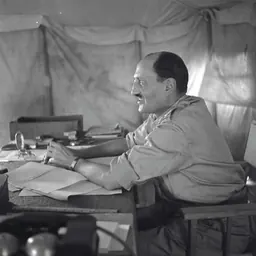



Related people
Same field, nearest in time



Contemporaries
People whose lives overlapped Ernest Esclangon's

Frequently asked questions
Who was Ernest Esclangon?
French astronomer and mathematician (1876–1954)
When was Ernest Esclangon born?
Ernest Esclangon was born on 17 March 1876 in Mison.
When did Ernest Esclangon die?
Ernest Esclangon died on 28 January 1954 in Eyrenville.
What was Ernest Esclangon's occupation?
Ernest Esclangon was a mathematician, astronomer and university teacher.
What nationality was Ernest Esclangon?
Ernest Esclangon was French.
Sources & further reading
Cite this page
APA: Biography.guide. (2026). Ernest Esclangon. https://biography.guide/ernest-esclangon/
MLA: "Ernest Esclangon." Biography.guide, https://biography.guide/ernest-esclangon/.
Chicago: "Ernest Esclangon." Biography.guide. https://biography.guide/ernest-esclangon/.
Data last updated: 2026-09-21 · Spot an error? Report a correction.
Portrait: Wikimedia Commons · author & licence
Page generated 2026-09-27 04:59 UTC