
About Ernest Belfort Bax
Lived 1854 – 1926 (aged 72). Ernest Belfort Bax was a British journalist, barrister, historian, philosopher, theatre manager and writer, known for Men's rights movement and Socialism.
Ernest Belfort Bax (; 23 July 1854 – 26 November 1926) was an English barrister, journalist, philosopher, men's rights advocate, socialist, and historian.
Biography
Ernest Belfort Bax was born on 23 July 1854, in Leamington Spa, son of Daniel Bax, a wealthy Mackintosh raincoat manufacturer and traditionalist nonconformist. Bax's elder brother, barrister Alfred Ridley Bax, was father of the composer and writer Arnold Bax and the playwright and essayist Clifford Bax. In his Reminiscences and Reflexions of a Mid and Late Victorian (1918), he describes the narrow Evangelicanism and Sabbatarianism in which he was brought up which he describes as having left "an enduringly unpleasant reminiscence behind it".
He was privately educated by tutors between the years 1864–1875, and influenced by George Lewes, William Lecky, Alexander Bain, Herbert Spencer and John Stuart Mill, which contributed to his dedication to rationalism. At the age of sixteen his interest in public affairs was awakened by the Franco-German War and the Paris Commune. His political ideas during this period amounted to a commonplace radicalism combined with aspirations to economic equality.
In his youth Bax had an interest in music and could play the piano, and at the age of 21 (1875) he went to Germany to study music. He visited there again in 1880 as Berlin correspondent of The Standard. It was then that he met with Eduard von Hartmann and came into contact with German philosophy in general. After studying for a period, his interest in Mill, Spencer and Bain yielded to the German greats Kant and Hegel, and his philosophical interests remained with him for life.
Studies in philosophy
In 1880 at the age of 26, Bax began studying philosophy in Germany, beginning with Kant and Hegel. In 1883 he produced an English translation of Kant's Prolegomena, and Metaphysical Foundations of Natural Science, and in 1884 he wrote his Handbook to the History of Philosophy, which was published in 1885 for Bohn's Philosophical Library.
Later philosophical works by Bax include The Problem of Reality (1892), The Roots of Reality: Being Suggestions for a Philosophical Reconstruction (1907), Problems of Men, Mind and Morals (1912), and The Real, The Rational, and The Alogical (1920).
Men's rights advocacy Bax was a passionate advocate for the social and legal rights of men, which he saw as lacking in comparison to the legal rights of women. His first major article on the subject was "Some Bourgeois Idols; Or Ideals, Reals, and Shams" (1886), in which he proposed that women were privileged under law at the expense of men. He was to continue writing articles on this topic for most of his life, published notably in Social Democrat, and Justice, and later in The New Age.
In 1896, he wrote The Legal Subjection of Men whose title is a play on John Stuart Mill's 1869 essay "The Subjection of Women." In the volume, Bax draws on his extensive experience as a barrister to demonstrate the numerous ways in which the legal code favoured women to the detriment of men and boys. Chapters in the book include 'Matrimonial Privileges of Women', 'Non-Matrimonial Privileges of Women', 'The Actual Exercise of Women's Sex Privileges', and 'A Sex Noblesse'. In 1913 he published a book, The Fraud of Feminism, critiquing feminism. In it, he described chivalry as "the deprivation, the robbery from men of the most elementary personal rights in order to endow women with privileges at the expense of men."
Bax's concern for men's equality fuelled his interest in socialism, to which he turned for a potential solution to what he viewed as the exploitation of males by the capitalist system: "The highest development of modern capitalism, as exemplified in the English-speaking countries, has placed man to all intents and purposes, legally under the heel of woman. So far as the relations of the sexes are concerned, it would be the task of Socialism to emancipate man from this position, if sex-equality be the goal aimed at. The first step on the road towards such equality would necessarily consist in the abolition of modern female privilege."
Initially very anti-nationalist, Bax came to support the British in World War I, but by this point he was concentrating on his career as a barrister and did little political work.
Historian
As well as his contributions to philosophy, men's rights, and socialism, Bax published several in depth historical studies of individuals, and cultures. He records in his Reminiscences that he always felt, from childhood on, the need of an intelligible doctrine of history.
Among his historical works are: Jean-Paul Marat: The People's Friend (1879), German Society at the Close of the Middle Ages (1894), The Social Side of the Reformation in Germany (1894), The Peasants' War in Germany (1899), The Rise and Fall of the Anabaptists (1903), The Last Episode of the French Revolution (1911), and German Culture Past and Present (1913).
Works
He wrote the following books on various subjects: Jean-Paul Marat: A Historico-Biographical Sketch (1882) A Handbook of the History of Philosophy (1886) A Short Account of the Commune of Paris of 1871, with Victor Dave & William Morris (1886) Religion of Socialism (1886) The Story of The French Revolution (1890) Outlooks From a New Standpoint (1891) The Problem of Reality (1893) The Ethics of Socialism (1893) German Society at the Close of The Middle Ages (1894) A Short History of The Paris Commune (1894) Socialism; Its Growth and Outcome, with William Morris (1894) The Legal Subjection of Men (1896 with Twentieth Century Press) with an unnamed Irish barrister, (republished in 1908 with New Age Press). The Peasants War in Germany (1899) Jean-Paul Marat: The People's Friend (1901) The Rise and Fall of the Anabaptists (1900) A New Catechism of Socialism, with Harry Quelch (1903) Essays in Socialism, New and Old (1906) The Roots of Reality (1908) The Last Episode of the French Revolution: Being a History of Gracchus Babeuf and the Conspiracy of the Equals (1911) Problems of Men, Mind, and Morals (1912) The Fraud of Feminism (1913) Reminiscences and Reflexions of a mid and late Victorian (1918) German Culture Past and Present (1915)
Don’t just read it —
keep it.
Full-length biographies made to live with: read them, listen on the way to work, watch them tonight.
- E-book
- Audio
- Video
Instant download · yours to keep · every purchase keeps this site free
Important facts
People in Ernest Belfort Bax's life
Named in this biography and alive at the same time




Related people
Same field, nearest in time
Contemporaries
People whose lives overlapped Ernest Belfort Bax's

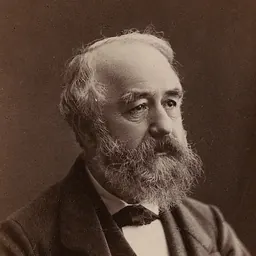

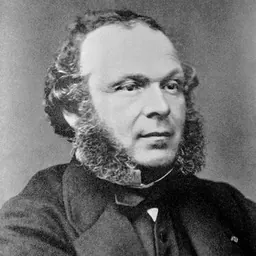


Frequently asked questions
Who was Ernest Belfort Bax?
British barrister and journalist (1854–1926)
When was Ernest Belfort Bax born?
Ernest Belfort Bax was born on 23 July 1854 in Leamington Spa.
When did Ernest Belfort Bax die?
Ernest Belfort Bax died on 26 November 1926 in London.
What was Ernest Belfort Bax's occupation?
Ernest Belfort Bax was a journalist, barrister, historian, philosopher, theatre manager and writer.
What was Ernest Belfort Bax known for?
Ernest Belfort Bax was known for Men's rights movement and Socialism.
What nationality was Ernest Belfort Bax?
Ernest Belfort Bax was British.
Sources & further reading
· Wikipedia: Ernest Belfort Bax
Cite this page
APA: Biography.guide. (2026). Ernest Belfort Bax. https://biography.guide/ernest-belfort-bax/
MLA: "Ernest Belfort Bax." Biography.guide, https://biography.guide/ernest-belfort-bax/.
Chicago: "Ernest Belfort Bax." Biography.guide. https://biography.guide/ernest-belfort-bax/.
Data last updated: 2026-09-20 · Spot an error? Report a correction.
Page generated 2026-09-27 05:29 UTC