
Ernest B. Price
Diplomat, linguist, university professor, business executive
About Ernest B. Price
Lived 1890 – 1973 (aged 83). Ernest B. Price was an American business executive, diplomat, linguist and university.
Ernest Batson Price (October 13, 1890 – October 20, 1973) was an American diplomat, university professor, military officer, and businessman. He spent over twenty years in China and witnessed first-hand warlord power struggles, the growth of Japanese militarism, America's post-war diplomacy, China's civil war, and the profound social change that followed. As a result of this first-hand experience, Price was one of America's foremost authorities on Chinese language, culture, and politics from the early nineteen twenties through the mid nineteen fifties.
Early life Price was the son of Baptist missionaries serving in Henzada, Burma. He was born on October 13, 1890, the youngest of four children. After his father died in 1899, he was sent to school at Wayland Academy in Beaver Dam, Wisconsin. After high school, he taught in a small, rural school in a German-speaking community in North Dakota. While there, he learned to speak, read and write German. His fluent German helped him get into college, and later qualified him to compete for an appointment in the United States Foreign Service. He attended college at University of Rochester in Rochester, New York, graduating in 1913.
Foreign service After graduation, Price was accepted into the special China branch of the Foreign Service, and posted to China. Upon arrival, he began intensive study of Mandarin, China's official language, with a traditional Chinese scholar. In less than two years he was fluent in Mandarin, and was posted to Tientsin as vice consul.
He had met Florence Mary Bentley when he was studying at Rochester. Since state-side leave was not authorized for junior diplomats, he arranged an administrative trip to Yokohama, Japan, in 1915. Florence joined him there, and they were married. The Prices spent the next 15 years in China where all five of their children were born.
In Canton, Price met Doctor Sun Yat-sen, who later became the first President of the Republic of China. They became good friends and often discussed politics over the bridge table. Their friendship continued even after Price was reassigned to Fuzhou where he served as United States consul. Sun Yat-sen personally invited both Price and his wife to his inauguration ceremony staged by the Nationalist government. The United States did not recognize the Nationalist government, choosing instead to retain official ties with the rival government in Peking. Therefore, Price could not attend a Nationalist-sponsored ceremony. Mrs. Price, however, was not a Government official so she did attend, and her detailed report of the event was passed to the United States Department of State in a formal dispatch. Here is how Andrews recalled one of their travel adventures:
Price and I drove back to Panj-kiang to obtain extra food and water ... We had gone only five miles when we discovered that there was no more oil for our motor ... Just then the car swung over the summit of a raise, and we saw the white tents and grazing camels of an enormous caravan. Of course, Mongols would have mutton fat and why not use that for oil! The caravan leader assured us that he had fat in plenty and in ten minutes a great pot of it was warming over the fire. We poured it into the motor and proceeded merrily on our way.
In 1928, Price was sent to re-open the United States consulate in Nanjing.
Price continued to serve in diplomatic posts throughout China until late 1929 when he left the Foreign Service to become President of China Airways (now China National Aviation Corporation, parent company of Air China), a post he held for two years before returning to the United States to pursue a doctoral degree. In 1935, Price visited Manchukuo, Japan's puppet state in Northeast China, and met with the last Manchu emperor, Pu Yi. His book along with a number of academic articles published in the mid-nineteen thirties when he was a fellow at the Brookings Institution highlighted the threat of Japanese imperialism in Manchuria and China. Price warned that Japan's aggressive policies could lead to a serious international conflict. His writing helped initiate the public debate over the "China question" in the years leading up to World War II. His warnings proved to be both prophetic and timely.
In 1936, Doctor Price became director of International House at the University of Chicago. Price spoke three European languages and at least three varieties of Chinese, so he was well suited to host the many distinguished foreign visitors who passed through International House. He also taught Chinese studies in the university's political science department.
World War II During the early days of World War II, Price was associated with the Office of Strategic Services (forerunner of the Central Intelligence Agency). Price's analysis of the war in China and related United States policy options were passed to President Franklin D. Roosevelt either through Major General William Donovan, head of the Office of Strategic Services, or in some cases, directly to the President. In 1944, he was released for duty with the United States Marine Corps,
Price announcing Japanese surrender in ChinaAfter the atomic bomb was dropped on Japan in August 1945, Price was immediately dispatched to China, and landed with the first wave of American occupation troops. He was assigned as the civil affairs liaison officer on the personal staff of Major General Lemuel C. Shepherd, Jr., commander of the 6th Marine Division. Price was present for the formal surrender of Japanese forces in China on October 25, 1945, and made the first Chinese-language radio announcement of the surrender. In February 1946, he received a Bronze Star medal for his "sound advice based on a thorough understanding of the Chinese people and of the civil affairs associated with the occupation of an area in which political and civil government problems were most complex."
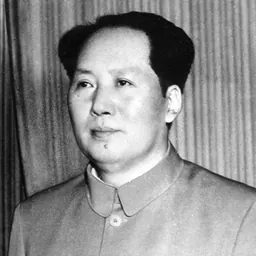
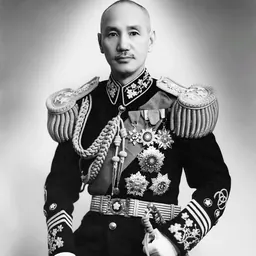
Following the war, Price remained in China to support the United States ambassador, General Patrick Hurley, and later General George C. Marshall as they tried to negotiate a coalition government that would prevent a bloody civil war between Chiang Kai-shek's Nationalist forces and Mao Zedong's communists. Both negotiation efforts ultimately failed; however, General Marshall awarded Price a second Bronze Star for his support. The award cited his "keen sense of judgment particularly with regard to the diplomatic behavior demanded while acting in the capacity of liaison officer between high ranking Chinese officials and United States forces."
Post-war career Price returned to the United States and was released from active duty in April 1946. However, he remained an officer in the Marine Corps reserve until 1954, ending his military career as a reserve Major.
Shortly after leaving active duty, Doctor Price accepted a position with Standard Vacuum Oil Company (now part of ExxonMobil). It was the company's intent to expand their oil exploration work into China when the political situation there stabilized. Price became the company's agent in Hong Kong and then Shanghai. He continued working there until the communist revolution forced the company to withdraw from mainland China. Price stayed with the company until he finally retired in 1960. He died on October 20, 1973, in Los Gatos, California.
Achievements Doctor Price's diplomatic dispatches, journals, correspondence, speeches, lecture material, and other papers are now in the Hoover Institute archives at Stanford University. A detailed catalog of the archived materials has been compiled by the Institute staff and is available on-line through the California Digital Library. His book, The Russo-Japanese Treaties of 1907-1916 Concerning Manchuria and Mongolia is still available in the reference section of many public policy libraries including the National Defense University library at Fort McNair in Washington, D.C.
Don’t just read it —
keep it.
Full-length biographies made to live with: read them, listen on the way to work, watch them tonight.
- E-book
- Audio
- Video
Instant download · yours to keep · every purchase keeps this site free
Important facts
People in Ernest B. Price's life
Named in this biography and alive at the same time



Related people
Same field, nearest in time



Contemporaries
People whose lives overlapped Ernest B. Price's




Frequently asked questions
Who was Ernest B. Price?
Diplomat, linguist, university professor, business executive (1890-1973)
When was Ernest B. Price born?
Ernest B. Price was born on 13 October 1890 in Hinthada.
When did Ernest B. Price die?
Ernest B. Price died on 20 October 1973 in Los Gatos.
What was Ernest B. Price's occupation?
Ernest B. Price was a business executive, diplomat, linguist and university.
What nationality was Ernest B. Price?
Ernest B. Price was American.
Sources & further reading
Cite this page
APA: Biography.guide. (2026). Ernest B. Price. https://biography.guide/ernest-b-price/
MLA: "Ernest B. Price." Biography.guide, https://biography.guide/ernest-b-price/.
Chicago: "Ernest B. Price." Biography.guide. https://biography.guide/ernest-b-price/.
Data last updated: 2026-09-22 · Spot an error? Report a correction.
Page generated 2026-09-27 05:09 UTC