
Erika Böhm-Vitense
German-American astronomer
About Erika Böhm-Vitense
Lived 1923 – 2017 (aged 93). Erika Böhm-Vitense was a German and American astronomer, university teacher and astrophysicist, known for Barium star and Mixing length model.
Erika Helga Ruth Böhm-Vitense (June 3, 1923 – January 21, 2017) was a German-born American astrophysicist known for her work on Cepheid variables and convection in stellar atmospheres.
Early life Böhm-Vitense was born Erika Helga Ruth Vitense on 3 June 1923 in Kurau, Germany. She was the second of three girls. Her parents, Wilma and Hans Vitense were both teachers. She, along with her sisters, was raised in Lübeck, Germany.
Education Erika started her undergraduate studies at University of Tübingen in 1943. However, she moved to Kiel University in 1945 in favor of a stronger astronomy department than at her first institution. She completed her undergraduate degree in 1948.
After getting married in 1954, she and her husband visited Lick Observatory and University of California, Berkeley for one year. Upon their return to Kiel, her husband, who was also an astrophysicist, was given a tenure track position, but she was not.
In 1968, they both moved to the University of Washington where she started as Senior Research Associate. She was awarded a full-time professor position in 1971, and became a professor emeritus later on. During her time at the University of Washington, she made fundamental contributions to the understanding of stellar binaries, stellar temperatures, chromospheric activity, rotation, and convection. She also made substantial contributions to the fundamentals of Mixing Length Theory. She continued this work through the rest of her career.
Around 1978, Erika realized that the ultraviolet band of light was the best way to make observations of stellar chromospheres. The International Ultraviolet Explorer (IUE) launched in January 1978, and she was able to use this data to further her work.
Notable works Erika has over 300 academic papers on the Harvard Astrophysics Data System, of which she is the first author on more than two-thirds of these publications.
Die Wasserstoffkonvektionszone der Sonne. Mit 11 Textabbildungen (Zeitschrift für Astrophysik: 1953) Introduction to Stellar Astrophysics (Cambridge University Press: 1989)
Personal life Erika met her husband, Karl-Heinz Böhm at Kiel, where he was also in astrophysics. They married in 1953 and had four children: Hans, Manfred, Helga, and Eva. Elected as Fellow of the American Association for the Advancement of Science. Karl Schwarzschild Medal from the Astronomische Gesellschaft in 2003
Don’t just read it —
keep it.
Full-length biographies made to live with: read them, listen on the way to work, watch them tonight.
- E-book
- Audio
- Video
Instant download · yours to keep · every purchase keeps this site free
Important facts
People in Erika Böhm-Vitense's life
Named in this biography and alive at the same time

Related people
Same field, nearest in time


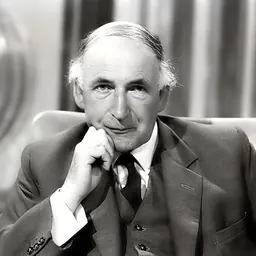
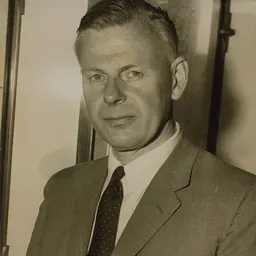
Contemporaries
People whose lives overlapped Erika Böhm-Vitense's
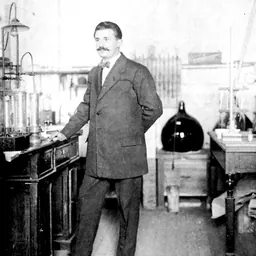
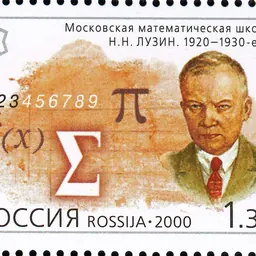
Frequently asked questions
Who was Erika Böhm-Vitense?
German-American astronomer
When was Erika Böhm-Vitense born?
Erika Böhm-Vitense was born on 3 June 1923 in Curau.
When did Erika Böhm-Vitense die?
Erika Böhm-Vitense died on 21 January 2017 in Seattle.
What was Erika Böhm-Vitense's occupation?
Erika Böhm-Vitense was an astronomer, university teacher and astrophysicist.
What was Erika Böhm-Vitense known for?
Erika Böhm-Vitense was known for Barium star and Mixing length model.
What nationality was Erika Böhm-Vitense?
Erika Böhm-Vitense was German and American.
Sources & further reading
· Wikipedia: Erika Böhm-Vitense
Cite this page
APA: Biography.guide. (2026). Erika Böhm-Vitense. https://biography.guide/erika-bohm-vitense/
MLA: "Erika Böhm-Vitense." Biography.guide, https://biography.guide/erika-bohm-vitense/.
Chicago: "Erika Böhm-Vitense." Biography.guide. https://biography.guide/erika-bohm-vitense/.
Data last updated: 2026-09-20 · Spot an error? Report a correction.
Page generated 2026-09-27 05:30 UTC