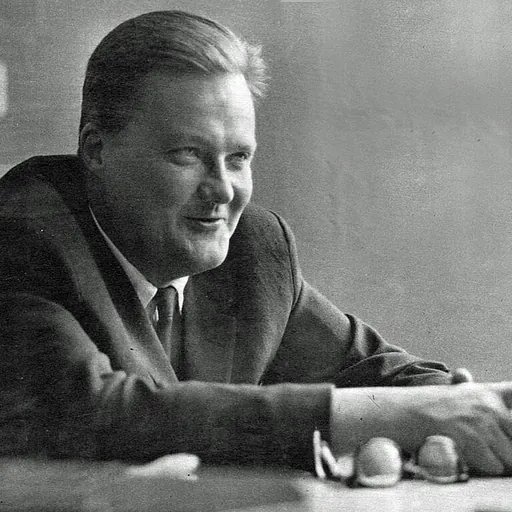
About Erik Allardt
Lived 1925 – 2020 (aged 95). Erik Allardt was a Finnish sociologist, social scientist and university teacher.
Erik Anders Allardt (9 August 1925 – 25 August 2020) was a Finnish sociologist and one of the most distinguished social scientists in Finland and the Nordic countries during the 20th century. He served as professor of sociology at the University of Helsinki from 1958 to 1991, and as chancellor of Åbo Akademi University from 1992 to 1994. He introduced empirical sociology to Finland and exercised considerable influence on public debate, particularly during the 1960s and 1970s. Internationally, he is best known for his welfare model with the three dimensions having, loving and being, and for his comparative research on political radicalism and linguistic minorities. In 1995, Allardt was awarded the honorary title of akateemikko.
Biography
Background and intellectual formation In his intellectual autobiography Bondtur och kulturchocker (1995), Allardt described his path to sociology. Growing up in a home marked by social commitment, and shaped by his experiences during the war years, he was drawn to the social sciences. Decisive impulses came through studies in European depth psychology and Swedish social liberalism, and through his acquaintance with Veli Verkko, Finland's first professor of sociology. In 1971 he was elected a member of the Finnish Academy of Science and Letters. He was a fellow of the Norwegian Academy of Science and Letters from 1982. In 1984 he was awarded an honorary doctorate by Uppsala University. In 1986 he was appointed chair of the scientific council of the Academy of Finland, a position he held for two three-year terms, during which the Academy's standing and its relations with the universities were strengthened.
Scholarly contributions Allardt's doctoral dissertation on divorce is regarded as the real breakthrough of modern sociology in Finland. The study examined how different normative systems affected divorce rates, and introduced a theoretical approach that was new to Finnish sociological research. His father was Arvid Allardt, a jurist, and his mother Marita Ingeborg Heikel, a primary school teacher. He married Sagi Nylander in 1947.
Selected bibliography Social struktur och politisk aktivitet (1956) Sociologi (with Yrjö Littunen, 1962) Yhteiskunnan rakenne ja sosiaalinen paine (1964; Swedish: Samhällsstruktur och sociala spänningar) Att ha, att älska, att vara: om välfärd i Norden (1975) Språkgränser och samhällsstruktur (with Christian Starck, 1981) Bondtur och kulturchocker (1995)
Awards and honours 1971 – Member of the Finnish Academy of Science and Letters 1982 – Fellow of the Norwegian Academy of Science and Letters 1984 – Honorary doctorate, Uppsala University 1985 – Swedish Academy Finland Prize 1988 – Honorary fellow of the Finnish Society of Sciences and Letters 1995 – Honorary title akateemikko 1996 – Tollander Prize
Don’t just read it —
keep it.
Full-length biographies made to live with: read them, listen on the way to work, watch them tonight.
- E-book
- Audio
- Video
Instant download · yours to keep · every purchase keeps this site free
Important facts
People in Erik Allardt's life
Named in this biography and alive at the same time

Related people
Same field, nearest in time




Contemporaries
People whose lives overlapped Erik Allardt's



Frequently asked questions
Who was Erik Allardt?
Finnish sociologist (1925–2020)
When was Erik Allardt born?
Erik Allardt was born on 9 August 1925 in Helsinki.
When did Erik Allardt die?
Erik Allardt died on 25 August 2020 in Helsinki.
What was Erik Allardt's occupation?
Erik Allardt was a sociologist, social scientist and university teacher.
What nationality was Erik Allardt?
Erik Allardt was Finnish.
Sources & further reading
Cite this page
APA: Biography.guide. (2026). Erik Allardt. https://biography.guide/erik-allardt/
MLA: "Erik Allardt." Biography.guide, https://biography.guide/erik-allardt/.
Chicago: "Erik Allardt." Biography.guide. https://biography.guide/erik-allardt/.
Data last updated: 2026-09-22 · Spot an error? Report a correction.
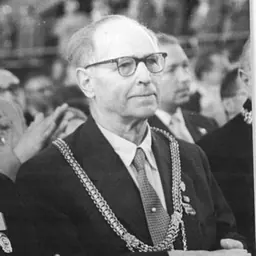
Portrait: Wikimedia Commons · author & licence
Page generated 2026-09-27 05:02 UTC