
About Eric Seelig
Lived 1909 – 1984 (aged 74). Eric Seelig was a German boxer.
Eric Seelig (July 15, 1909, in Bromberg, now Bydgoszcz – January 19, 1984) was middleweight boxing champion in Germany in 1931 and their light-heavyweight champion in 1933. Because he was Jewish, he was stripped of his titles, and, in July 1933, the Nazis threatened that if he dared to fight another match to defend his titles he would be killed. Seelig fled to France, though his stripped titles were never restored. He had a successful boxing career in America from 1935 to 1940.
Early life and amateur boxing career
Eric Seelig was born on July 15, 1909, in Bromberg, Germany. When he was nine, his family moved to Berlin and in the period before Hitler, he became Germany's Amateur Middleweight Champion.
Professional boxing career Seelig won his first twelve professional matches in Germany, from February 1931 to March 1932. This period included his winning the German national middleweight title. upright=.7
On May 22, 1933, Seelig fought an important bout against IBU world middleweight champion Marcel Thil at the Palais de Sports in Paris, losing in a twelve-round points decision. Thil was also the former holder of the NBA world middleweight title, and would later hold the European light heavyweight title in 1934. By a few accounts, Seelig's May bout with Thil was for the world title, but the boxers were overweight according to Le Petit Parisien.
In only his second bout in New York, Seelig knocked out Charley Bellanger on November 11, 1935, to a winning reception, fifty-two seconds into the fourth round at New York's St. Nicholas arena. An overhand right to the point of the jaw, preceded by a storm of lightning fast blows to the head and body, dropped Bellanger for the count. After Seelig was momentarily down to one knee from a terrific right hook to the jaw, he fought cautiously, realizing that long range fighting would not be his best bet against Bellanger who had a slight advantage in reach. Another right to the chin put Bellanger down momentarily in the second. The Brooklyn Daily Eagle, wrote, "a fighting heart, a will to win and two strong arms that keep whirling like a windmill...have combined to enlist the hearts of American fighting fans to his side." The New York crowd gave him an enormous hand at the end of the bout.
Seelig won a unanimous fifteen-round decision against leading contender Paul Pirrone in Cleveland, Ohio, on December 16, 1935, retaining his standings in the top ten world middleweights. He came back to win after being knocked down in the second round by a stiff punch to the chin. In a clear cut victory, Seelig continued to box well after fracturing his hand in the fifth round. It was his fourth win since arriving in America.
On May 10, 1938, Seelig lost to highly rated contender Billy Conn in a ten-round mixed decision at the Motor Square Garden in Pittsburgh. Conn would become a world light heavyweight champion the following year. In close bout before a modest crowd of 1,200, Seelig was given three rounds, Conn took five, and two were declared even. Seelig blasted Conn in the sixth with a right uppercut that sent him to the ropes. Conn dominated the last three rounds with high pressured infighting that smothered Seelig, and gave a significant points advantage to Conn. Conn held a slight advantage in the infighting, with a five-inch advantage in height, giving him roughly a three-inch or ten centimeter advantage in reach. Barth had defeated Seelig one year earlier in an eight-round decision in Cleveland on December 6, 1937. In April 1937, Seelig defeated Barth in a ten-round points decision at Public Hall in Cleveland in what the Ring magazine described as "one of the greatest fights in the history of the fight game." Seelig lost the third as the results of a low punch, but took the first two on hard rights to the head and body, but after the fourth, he lost ground with continuous body punches from Seelig, which the crowd may not have noticed. In the last two rounds, Overlin switched to blows to the head, and scored again, but was too far behind in scoring to take the decision. There were no knockdowns in the bout. Seelig lost to Overlin in a ten-round points decision at Chicago Stadium on June 8, 1939. Seelig showed more aggression which won him fans in the audience, but Overlin landed more effective punches and allowed him to win decisively.
Seelig drew with Teddy Yarosz, former world middleweight champion, before a crowd of 7,937, on February 3, 1939, at New York's shrine to boxing, Madison Square Garden in an eight-round bout, but still retained a top ten world standing among middleweights. In the second, the close bout saw Yarosz drop Seelig for a two count. Seelig evened up the bout by scoring repeatedly in close fighting.
Match with World middle champ, Apostoli, 1939 On May 1, 1939, before 3,500 fans, accomplished world middleweight champion Fred Apostoli won an unpopular ten round points decision over Seelig in Cleveland, Ohio. Seelig's best round was the seventh when he smashed Apostoli's jaw with a right that caused the champion to clinch and cover, and gained the support of a number of fans. Nonetheless, judges gave Apostoli, the reigning champion, seven of the ten rounds.
World Middle title attempt, 1939 On December 11, 1939, Seelig fought an NBA world middleweight title match against Al Hostak before an enthusiastic crowd of 10,000 at the Arena in Cleveland, Ohio, losing in a first-round knockout of a scheduled fifteen rounds. Seelig sparred cautiously in the opening of the round, but was sent to the canvas from a crushing left hook to the right side of his jaw, and could not resume the bout until a count of nine was completed. A left and right put him to the canvas for the count 1:21 into the first round.
In his last bout, Seelig lost to top rated heavyweight contender Tami Mauriello in the feature fight at the Bronx's New York Colliseum in a seventh-round technical knockout on December 3, 1940. Seelig was hammered about the head and body in the sixth, and in the seventh, after arising, turned his back to Mauriello, when the referee called the bout. He was elected to the New Jersey Boxing Hall of Fame in November 1999, and the International Jewish Sports Hall of Fame.
Selected fights
Win Hans Seifried 12 Nov 1931 Mitte, Germany 12 Rounds Won BDU German Middle title Win Helmut Hartkopp 26 Feb 1933 Flora Theatre 12 Rounds Won BDU German Light-Heavy title Loss Marcel Thil 22 May 1933 Paris 12 RoundsNon-title Thil - EBU World middle champ Loss Gustave Roth 17 Mar 1934 Brussels, Bel. 10 Rounds For EBU Europ. Middle title Win Kid Tunero 28 Sep 1934 Salle Wagram, Paris 10 Rounds Win Al Rossi 23 Sep 1935 St. Nick's, NY city 8 Round KO Win Charley Bellanger 11 Nov 1935 St. Nick's, NY city 4 Round KO Win Mickey Walker 2 Dec 1935 St. Nicks Arena, NY City 7 Round TKO Former Middle and Welter champ Win Paul Pirrone 16 Dec 1935 Cleveland, OH 15 Rounds Loss Billy Conn 20 May 1938 Pittsburgh, PA 10 Rounds 1939 World Light heavy champ Win Carmen Barth 14 Oct 1938 Legion Stadium, Hollywood 10 Rounds Win Ken Overlin 20 Dec 1938 NY Stadium, Bronx 10 Round UD Future World Middle champ
Teddy Yarosz 3 Feb 1939 Mad. Sq. Gard., NY 10 Rounds Former World middle champ Loss Fred Apostoli 1 May 1939 Cleveland, Ohio 10 Round SDClose bout Apostoli was Middle champ Loss Al Hostak 11 Dec 1939 Cleveland, Ohio 1st Round KO10,000 fans For NBA World Middle title Loss Tami Mauriello 3 Dec 1940 Bronx, NY 7th Round TKO
Don’t just read it —
keep it.
Full-length biographies made to live with: read them, listen on the way to work, watch them tonight.
- E-book
- Audio
- Video
Instant download · yours to keep · every purchase keeps this site free
Important facts
People in Eric Seelig's life
Named in this biography and alive at the same time
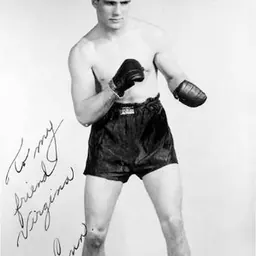
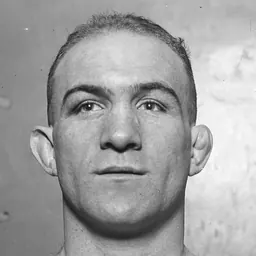
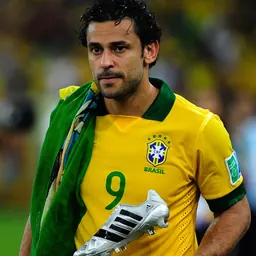




Related people
Same field, nearest in time
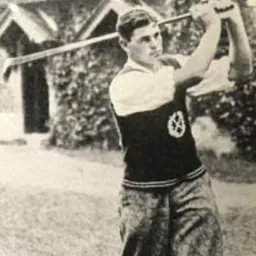



Contemporaries
People whose lives overlapped Eric Seelig's



Frequently asked questions
Who was Eric Seelig?
American boxer
When was Eric Seelig born?
Eric Seelig was born on 15 July 1909 in Bydgoszcz.
When did Eric Seelig die?
Eric Seelig died on 19 January 1984 in Atlantic City.
What was Eric Seelig's occupation?
Eric Seelig was a boxer.
What nationality was Eric Seelig?
Eric Seelig was German.
Sources & further reading
Cite this page
APA: Biography.guide. (2026). Eric Seelig. https://biography.guide/eric-seelig/
MLA: "Eric Seelig." Biography.guide, https://biography.guide/eric-seelig/.
Chicago: "Eric Seelig." Biography.guide. https://biography.guide/eric-seelig/.
Data last updated: 2026-09-20 · Spot an error? Report a correction.
Page generated 2026-09-27 05:08 UTC