
Eric Clark
British writer and investigative journalist
About Eric Clark
Lived 1937 – 2018 (aged 81). Eric Clark was a writer, fiction and investigative journalism.
Eric Clark (29 July 1937 – 22 October 2018) was a British author and investigative journalist. Clark is best known for his book The Real Toy Story, which examines the world toy market and the battle companies have to win over consumers. During his career, he wrote several books in both the fiction and non-fiction sectors that have been published in more than 20 countries (LINK). His works included thrillers, documentaries, magazine, and newspaper articles.
In the 1960s, Clark wrote a series of articles that appeared in The Observer, focusing on the American Mafia's infiltration of London's casinos. These articles were credited for the changes that were made to the UK's gambling laws. One of Clark's espionage novels, The Sleeper, was described by Kirkus Reviews as "mind-lingering entertainment that boosts Clark high up in the stark, lean, British-suspense echelons."
Life and Family Clark was born in Moseley, Birmingham, to Horace and Hilda (née Mitchley) After studying at Handsworth Grammar School, Clark flew to Spain with the desire to be the next Hemingway. He had the ambition to write from a young age and wrote his first (unpublished) novel before his 17th birthday. He then started his career in journalism.
In 1958, Clark married Frances Grant; the couple later divorced. In 1972, Clark married Marcelle Bernstein. Together they had three children, Rachael, Charlotte and Daniel. He also has 4 grandchildren, Madeleine, Cecilia, Tabitha and Iris. Together, Clark and Bernstein decided to become freelance writers, and earned their living as self-employed authors. Clark's style of writing was that of unadorned and spare prose, while his wife preferred to use more adjectives and write in a "flowery" manner.
In 1974, he received a prospective commission from politician Enoch Powell who asked Clark to write a biography for him in exchange for access to his papers. At their meeting in Powell's London flat, Powell expressed his surprise that Clark had married someone of Jewish heritage, and Clark rejected the offer.
At the age of 81, Clark died on 22 October 2018.
Career Non-Fiction Clark started working for local papers, including the Erdington News and the Birmingham Post, before moving to The Daily Mail. In 1958, he joined The Guardian, where he wrote authoritative backgrounders to major events of the time, such as the Great Train Robbery. From 1964 to 1972, Clark worked for The Observer, where he served as Home Affairs Editor and head of the Investigative Unit.
In 1969, Clark's first book was Everybody's Guide to Survival: A Handbook on Danger - How to Prevent It or Live through It. His solution to the problem of escaping from a submerged car led to a 1968 television appearance on ATV's Tonight with Dave Allen. "A tank was rigged up in the studio car park: the about-to-be-submerged pair discovered to their horror that the car, an old banger, leaked like a sieve. 'If things go wrong we'll smash the tank,' the director assured them. 'Do that and you'll kill us both,' said Eric. He and Allen were nevertheless lowered in – and survived."
In 1988, Clark released The Want Makers, a look at the rise of advertising, revealing how deeply the industry has come to affect every area of life. This was another international investigation, based on firms in London, Tokyo, and New York. In the book, Clark describes "in exhaustive detail an industry that targets as captive customers children, who spend more time watching TV than in school and can zero in on consumer 'grazers' 18–30 years old, who eat lightly and often and buy more of everything than anyone else. He shows us tobacco and liquor advertisers who subtly evade regulation, giant pharmaceutical companies with identical therapies that push their own brand names on doctors through gifts, entertainment and a barrage of trade ads, and political TV spots that overwhelm democracy in national elections."
In 2007, The Real Toy Story was published. Clark contrasted the ruthless pragmatism of the international toy industry with the cozy lovable image of the products it sells. He interviewed 200 industry insiders, from lone inventors to heads of multinational companies, and also investigated the Chinese sweatshops, where 80% of the world's toys are made: 'This is where toys are produced for a few cents each by vast numbers of young migrants toiling in sweatshop conditions. This is the hidden face of the toy industry, without which it could not exist. The Pearl River Delta, China. The workshop of the world. Behind high fences, sprawling factory compounds stretch mile after dusty, depressing mile along the congested roads. Guarded gates control entry and exit. Adjoining many of the blocks are identical concrete boxes – the washing at the chicken-wire-covered windows, adding flashes of colour, is the only indication that these are the dormitories. Between shifts, the workers, mostly young women, their faces set in exhaustion, shuffle from building to building. Shifts can last more than 15 hours a day, seven days a week...'
Fiction Between 1977 and 1985, Clark wrote five espionage novels. The first, Black Gambit, influenced by John le Carré, concerns a plan to rescue a Soviet dissident under house arrest by substituting a double for him. Kirkus Reviews described the book as 'revamped escape-from-behind-the-Iron-Curtain... (with) the quiet, cumulative force and the clean, cinematic through-line that more convoluted spy-thrillers miss out on.'
Clark's second novel, The Sleeper, which was published in 1980, was judged by Kirkus to be his most successful: "Clark's quietly impressive spy debut, Black Gambit (1977), had everything but original twists—and now he has those too, in a swift, cleanly knotted festival of ironies... Dark-edged characters, shards of raw action, implicit moral dilemmas left and right, plus a last-page punchline guaranteed to elicit a gasp or groan." The reviewer found the book "more like a film scenario than a full-scale novel... swiftly readable but disappointingly sketchy."
Publications
Non-Fiction Len Deighton's London Dossier (Chapter 10), 1967 Everybody's Guide to Survival, 1969 Corps Diplomatique, 1973 Diplomat: The World of International Diplomacy, 1974 The Want Makers: The world of advertising: how they make you buy, 1988 The Real Toy Story: Inside the Ruthless Battle for America's Youngest Consumers, 2007
Fiction Black Gambit, Morrow, 1977 The Sleeper, 1980 Send in the Lions, Hodder and Stoughton, 1981 Chinese Burn, Hodder and Stoughton, 1984 China Run, Little Brown & Co, 1985
Don’t just read it —
keep it.
Full-length biographies made to live with: read them, listen on the way to work, watch them tonight.
- E-book
- Audio
- Video
Instant download · yours to keep · every purchase keeps this site free
Important facts
Family & relationships
People in Eric Clark's life
Named in this biography and alive at the same time

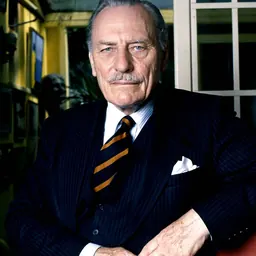
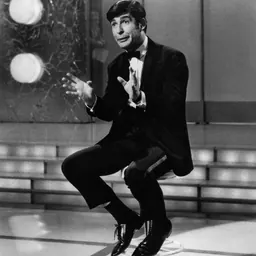




Related people
Same field, nearest in time


Contemporaries
People whose lives overlapped Eric Clark's



Frequently asked questions
Who was Eric Clark?
British writer and investigative journalist (1937-2018)
When was Eric Clark born?
Eric Clark was born on 29 July 1937 in Moseley.
When did Eric Clark die?
Eric Clark died on 22 October 2018.
What was Eric Clark's occupation?
Eric Clark was a writer, fiction and investigative journalism.
Sources & further reading
· DBpedia: Eric Clark (author)
Cite this page
APA: Biography.guide. (2026). Eric Clark. https://biography.guide/eric-clark-writer/
MLA: "Eric Clark." Biography.guide, https://biography.guide/eric-clark-writer/.
Chicago: "Eric Clark." Biography.guide. https://biography.guide/eric-clark-writer/.
Data last updated: 2026-09-20 · Spot an error? Report a correction.
Page generated 2026-09-27 05:07 UTC