
Ephraim Kishon
Israeli author, dramatist, screenwriter and film director
About Ephraim Kishon
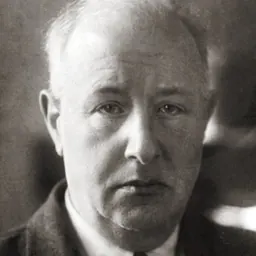
Lived 1924 – 2005 (aged 80). Ephraim Kishon was an Israeli writer, playwright, opinion journalist, film director, screenwriter and sculptor.
Ephraim Kishon (; 23 August 1924 – 29 January 2005) was a Hungarian-born Israeli author, dramatist, screenwriter, and Oscar-nominated film director. A Holocaust survivor who immigrated to Israel in 1949, he became the young state's leading satirist, writing a daily satirical column, "Had Gadya", in the newspaper Ma'ariv for about 30 years and publishing dozens of books, many translated into over 30 languages.
Kishon expanded into filmmaking in the 1960s, writing and directing five feature films; Sallah Shabati (1964) and The Policeman (1971) were both nominated for the Academy Award for Best Foreign Language Film and won Golden Globe Awards in the category. His films and characters, along with his writing, are credited with shaping Israeli popular culture and helping give rise to the Bourekas film genre. He was also a lifelong chess enthusiast whose passion for the game inspired a talking chess computer, the Kishon Chesster. His work was especially celebrated in West Germany and Austria, where he received the Bundesverdienstkreuz, Germany's highest award for literary achievement, in 1990.
Although Kishon was one of the most widely read satirists in Israel, he came to feel that the Israeli literary establishment looked down on his popular style, and his domestic acclaim waned somewhat in the 1970s even as his books topped the bestseller lists in West Germany and Austria, where his reception became the subject of later academic study. He received the Israel Prize for lifetime achievement in 2002. Kishon died in Switzerland in 2005 at the age of 80.
Biography Ephraim Kishon was born on August 23, 1924, by the name of Ferenc Hoffmann into a middle-class Jewish family in Budapest, Hungary. (Later his name was Hungarized to Ferenc Kishont, hence his surname.) In his youth he knew neither Hebrew nor Yiddish. His father worked as a bank manager and his mother was a former secretary. Kishon also had a sister who was a writer.
His writing talent became evident in his youth. In 1940 he won his first prize for writing a novel for high school students. Due to the racial laws applied in Hungary during World War II, he was not allowed to continue his studies at the university and therefore he began to study jewelry making in 1942.
During World War II the Nazis imprisoned him in several concentration camps. At one camp his chess talent helped him survive, as he played chess with the guards. In another camp, the Germans lined up the inmates and shot every tenth person, but passed him by.
After the war when he returned to Budapest he discovered that his parents and sister had survived, but many other family members had been murdered in the gas chambers at Auschwitz. In 1945, he changed his surname from Hoffmann to Kishont and returned to Hungary, where he continued to study art and writing. In 1948 he completed his studies in metal sculpturing and art history and began publishing humorous articles under the pseudonym Ferenc Kishont.
Kishon died on 29 January 2005 at his home in Appenzell at the age of 80, apparently of a heart attack; his third wife, Lisa, was with him. A memorial ceremony led by Chaim Topol, who had played the title role in Sallah Shabati, preceded the procession to the old cemetery on Trumpeldor Street, where Kishon was buried beside the grave of his wife Sara. Until Torberg's death in 1979, Friedrich Torberg translated his work into German. Thereafter Kishon did the German translations himself.
Chess
Kishon was a lifelong chess enthusiast, and took an early interest in chess-playing computers. In 1990, German chess computer manufacturer Hegener & Glaser together with Fidelity produced the Kishon Chesster, a chess computer distinguished by the spoken comments it would make during a game. Kishon wrote the comments to be humorous, but they were also carefully chosen to be relevant to chess and the position in the game.
Reception and legacy Kishon is widely considered one of the central figures of modern Israeli satire; his linguistic style and stage/screen characters became embedded in everyday spoken Hebrew and Israeli popular culture. Despite this, Kishon increasingly felt that his best-selling work was looked down on as "middlebrow" by the Israeli literary establishment, and his domestic popularity waned somewhat during the 1970s even as his acclaim in Germany grew. By the 1980s, as his political sympathies shifted further to the right, Kishon described himself as an outsider within Israel's literary and media establishment, and increasingly turned from satire to overtly political opinion writing.
A 2017 reissue of a book of conversations between Kishon and journalist Yaron London drew renewed critical attention to a tension in his later work: reviewers noted a contrast between the versatile, funny satirist and a more pessimistic, cynical figure whose uncompromising positions on Israel's rectitude were seen as having undermined his ability to produce sharp humor.
Kishon's satire found an unusually large readership in West Germany and Austria from the 1960s onward, and his books topped West German bestseller lists through the 1960s and 1970s. Kishon himself tended to attribute this popularity to a kind of historical irony; a 2020 academic study instead traces it to the specific dynamics of the West German publishing industry and the broader politics of postwar German–Israeli reconciliation.
Sallah Shabati is widely regarded as having inaugurated the Bourekas film genre, ethnic comedies and melodramas centered on tensions between Mizrahi immigrants and Israel's Ashkenazi establishment, which dominated Israeli popular cinema through the mid-1970s. Later scholarship has treated Kishon's title character as an archetype whose traits recurred across the genre's subsequent films, while also noting that the genre's broadly comic treatment of ethnic and class tension drew criticism for softening more serious social issues into sentimental comedy.
Books, plays, and films Books
Ha-ole Ha-Yored le-Chayenu (1951) Thousand of Gadia and Gadia (1954) Ein Kamonim (1955); republished in 1972 as , on which the film with the same name is based Do Not Worry (1957) Sketches (1959) It All Depends (1958) Be-Echad Ha-Emeshim (1961) He and She (1963) Somersaults (1964) Bone in the Throat (1966) So Sorry We Won! (1967), with illustrations by Dosh Gomzim Gomzim (1969) (1970) Oh, Winners (1970) Department of Ephraim Kishon (1972) , Chor beSemach, Hole in the Screen (1973) Partachia my Love (1974) The Mark of Cain: A Bitter Smile from Besieged Israel (1976) My Family Right or Wrong (1977) Smile drought (1978) Family Book (1980) Jonathan Voyage (1981), children book The Cup is Ours (1981), children book Uncles on the Wires (1981), children book Unfinished Adventure (1981), children book Gum with Stripes (1981), children book Seven Comedies (1981) Satire Book I (1981) Arbinkea (1991) Satire Book II (1991) Satire Book III (1992) 58 Sketches (1995) Ants War (1995) children books Hercules and the Seven Midgets (1995) children books The Taming of the Shrew Dog (1995) children books Hairy, Hell (1998) State Protocol (1999) The Redhead with the Key (2002) children books Book of Travels (2003) Partachia (2004) (2004)
Plays
His Reputation Precedes Him (1953) Black on White (1957) Ha-Ketubbah (1959) No Word to Morgenstein (1960) Take the Plug Out (1968) Oh, oh, Juliet (1972) Salah Shabati the musical (1988) Open for Renovation (2004) The Policeman (2009)
Kishon's sketches and plays have been translated and performed on stages and television networks worldwide.
Films Kishon expanded into cinema in the early 1960s. He wrote, directed and produced five feature films, all of them comedic /satirical movies. Three movies were nominated for major international awards including the Golden Globe award (two wins) and the Oscar (two nominations): Sallah Shabati (1964), nominated for Oscar for best foreign language film), Israeli comedy film about the chaos of Israeli immigration and resettlement which was critical of the treatment immigrants to Israel received depicting immigrants being vilified by Ashkenazi Israelis. (1971, nominated for Oscar for best foreign language film, awarded 1972 Golden Globe for best foreign language film). It won several other awards, such as best foreign film in the Barcelona film festival and best director in the Monte Carlo festival. In Israel it is considered a cinematic classic. The Fox in the Chicken Coop (1978), based on Kishon's satirical book by the same name (Hebrew: Ha Shu'al B'Lool HaTarnegolot), features many prominent Israeli actors of the time, most notably Shaike Ophir and Seffy Rivlin. The film takes a satirical, comic look at the old generation of Israeli politicians.
Awards 1953, Nordau Prize for Literature 1958, Sokolov Prize for Journalism 1964, Kinor David (David's Harp) Prize 1970, Herzl Award for Hungarian Jewry: for literature 1990, Bundesverdienstkreuz, First Class, Germany's highest award for literary achievement 1998, co-recipient (jointly with Nurit Guvrin and Aryeh Sivan) of the Bialik Prize for Hebrew literature 2002, Israel Prize for lifetime achievement & special contribution to society and the State of Israel Upon receiving the prize, he remarked: "I've won the Israel Prize, even though I'm pro-Israel. It's almost like a state pardon. They usually give it to one of those liberals who love the Palestinians and hate the settlers."
Kishon was nominated twice for an Academy Award for Best Foreign Language Film and three times for a Golden Globe Award. He won two Golden Globe Best Foreign Language Film Awards, for Sallah Shabati (1964), and The Policeman (1971).
Don’t just read it —
keep it.
Full-length biographies made to live with: read them, listen on the way to work, watch them tonight.
- E-book
- Audio
- Video
Instant download · yours to keep · every purchase keeps this site free
Important facts
Family & relationships
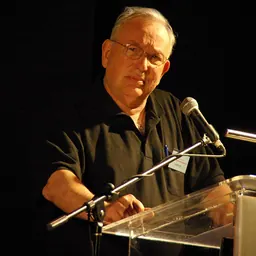
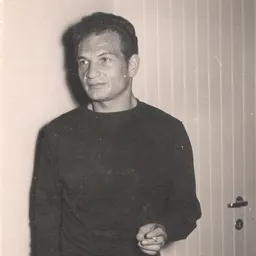
People in Ephraim Kishon's life
Named in this biography and alive at the same time






Related people
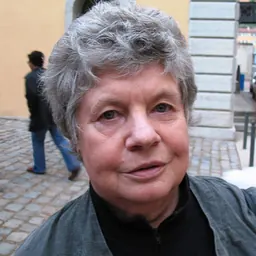
Same field, nearest in time



Contemporaries
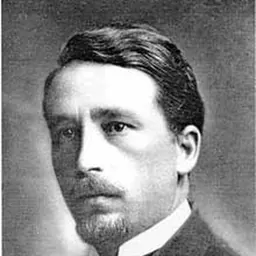
People whose lives overlapped Ephraim Kishon's


Frequently asked questions
Who was Ephraim Kishon?
Israeli author, dramatist, screenwriter and film director (1924–2005)
When was Ephraim Kishon born?
Ephraim Kishon was born on 23 August 1924 in Budapest.
When did Ephraim Kishon die?
Ephraim Kishon died on 29 January 2005 in Appenzell.
What was Ephraim Kishon's occupation?
Ephraim Kishon was a writer, playwright, opinion journalist, film director, screenwriter and sculptor.
What nationality was Ephraim Kishon?
Ephraim Kishon was Israeli.
Sources & further reading
Cite this page
APA: Biography.guide. (2026). Ephraim Kishon. https://biography.guide/ephraim-kishon/
MLA: "Ephraim Kishon." Biography.guide, https://biography.guide/ephraim-kishon/.
Chicago: "Ephraim Kishon." Biography.guide. https://biography.guide/ephraim-kishon/.
Data last updated: 2026-09-20 · Spot an error? Report a correction.
Page generated 2026-09-27 05:23 UTC