
About Ephraim F. Morgan
Lived 1869 – 1950 (aged 80). Ephraim F. Morgan was an American lawyer, judge and politician.
Ephraim Franklin Morgan (January 16, 1869 – January 15, 1950) was an American Republican politician who served as the 16th governor of West Virginia from 1921 to 1925.
Early life and education He was born on a farm near Forksburg, Marion County, West Virginia, a descendant of the first white settler of western Virginia, Morgan Morgan, and his son David Morgan. He studied at Fairmont State Normal School and graduated from the West Virginia University law school in 1897. After establishing a law practice in Fairmont, Morgan enlisted in the First West Virginia Infantry during the Spanish–American War. In 1902, he married Alma Bennett.
Political career Following the war, he became the Fairmont city attorney. He served as a judge of the Marion County Intermediate Court from 1907 to 1912 and as a member of the West Virginia Public Service Commission from 1915 to 1920.
At the time Morgan became governor, a virtual state of war existed between union coal miners and coal operators. The United Mine Workers union was protesting for the right to organize miners in the southwestern part of the state. In late summer 1921, the governor called upon President Warren G. Harding to dispatch federal troops to end an armed miners' march in Boone and Logan counties. After the conflict ended, Morgan used National Guard troops to discourage miners from again taking up arms. A more detailed discussion of the 1921 armed miners' march and the Battle of Blair Mountain can be found in Clayton D. Laurie's "The United States Army and the Return to Normalcy in Labor Dispute Interventions: The Case of the West Virginia Coal Mine Wars, 1920–1921" in West Virginia History, Volume 50 (1991).
Under Morgan, the legislature created a sinking fund to provide financial assistance to new programs, namely a new road system. He appointed a Capitol Commission to devise a plan for replacing the old state capitol, which was destroyed by fire on January 3, 1921. The west wing of the present state capitol was completed in 1925. One week before leaving office, Ephraim and Alma Morgan became the first residents of the present West Virginia Governor's Mansion.
After his term as governor, Morgan served as solicitor for the United States Department of Commerce before retiring in Fairmont, West Virginia. In 1940, he was defeated for the Republican nomination for the United States Senate. He died in Bethesda, Maryland, on January 15, 1950, one day before his 81st birthday.
Don’t just read it —
keep it.
Full-length biographies made to live with: read them, listen on the way to work, watch them tonight.
- E-book
- Audio
- Video
Instant download · yours to keep · every purchase keeps this site free
Important facts
Family & relationships
People in Ephraim F. Morgan's life
Named in this biography and alive at the same time
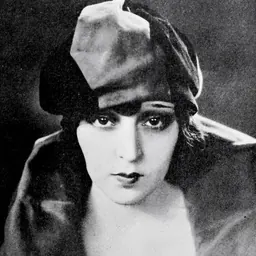
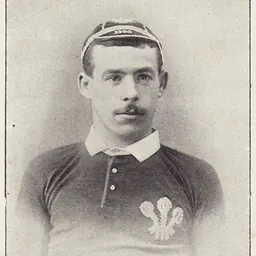
Related people
Same field, nearest in time
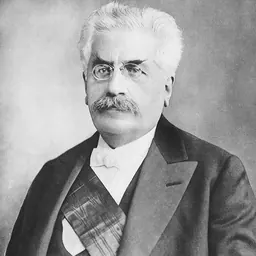
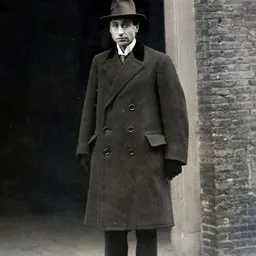

Contemporaries
People whose lives overlapped Ephraim F. Morgan's



Frequently asked questions
Who was Ephraim F. Morgan?
American politician (1869–1950)
When was Ephraim F. Morgan born?
Ephraim F. Morgan was born on 16 January 1869 in Marion County.
When did Ephraim F. Morgan die?
Ephraim F. Morgan died on 15 January 1950 in Bethesda.
What was Ephraim F. Morgan's occupation?
Ephraim F. Morgan was a lawyer, judge and politician.
What nationality was Ephraim F. Morgan?
Ephraim F. Morgan was American.
Sources & further reading
· Wikipedia: Ephraim F. Morgan
Cite this page
APA: Biography.guide. (2026). Ephraim F. Morgan. https://biography.guide/ephraim-f-morgan/
MLA: "Ephraim F. Morgan." Biography.guide, https://biography.guide/ephraim-f-morgan/.
Chicago: "Ephraim F. Morgan." Biography.guide. https://biography.guide/ephraim-f-morgan/.
Data last updated: 2026-09-20 · Spot an error? Report a correction.
Page generated 2026-09-27 05:19 UTC