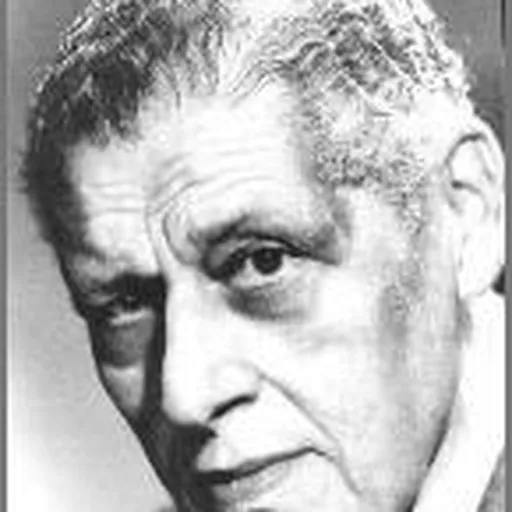
About Enrique Telémaco Susini
Lived 1891 – 1972 (aged 81). Enrique Telémaco Susini was an Argentine film director, screenwriter and director.
right|frame|Portrait of Enrique Telémaco Susini by photographer Annemarie Heinrich Enrique Telémaco Susini (January 31, 1891 – July 4, 1972) was an Argentine entrepreneur and media pioneer.
In 1920, Susini led the effort for the first radio broadcast in Argentina, and subsequently established one of the earliest regular radio stations in the world. During the 1920s and 1930s, he became a successful entrepreneur in the nascent radio and film industry.
Besides his business interests, Susini was an accomplished artist. He worked as director for theaters in Argentina and Italy and directed several movies produced by Lumiton, which he owned.
Early life
Enrique T. Susini was born in Buenos Aires as son of Dr. Telémaco Susini, professor of pathological anatomy at the University of Buenos Aires and the country's first otolaryngologist. In 1906, his father assumed the position of Argentine consul in the Austro-Hungarian capital of Vienna. This allowed young Susini, who had received his high-school diploma one year earlier at the age of 14 to attend the Vienna conservatory, where he received formal training in singing and playing the violin. After briefly studying physics and chemistry in Berlin and Paris, he returned to Buenos Aires in 1909 to begin his medical studies at the faculty where his father had taught. In 1913, at the age of 22, he received his degree of medical doctor having written an award-winning thesis. The publicity generated by Marconi's visit helped to create a group of mostly young radio enthusiasts. Among these young people were Susini and a group of his friends from medical school.
In 1915, the community had become large and sophisticated enough for a newspaper article to mention that the radio amateurs "formed a sort of fraternity, exchanging news, talking with each other over long distances, and even transmitting little piano or violin concerts over their connections."
In this situation, Susini was offered a great opportunity resulting from his military experience. After the end of the war in late 1918, he was sent to France to study the effect of chemical warfare on the respiratory system. While conducting his research, he was able to procure radio communications hardware from the formerly belligerent armies, which he later smuggled back to Argentina.
During 1920, while the group was working on the project, news reached them of Marconi's successful broadcast of a concert of Nellie Melba in Chelmsford that had taken place on June 15. Even though it was somewhat of a disappointment that their broadcast would not be the world's first, the preparations continued at a rapid pace. along with a wire antenna connected to the dome on top of a neighboring building. To pick up the sound in the theater, they used a microphone originally designed to aid people with hearing loss.
Radio Argentina
During the next 19 days, the group continued to broadcast from the theater, transmitting mostly Italian operas such as Verdi's Aida and Rigoletto. After the season at the Teatro Coliseo was over, they started creating productions under their own name. By now they officially called their station "Radio Argentina".
During the following years, radio broadcasting in Argentina saw a quick expansion. In 1921, Buenos Aires mayor Juan Barnetche introduced official broadcasting licenses. In the same year, Radio Club Argentina was founded, becoming the first such association on American soil.
The company soon entered the market of short-wave radio communication between South America and Europe, receiving a "concession for an international radio telegraphy service allowing direct communication between Spain and Argentina" from the Spanish government.
With its relay stations in Paraguay, New York City and Madrid, the company, operating under the brand name "Vía Radiar", had considerable financial success. Moving aggressively against competitors by reducing prices, it soon managed to control the majority of radio traffic between Argentina and Europe, in close cooperation with the Spanish administration's telegraph service.
With equipment bought during a trip to the United States, the four partners set up the most modern film studio in the country at the time, which included its own laboratory. The studio released its first film, Los Tres Berretines, on May 19, 1933. It was the second sound film in Argentina, preceded only by competitor Sono Film's Tango, released about three weeks earlier on April 27. Though officially credited collectively to "Equipo Lumiton", it had actually been directed by Susini himself.
In total, 99 films were released by the company with its trademark gong. Among the most notable was 1938 Venice Film Festival entry La chismosa, starring Lola Membrives, also directed by Susini himself. Lumiton continued producing feature films until 1957.
Other activities
Even while leading his various companies, Susini remained active in the cultural domain. He was in charge of Teatro Coliseo during several seasons in the 1920s, and served as technical director of the famous Teatro Colón. After setting in scene the opera Oberon in 1938 at the Teatro Reale in Rome to great critical acclaim, he was called to work as director at the Scala in Milan.
Later he also worked at the "Teatro Argentino de La Plata". During his life, Susini authored more than seventy theater plays, receiving the National Culture Award in 1951 for his comedy En un viejo patio porteño ("In an old Buenos Aires back yard"). Furthermore, he was known as an excellent concert pianist.
Also in 1951, Susini returned to his roots as broadcast pioneer, working as director of photography during Argentina's first television broadcast on October 17.
Finally, in 1962, Susini founded the cooperative phone company TELPIN in Pinamar, opening the way for a series of popular local phone companies in Argentina. TELPIN is still in business today as a modern telecommunications company offering a broad range of phone and internet services.
Legacy
Although he definitely did not perform the world's first radio broadcast, an honor that belongs to Enrico Marconi, Susini is often credited, especially in Argentine publications, with the establishment of the world's first regular radio broadcast service.
A final evaluation of this claim is not easy, since there were many experimental audio broadcasts in various countries at the time. However, what remains certain is that Susini established the first radio broadcast station in South America on his personal initiative, overcoming serious difficulties in the process. Even though Susini himself has remained relatively unknown, even in his home country, the significance of his pioneering feat was acknowledged in 1970 by the establishment of August 27 as National Broadcast Day (Día de la Radiodifusión) in Argentina, annually celebrated by the country's radio stations.
Selected filmography It Always Ends That Way (1939)
Don’t just read it —
keep it.
Full-length biographies made to live with: read them, listen on the way to work, watch them tonight.
- E-book
- Audio
- Video
Instant download · yours to keep · every purchase keeps this site free
Important facts
People in Enrique Telémaco Susini's life
Named in this biography and alive at the same time

Related people
Same field, nearest in time


Contemporaries
People whose lives overlapped Enrique Telémaco Susini's





Frequently asked questions
Who was Enrique Telémaco Susini?
Argentine film director
When was Enrique Telémaco Susini born?
Enrique Telémaco Susini was born on 31 January 1891 in Gualeguay.
When did Enrique Telémaco Susini die?
Enrique Telémaco Susini died on 4 July 1972 in Buenos Aires.
What was Enrique Telémaco Susini's occupation?
Enrique Telémaco Susini was a film director, screenwriter and director.
What nationality was Enrique Telémaco Susini?
Enrique Telémaco Susini was Argentine.
Sources & further reading
· Wikipedia: Enrique Telémaco Susini
· DBpedia: Enrique Telémaco Susini
Cite this page
APA: Biography.guide. (2026). Enrique Telémaco Susini. https://biography.guide/enrique-telemaco-susini/
MLA: "Enrique Telémaco Susini." Biography.guide, https://biography.guide/enrique-telemaco-susini/.
Chicago: "Enrique Telémaco Susini." Biography.guide. https://biography.guide/enrique-telemaco-susini/.
Data last updated: 2026-09-22 · Spot an error? Report a correction.
Portrait: Wikimedia Commons · author & licence
Page generated 2026-09-27 05:02 UTC