
About Enrique Iglesia
Born 1954. Enrique Iglesia is a Cuban and American researcher and chemist.
Enrique Iglesia is a chemical engineer who holds the Theodore Vermeulen Chair in Chemical Engineering at the University of California, Berkeley. He is a Faculty Senior Scientist at the Lawrence Berkeley, and he previously served as the Director of the UC Berkeley Catalysis Center.
Early life Iglesia was born in Cuba and his family is originally from Spain. In 1969, his family relocated to the United States. As a young immigrant with limited English, he developed an interest in mathematics and chemistry subjects because they did not rely heavily on his language skills. His strengths in these subjects were recognized by his teachers, who, despite his language barrier, encouraged him to apply to top universities.
Education Iglesia attended Princeton University from 1973 to 1977, where he studied chemical engineering. He received his B.S degree as the top-ranked graduating senior in the College of Engineering. He completed an internship at Exxon's corporate research laboratories as a research associate, where he worked on engineering problems and found an interest in catalysis. Iglesia received his Master of Science degree from Stanford University in 1979. Iglesia was recognized for his dedication to teaching and mentorship and received the Donald Sterling Noyce Teaching Prize, the highest teaching honor in the physical sciences at UC Berkeley. Among one of his innovations is a zeolite based technology that is currently used as a catalyst in oil and chemical industry. He worked as a scientist at the Lawrence Berkeley National Lab. He was also elected to the National Academy of Inventors in 2016. In 2012 he received the Gabor A. Somorjai Award for Creative Research in Catalysis. In 2018 he received the William H. Walker Award for Excellence in Contributions to Chemical Engineering Literature. In 2019 he received the Michel Boudart Award for the Advancement of Catalysis. He was awarded the 2021 NACS Award for Distinguished Service in the Advancement of Catalysis. He was also awarded the 2023 Faraday Lectureship Prize.
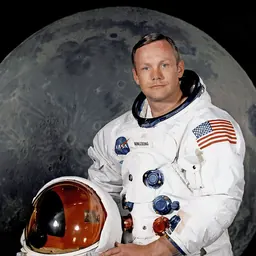
Iglesia is a fellow of the American Chemical Society, Japan Society for the Promotion of Science, American Institute of Chemical Engineers, American Academy of Arts and Sciences, and the Royal Society of Chemistry. He is also an Honorary Fellow of the Chinese Chemical Society and was a Neil Armstrong Visiting Fellow of Purdue University from 2018 to 2021.
Don’t just read it —
keep it.
Full-length biographies made to live with: read them, listen on the way to work, watch them tonight.
- E-book
- Audio
- Video
Instant download · yours to keep · every purchase keeps this site free
Important facts
People in Enrique Iglesia's life
Named in this biography and alive at the same time


Related people
Same field, nearest in time



Contemporaries
People whose lives overlapped Enrique Iglesia's


Frequently asked questions
Who is Enrique Iglesia?
Cuban American chemist
When was Enrique Iglesia born?
Enrique Iglesia was born in 1954 in Havana.
What is Enrique Iglesia's occupation?
Enrique Iglesia is a researcher and chemist.
What nationality is Enrique Iglesia?
Enrique Iglesia is Cuban and American.
Sources & further reading
Cite this page
APA: Biography.guide. (2026). Enrique Iglesia. https://biography.guide/enrique-iglesia/
MLA: "Enrique Iglesia." Biography.guide, https://biography.guide/enrique-iglesia/.
Chicago: "Enrique Iglesia." Biography.guide. https://biography.guide/enrique-iglesia/.
Data last updated: 2026-09-20 · Spot an error? Report a correction.
Page generated 2026-09-27 05:15 UTC