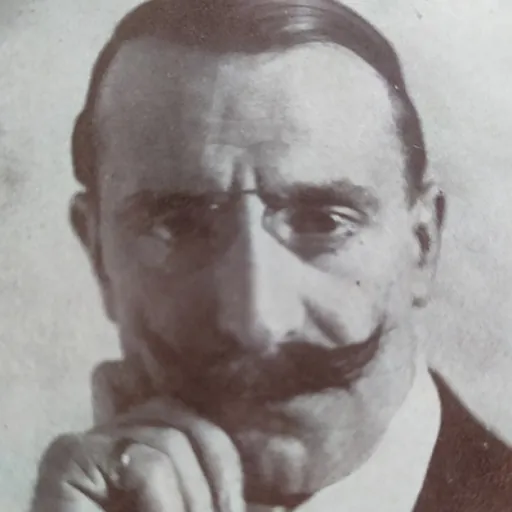
About Enrico Thovez
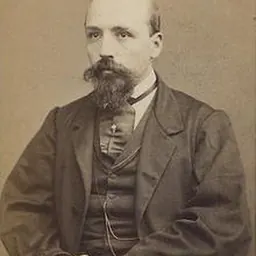
Lived 1869 – 1925 (aged 55). Enrico Thovez was an Italian poet, literary critic, painter, journalist and writer.
Enrico Thovez (10 November 1869 – 16 February 1925) was an Italian artist-polymath best known for his contributions as a poet and literary critic.
Biography Enrico Thovez was born in Turin less than ten years after unification. He was his parents' second son: his brother, Ettore, was five years older than he. Cesare Thovez, his father, was a hydraulics engineer of Savoyard provenance. His mother, Maria Angela Berlinguer, was from Sardinia, but could trace her own family back to Catalonia from where her ancestors had emigrated at the end of the sixteenth century. Between 1881 and 1886 Thovez attended secondary schools, choosing the "technical" rather than the "gymnasium" route. He graduated from school successfully and moved on to enrol at the Sciences Faculty of the university. After just two months he abandoned these studies, however, in order to study the classics. By 1892 he had mastered Latin and Ancient Greek and acquired a thorough basic knowledge of classical literature.
"For me the highest purpose is to make my existence a work of poetry: this is not a wish but a need. ... Something unstoppable in me pushes me beyond the normal limits." "Fare della mia esistenza un’opera di poesia è per me lo scopo più alto: anzi non è un desiderio, ma un bisogno. (…) Vi è in me qualcosa di incoercibile che m’incalza oltre dei limiti consueti." Thovez wrote his first known idylls in 1887 in loose hendecasyllables. They appeared in the "Gazzetta letteraria" ("Literary Gazette") in 1891 and 1892, and subsequently in anthologies. Having established his credentials within the literary establishment, Enrico Thovez now became a regular contributor on literary topics to several mass circulation daily newspapers, including the Gazzetta del Popolo (Turin), the Corriere della Sera (Milan) and Il Resto del Carlino (Bologna). He did not restrict himself to literature, but also contributed extensively on the visual arts and on costumery. It was also in 1902 that he began working with the Senese periodical that became "Vita d'Arte".
Much of the poetry of Enrico Thovez was written during his adolescence. During his lifetime he was better known as a critic and commentator than as a poet. However, in May 1924 he took the opportunity of a stay on Giannutri to subject his 1887 work, "La casa degli avi" (loosely, "The house of the ancestors"), to what a biographer describes approvingly as a "careful lexical revision" ("... un’assennata revisione lessicale"), following which he had it republished.
Literary criticism "Il pastore, il gregge e la zampogna" ("The shepherd, the flock and the bagpipes"'') is a polemical analysis of the language of Italian poetry, in which only Dante Alighieri and Giacomo Leopardi emerge with their reputations spared from attack. More recent celebrity poets such as Giosuè Carducci and D'Annunzio are attacked for a perceived lack of originality. It is hard to decide whether the book, which itself runs to around 500 pages, is to be considered a piece of wide-ranging scholarly criticism or more as a work of art in its own right. It certainly caught the attention of the reading classes, and stirred up the admirers of Italy's contemporary poets.
Both the virtues and the limitations of the literary criticism produced by Thovez lie in the originating primacy that he ascribes to Greek lyric, and the theory, apparently unknown in Italy, of poetry as lyrical purity in the immediacy of its expression of poetic sentiment, without cultural or technical mediation. There is a ruthless analysis of the backwardness of contemporary Italian culture, at one time Arcadian, yet now academicized and aestheticized to a fault, reflecting the moral bankruptcy of the nation, without acknowledging that same backwardness which the problems of contemporary poetry have their origin. His own distinction between "poetry of form" and "poetry of content" invites the reply the "poetry of form" also has its own content: the poet's moral indifference, his inner emptiness and his underlying cynicism.
"Il pastore ..." is certainly an enjoyable read, set out clearly in lively and ironic prose. Although its publication scandalised some, there were others, such as Arturo Graf, who welcomed its message and delivery. Critics condemned it as the rant of a man disappointed and annoyed by the commercial failure of his own juvenile poetry, and his theses was increasingly marginalised by senior members of literary establishment. It should be remembered that as a prolific literary critic in major newspapers ever since then 1890s, Thovez himself was not universally loved by his fellow-writers.
Output (selection)
Don’t just read it —
keep it.
Full-length biographies made to live with: read them, listen on the way to work, watch them tonight.
- E-book
- Audio
- Video
Instant download · yours to keep · every purchase keeps this site free
Important facts
People in Enrico Thovez's life
Named in this biography and alive at the same time
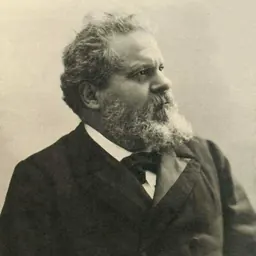
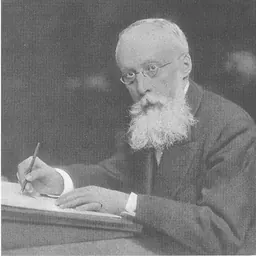
Related people
Same field, nearest in time

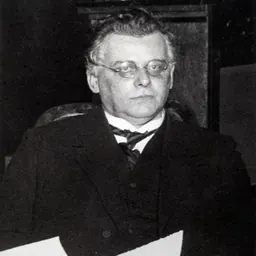
Contemporaries
People whose lives overlapped Enrico Thovez's

Frequently asked questions
Who was Enrico Thovez?
Italian poet (1869-1925)
When was Enrico Thovez born?
Enrico Thovez was born on 10 November 1869 in Turin.
When did Enrico Thovez die?
Enrico Thovez died on 16 February 1925 in Turin.
What was Enrico Thovez's occupation?
Enrico Thovez was a poet, literary critic, painter, journalist and writer.
What nationality was Enrico Thovez?
Enrico Thovez was Italian.
Sources & further reading
Cite this page
APA: Biography.guide. (2026). Enrico Thovez. https://biography.guide/enrico-thovez/
MLA: "Enrico Thovez." Biography.guide, https://biography.guide/enrico-thovez/.
Chicago: "Enrico Thovez." Biography.guide. https://biography.guide/enrico-thovez/.
Data last updated: 2026-09-22 · Spot an error? Report a correction.
Portrait: Wikimedia Commons · author & licence
Page generated 2026-09-27 05:04 UTC