
About Enoch Light
Lived 1905 – 1978 (aged 72). Enoch Light was an American composer, audio engineer, bandleader, violinist, conductor and engineer.
Enoch Henry Light (August 18, 1907 – July 31, 1978) was an American classically trained violinist, danceband leader, and recording engineer. As the leader of various dance bands that recorded as early as March 1927 and continuing through at least 1940, Light and his band primarily worked in various hotels in New York. For a time in 1928 he also led a band in Paris. In the 1930s Light also studied conducting with the French conductor Maurice Frigara in Paris.
Throughout the 1930s, Light and his band were steadily employed in upscale hotel restaurants and ballrooms in New York, playing popular songs for dining and dancing rather than out-and-out jazz.
At some point his band was tagged The Light Brigade and they often broadcast over radio live from the Hotel Taft in New York, where they had a long residency. Through 1940, Light and his band recorded for various labels including Brunswick, ARC, Vocalion and Bluebird. In 1955, Light founded Grand Award Records and served as president and A&R chief. In 1959 he founded a subsidiary label, Command Records. Grand Award and its subsidiary labels were sold to ABC-Paramount Records in October 1959. Light's name was prominent on many albums both as musician and producer.
Early years Light was born in Canton, Ohio, on August 18, 1907. While he was a student at Johns Hopkins University, he formed his initial orchestra. When he took that group on tours of Europe in 1928 and 1929, he studied classical conducting at the Mozarteum in Salzburg and the Opera Comique in Paris. He also studied at Ohio State University and the University of Pittsburgh. The recordings were released under the "35MM" series, starting from "Stereo 35-MM" released by Command Records. Musicians who appeared on Light's albums include The Free Design, The Critters, Rain, Doc Severinsen, Tony Mottola, Dick Hyman, and organist Virgil Fox (on the Wanamaker Organ). As an arranger, Lew Davies was one of the label's most important contributors.
Light joined forces with the Singer Corporation in August 1966, to help the company launch production of phonograph records, tapes, and tape cartridges. Plans called for a new company to be formed, with Light and Singer each having half-interest and Light as both president and chief executive officer.
Light's new label was called Project 3. It did not concentrate as heavily on stereo effects. Light recorded several successful big band albums with an ace group of New York studio musicians, many of whom were veterans of the bands of the swing era who were still regularly working in New York's television and recording studios. Released as Enoch Light and the Light Brigade, the arrangements used on the recordings were transcribed note-for-note from some of what were the hallmark recordings by many of the best bands of the swing era.
The arranging reconstructions of these now "classic" arrangements were completely reconstructed by arrangers Dick Lieb, Dick Hyman, Tony Mottola and Jeff Hest. Many of the musicians employed for this series of "re-creations" had been members of the original bands that made the original records decades earlier. This veritable Who's Who of swing-era veterans included saxophonists Phil Bodner, Walt Levinsky (both also heavily featured on clarinet), Al Klink, Boomie Richman, Romeo Penque, and Sol Schlinger; trumpeters Mel Davis, Rusty Dedrick, Bernie Glow, Bob McCoy, and Marvin Stamm; trombonists Wayne Andre, Urbie Green, Lou McGarity, Buddy Morrow, and Santo Russo; guitarist Tony Mottola; bassists Bob Haggart and George Duvivier; drummers Don Lamond and Ronnie Zito; pianists Dick Hyman and Derek Smith and vibraharpist Phil Kraus.
Personal life and death Light married Mary Danis, who acted on stage and sang on recordings and on radio. They had two daughters.
Light retired from music entirely in 1974. He died on July 31, 1978, at Mount Sinai Hospital in New York City, aged 71. which featured bands performing Light's work and multimedia installations remixing the distinctive Command Records album cover designs.
Discography
Big Band Hits of the 30s (Project 3, PR-5049) [LP-1 / 13 tracks] Begin The Beguine – Artie Shaw version A String of Pearls – Glenn Miller version I'm Gettin' Sentimental Over You – Tommy Dorsey version We'll Git It! – Tommy Dorsey version Woodchopper's Ball – Woody Herman version One O'Clock Jump – Count Basie version Moonlight Serenade – Glenn Miller version Let's Dance – Benny Goodman version In The Mood – Glenn Miller version Ciribiribin – Harry James version Snowfall – Claude Thornhill version South Rampart Street Parade – Bob Crosby version Take The "A" Train – Duke Ellington version
Big Band Hits of the 30s, Vol. 2 (Project 3, PR-5089) [LP-2 / 12 tracks] Stardust – Benny Goodman version American Patrol – Glenn Miller version Sugar Blues – Clyde McCoy version Solitude – Duke Ellington version King Porter Stomp – Benny Goodman version What Is This Thing Called Love? – Artie Shaw version Bugle Call Rag – Benny Goodman version Smoke Rings – Casa Loma Orchestra version Softly, As in a Morning Sunrise – Artie Shaw version Boogie Woogie – Tommy Dorsey version Caravan – Duke Ellington version Little Brown Jug – Glenn Miller version
Big Band Hits of the 30s and 40s (Project 3, PR-5056) [LP-3 / 13 tracks; CD re-issue = 12 tracks] Cherokee – Charlie Barnet version April in Paris – Count Basie version I Can't Get Started – Bunny Berigan version Jersey Bounce – Benny Goodman version Sing, Sing, Sing (Part 1)* – Benny Goodman version Sing, Sing, Sing (Part 2)* – Benny Goodman version Marie – Tommy Dorsey version I'll Never Smile Again – Tommy Dorsey version Don't Get Around Much Anymore – Duke Ellington version Moonlight Sonata – Glenn Miller version Flying Home – Lionel Hampton version Tuxedo Junction – Glenn Miller version Four Brothers – Woody Herman version
(*) These two tracks were merged into one continuous track on CD re-issues.
Big Band Hits of the 40s and 50s (Project 3, PR-5076) [LP-4 / 12 tracks] Chattanooga Choo Choo – Glenn Miller version You Made Me Love You – Harry James version Satin Doll – Duke Ellington version On a Slow Boat to China – Kay Kyser version Cherry Pink And Apple Blossom White – Prez Prado version Pennsylvania 6-5000 – Glenn Miller version Song of India – Tommy Dorsey version Sentimental Journey – Les Brown version Don't Be That Way – Benny Goodman version Heartaches – Ted Weems version Sunrise Serenade – Glenn Miller version Stompin' At The Savoy – Benny Goodman version
LP-1 and -4 and LP-2 and -3 were reissued as two double album compilation LPs, but the various compilation double-album releases of LP-2 and -3 are missing two tracks that originally appeared on LP-3.
Don’t just read it —
keep it.
Full-length biographies made to live with: read them, listen on the way to work, watch them tonight.
- E-book
- Audio
- Video
Instant download · yours to keep · every purchase keeps this site free
Important facts
People in Enoch Light's life
Named in this biography and alive at the same time




Related people
Same field, nearest in time



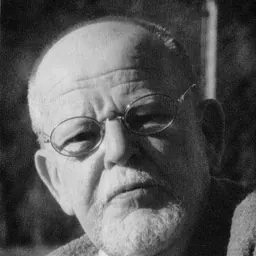
Contemporaries
People whose lives overlapped Enoch Light's



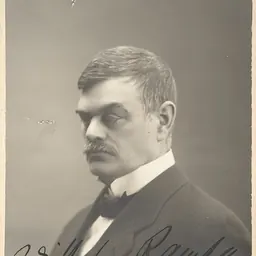

Frequently asked questions
Who was Enoch Light?
American musician (1905–1978)
When was Enoch Light born?
Enoch Light was born on 18 August 1905 in Canton.
When did Enoch Light die?
Enoch Light died on 31 July 1978 in Connecticut.
What was Enoch Light's occupation?
Enoch Light was a composer, audio engineer, bandleader, violinist, conductor and engineer.
What nationality was Enoch Light?
Enoch Light was American.
Sources & further reading
Cite this page
APA: Biography.guide. (2026). Enoch Light. https://biography.guide/enoch-light/
MLA: "Enoch Light." Biography.guide, https://biography.guide/enoch-light/.
Chicago: "Enoch Light." Biography.guide. https://biography.guide/enoch-light/.
Data last updated: 2026-09-20 · Spot an error? Report a correction.
Page generated 2026-09-27 05:11 UTC