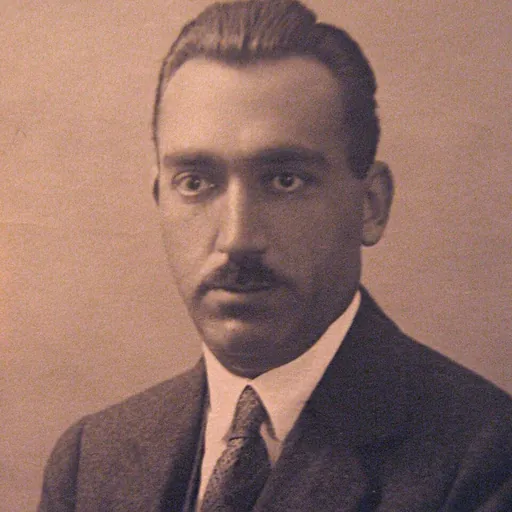
Enea Bossi, Sr.
Italian-American aerospace engineer and aviation pioneer
About Enea Bossi, Sr.
Lived 1888 – 1963 (aged 74). Enea Bossi, Sr. was an American military flight engineer, inventor and aircraft pilot.
Enea Bossi Sr. (March 29, 1888 – January 9, 1963) was an Italian-American aerospace engineer and aviation pioneer. He is best known for designing the Budd BB-1 Pioneer, the first stainless steel aircraft, and the Pedaliante airplane, disputably credited with the first fully human-powered flight.
Personal life
Enea Bossi was born in Milan, Italy. He emigrated to the United States on the RMS Oceanic from Cherbourg, France, on July 20, 1914, subsequently residing in Great Neck, New York. He spoke fluent Italian, French, and English. Bossi petitioned for naturalization in 1925 and became a naturalized United States citizen on March 16, 1926; his two sons retained their inherited Italian citizenship, jus sanguines, as well their American citizenship, jus soli.
Bossi married Flora Kehrer, a Swiss German from Lausanne who had been sent away by a new stepmother to the United States immediately prior to the outbreak of World War I and was living with her aunt and uncle in Connecticut. The two met through Enea Bossi's professional relationship with her uncle, George Boldt. Flora and Enea eloped against the wishes of Flora's guardians. The couple had two children, Charles Bossi (1922, New York City1989, Ohio) and Enea Wilbur Bossi. (1924, Montclair, New Jersey1999, Lansdale, Pennsylvania). They ultimately resided on Upper Mountain Avenue in Montclair and maintained a country house in Lansdale, Pennsylvania.
Professional career Bossi graduated from the Istituto Tecnico in Lodi, Italy, in 1907, specializing in physics and mathematics. The Wright brothers' Flyer, having successfully flown in December 1903, impressed Bossi so much that he devoted himself to aviation, becoming the second licensed pilot in Italy. Financed by his father, in 1908 he designed and built his own plane, modeled after the Wright Flyer. Bossi also used the plane to teach both himself and Giuseppe M. Bellanca how to fly. The design won a silver medal the following year at the first international aviation meeting in Reims, France. The plane, built in Bossi's own factory, was the first successful plane to be designed in Italy.
In early December 1909, the first flight of an Italian-designed and built aircraft was successfully completed alongside fellow engineers Giuseppe M. Bellanca and Paolo Invernizzi. Also in 1909, Bossi developed the first landing gear braking system as well as the Italian Navy's first seaplane.
During World War I, Bossi served both as a bomber pilot and as a flight instructor for the Italian Navy. Due to the economic and social difficulties in Italy following the war, in 1918, Bossi emigrated to the United States, where he eventually became a naturalized citizen.
In 1927, Bossi was a co-founder of the company Société Continentale Parker in France together with Robert Deté, Louis Paulhan and Pierre Prier. The purpose was to transfer surface treatment technologies for the growing aerospace industry to Europe. Using his relationships he brokered a license from Parker Rust-Proof in Detroit (Parkerizing) and in a later step the distribution rights of Udylite Corp for specialty chemicals in electroplating. The company later became the European market leader in surface treatment via its successor organizations Chemetall GmbH and Coventya GmbH.
American Aeronautical Corporation
In October 1928, Bossi founded the American Aeronautical Corporation (AAC), officially located at 730 Fifth Avenue in Port Washington, New York, to build Savoia-Marchetti seaplanes under license. Licenses were acquired for both the S-55 and the S-56 and both were tested at the Miller Army Air Field, but only the latter made it to production. The S-56 became the first plane used by the New York City Police Department, which used it to enforce flying regulations, assist with sea rescues, and to chase rum-runners during the Prohibition era. A follow-up design, the more-powerful S-56B, proved even more successful. Whereas the prices for the S-56 and S-56B were modest for the time, the Great Depression caused sales to drop significantly by 1933.
Budd Company
The Edward G. Budd Manufacturing Corporation, of Philadelphia, Pennsylvania, was a major manufacturer of railroad cars, which resulted in significant experience in working with stainless steel. In 1930, the company made its first foray into the aviation industry by signing contracts to manufacture aircraft wheels and stainless steel wing ribs. A close friend of Edward Budd, Enea Bossi joined the company as the head of stainless steel research to supervise the design and construction of the 4-seat Budd BB-1 Pioneer – the first aircraft with a structure built out of stainless steel. Occurring in 1931, this was the first aircraft for the Budd Company. Built under Restricted License NR749, its design utilized concepts developed for the Savoia-Marchetti S-31 and was powered by a single Kinner C-5 motor.
The stainless steel construction process for the BB-1 was patented in 1942. At the time, stainless steel construction was not considered practicable, and only one airplane was built. In 1934, it was stripped of its fabric covering and mounted outside the Franklin Institute in Philadelphia, where it remains to this day as the longest continuous display of any airplane. In 1931, Bossi sold the controlling interest of the AAC to Dayton Airplane Engine Company. The success which came from the technical innovations of the BB-1 prompted the Budd Company to employ Bossi as its European representative. The design was introduced in 1937 and Vittorio Bonomi, an Italian sailplane manufacturer, was contracted to build the plane. This set a world record for human-powered flight, but as a catapult launch was not permitted in the rules of the competition, the Pedaliante did not win the prize for which it was designed. The plane was retired the following year having made a total 80 flights – 43 without the assistance of a catapult launch. At this time, the Mufli and the Pedaliante were the most advanced Human-powered aircraft ever built.
Later work
Initially developed at Delgado Trades School and completed by Enea Bossi, the two-place side-by-side single-rotor Higgins EB-1 helicopter was completed in 1943 and built by Higgins Industries, Inc., of New Orleans, Louisiana. Plans for larger versions were terminated following the downturn in the military aviation industry following the end of World War II. The fuselage was covered in its entirety by a metallic skin, with the tail covered in fabric. A two-bladed vertical tail rotor was included in its design to counter the effects of torque, and the landing gear was configured in a fixed tricycle form. The four-bladed main rotor consisted of two pairs of blades mounted one above the other. The interior featured controls similar to those of a conventional airplane.
Bossi further developed helicopter technology, particularly with regard to contra-rotating dual propellers and tail rotors – work which was also, to a limited degree, furthered by his two sons.
Bossi, a resident of West Orange, New Jersey, died on January 9, 1963, at the age of 74 at Miami Valley Hospital in Dayton, Ohio, while visiting his youngest son Charles, Charles's wife Thelma and Grand-Children Charles and Ronald. He is interred at David's Cemetery in Kettering, Ohio. Dayton, Ohio.
Don’t just read it —
keep it.
Full-length biographies made to live with: read them, listen on the way to work, watch them tonight.
- E-book
- Audio
- Video
Instant download · yours to keep · every purchase keeps this site free
Important facts
Family & relationships
People in Enea Bossi, Sr.'s life
Named in this biography and alive at the same time
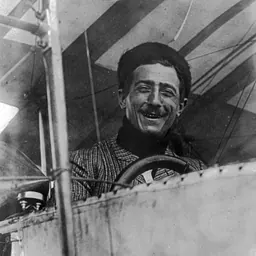
Related people
Same field, nearest in time


Contemporaries
People whose lives overlapped Enea Bossi, Sr.'s



Frequently asked questions
Who was Enea Bossi, Sr.?
Italian-American aerospace engineer and aviation pioneer
When was Enea Bossi, Sr. born?
Enea Bossi, Sr. was born on 29 March 1888 in Milan.
When did Enea Bossi, Sr. die?
Enea Bossi, Sr. died on 9 January 1963 in Dayton.
What was Enea Bossi, Sr.'s occupation?
Enea Bossi, Sr. was a military flight engineer, inventor and aircraft pilot.
What nationality was Enea Bossi, Sr.?
Enea Bossi, Sr. was American.
Sources & further reading
Cite this page
APA: Biography.guide. (2026). Enea Bossi, Sr.. https://biography.guide/enea-bossi-sr/
MLA: "Enea Bossi, Sr.." Biography.guide, https://biography.guide/enea-bossi-sr/.
Chicago: "Enea Bossi, Sr.." Biography.guide. https://biography.guide/enea-bossi-sr/.
Data last updated: 2026-09-23 · Spot an error? Report a correction.
Portrait: Wikimedia Commons · author & licence
Page generated 2026-09-27 05:07 UTC