
About Endre Fülei-Szántó
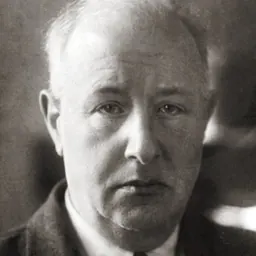
Lived 1924 – 1995 (aged 70). Endre Fülei-Szántó was a Hungarian linguist, philologist, university teacher, literary translator and textbook writer.
Endre Fülei-Szántó (September 28, 1924 – January 16, 1995) was a Hungarian linguist, author and professor.
Biography
His father Endre Fülei-Szántó senior (1890–1958) was a lawyer, university professor and writer from Transylvania.
His grandfather was Lajos Fülei Szántó, a writer, poet, publicist. His great-grandfather was furrier, studied in Germany, then returned home to Székelyudvarhely (Odorheiu Secuiesc). His mother was a literary translator. Her parents were deported in 1951 and her father was imprisoned. From 1944 to 1945, he was a member of the resistance, doing increasingly desperate political work within the youth group of the Smallholders' Party. In 1948, he was arrested and transferred to the Hadik barracks (Budapest, Bartók Béla út 24–26). From 1945, the building became the headquarters of the Ministry of Defense, Military Policy Department (Katpol), which was under communist influence, and in the basement of the building cellar prisons were built. György Kardos was interrogated. He offered him either to apply for admission to the secret service and become an external collaborator, or, as he spent too much time at the French Institute, to be arrested as a spy. György Kardos encouraged him with the words: "I don't have much interest in you, but it's not impossible that you will be a useful external collaborator". Endre Fülei-Szántó signed the application to become an external collaborator and was released. He tried to escape to the West, but was caught. The Military High Court sentenced him to life imprisonment in the first instance and to ten years in the second instance.
Between 1948 and 1956, he served eight years in Váci prison. In March 1951, a new prisoner arrived at the prison, who was György Kardos and they got to know each other, and were prison mates for five years. He was put in the same cell with many others, from the defendants in the Rajk trial to veterans of the Spanish Civil War, which was how he learned Spanish. His Spanish teachers in prison were Pál Ignotus, József Hatvany, László Mátyás and Béla Szász. The many sufferings of prison could not change the basic traits of his personality: the young man with a sparkling mind, a great sense of humour, courage, who saw the goodness in everyone, wrote plays for the prison theatre, debated, thought and made friends with many of his fellow prisoners of the most diverse political parties.
After his release, Fülei-Szántó worked as an auxiliary worker for 6 years. In 1962, he was admitted to the Karl Marx University of Economics to teach language. He taught German, Spanish, French and English at the Language Institute of the Budapest University of Economics and Business. In 1965, he obtained a diploma as a secondary school teacher of Spanish and in 1983, a diploma as a secondary school teacher of English at Eötvös Loránd University. In 1971, he received the degree candidate of science. For a decade from 1966, he was the director of the Debrecen Summer University, where he directed the study of Hungarian for foreigners. The product of these experiences was his five-volume book: Hungarian Language for Foreigners (Volumes I-V, TIT, Budapest, 1972). The Hungarian Language and Culture, 1972, "Hungarian for Foreigners", 1972-V. He and his colleagues taught Hungarian to Finns, Russians, Koreans, Venezuelans, English, Germans and people from twenty other countries from all over the world.
Notable works
Theory of Teaching Material and Modern Teaching Materials In: Modern Linguistics and Language Teaching (International Conference Bp., 1–5 April 1971): 77–87, Akadémiai Kiadó, Bp. 1975. „Impositive sentences in Spanish. Theory and description in linguistic pragmatics". Henk Haverkate, Amsterdam: North-Holland Publishing Company, 1979. Speculative grammars of the Middle Ages. The doctrine of Partes orationis of the Modistae by Bursill-Hall, G. L. Publication date 1972. Fülei-Szántó Endre. 246–255. ”Congressus internationalis Fenno-Ugristarum "Congressus internationalis Fenno-Ugristarum" Tractationes participantium Hungarorum sectiorum linguisticarum Congressus VI. internationalis Fenno-Ugristarum "Tractationes participantium Hungarorum sectiorum linguisticarum Congressus VI. internationalis Fenno-Ugristarum" Budapest. Akadémiai Kiadó., 1984. Just, Economica, Linguistica In: Sprache und Information (Wirtschaft) Attikon Verlag (Hrg.: Theo Bungarten) Hamburg, 1988. Fortress in captivity: the psychological adventures of a visiting teacher in the Balkans. Pécs Baranya M. Kvt., (Pécs Molnár) 1993). (in Hungarian Model S - O (strukture–operacije) In: Aktivne metode i moderna pomogala u nastavi dstranih jezika (511–518.) Zagreb 1971. Ein Versuch der logischen und grammatischen Beschreibung der Modalitaten in einigen Sprachen In: Papers from the International Symposium on Applied Contrasive Linguistics (141–157.) Stuttgart 1971. Modern Linguistics and up-tu-date Teaching Materials (Társszerző Hegedűs József) In: FIPLV–TIT Kongresszus, 1971. április 3.) Der Zusammengesetzte Satz im Lehrmaterial In: Iral-Sonderband (207–214.) Heidelberg 1972. La gramática generativa y la enseńanza del espańol In: Boletin de AEPE No. 8. Madrid 1973. Generative Grammar and Teaching Materials In: Comenius Emlékkönyv Bratislava 1973. Oraciones nucleares en alemán, inglés, espańol y húngaro YELMO – Rev. del profesor de espańol 1973. No. 14. Madrid 1973. In: Actas del internacional de Estudios Hispánicos (277–283.) Bp. 1976. Grundstrukturen der kommunikativen Situationen In: Kommunikative und funktionale Sprachbetrachtung (162–168.) Halle, 1978. Interjektionen als kommunikative Einheiten In: Kommunikative–funktionale Sprachbetrachtung, Band 1. (87–91.) Halle 1981. Die Spieltheorie und ihre Besichtigung bei der Stoffauswahl für die sprachliche Ausbildung ausländisher Geraminstikstudenten In: Sammelband Herder Institut (35–40.) Leipzig, 1982. Soma Modal Values in Hungarian In: Nyelvtudományi Közlemények 87. 1984. 2. (331–336.) Bp. 1984. Plurilingua – Gegenwärtige Tendenzen der Kontaktlinguistik, Dümmler, Bonn 1983. – Könyvismertetés In: Germanistische Mitteilungen, Brüssel 19. 1984 (93–95.) On Modal Auxiliaries In: Nyelvtudományi Közlemények 1986. 2. (332–337.) Bp. 1986. Typological Aspects of Auxiliary Verbs In: Proceedings of the 14 International Congress of Linguistics (2361–2363.) Berlin 1987. Just, Economica, Linguistica In: Sprache und Information (= Wirtschaft) (295–306.) Attikon Verlag (Hrg.: Theo Bungarten) Hamburg 1988. Un unavoidable "seme" (meaning-element) in Componential Analysis In: Revue de Linguistique Roumaine C.I.T.A. XXVI. 1. (33–43.) Bukarest 1988. There Ranks of Action-guiding Rules in Natural Languages In: Revue de Linguistique Roumaine 1988. Tom. XXXIII. N.5. (Sept.–oct.) Bukarest 1988. Trans-, anti- und meta- (Philosophische Prefixe der Bedeutungsschaffung in der Dichtung von Paul Celan) In: Neue Literatur, Zeitschrift des Schriftstellerverbandes der Republik Rumänien, 1988. Nr. 6. (56–58.) Bukarest 1988. A verbális érintés. MTA Nyelvtudományi Intézete. Linguistica, Series C. Relationes 7. 1994. AKJournals DOI
Don’t just read it —
keep it.
Full-length biographies made to live with: read them, listen on the way to work, watch them tonight.
- E-book
- Audio
- Video
Instant download · yours to keep · every purchase keeps this site free
Important facts
People in Endre Fülei-Szántó's life
Named in this biography and alive at the same time


Related people
Same field, nearest in time



Contemporaries
People whose lives overlapped Endre Fülei-Szántó's

Frequently asked questions
Who was Endre Fülei-Szántó?
linguist
When was Endre Fülei-Szántó born?
Endre Fülei-Szántó was born on 28 September 1924 in Budapest.
When did Endre Fülei-Szántó die?
Endre Fülei-Szántó died on 16 January 1995 in Pécs.
What was Endre Fülei-Szántó's occupation?
Endre Fülei-Szántó was a linguist, philologist, university teacher, literary translator and textbook writer.
What nationality was Endre Fülei-Szántó?
Endre Fülei-Szántó was Hungarian.
Sources & further reading
· Wikipedia: Endre Fülei-Szántó
Cite this page
APA: Biography.guide. (2026). Endre Fülei-Szántó. https://biography.guide/endre-fulei-szanto/
MLA: "Endre Fülei-Szántó." Biography.guide, https://biography.guide/endre-fulei-szanto/.
Chicago: "Endre Fülei-Szántó." Biography.guide. https://biography.guide/endre-fulei-szanto/.
Data last updated: 2026-09-20 · Spot an error? Report a correction.
Page generated 2026-09-27 05:28 UTC