
Empress Cao
Later Tang empress in China
About Empress Cao
Lived 801 – 937.
Empress Cao (曹皇后, personal name unknown) (died January 11, 937 ), formally Empress Hewuxian (和武憲皇后), was an empress of the Chinese Five Dynasties and Ten Kingdoms Period state Later Tang. Her husband was Later Tang's second emperor Li Siyuan (Emperor Mingzong), and she was empress dowager during the subsequent reigns of his son Li Conghou (Emperor Min) and adoptive son Li Congke. Eventually, when her son-in-law Shi Jingtang rebelled against Li Congke, establishing his own Later Jin and attacked the Later Tang capital Luoyang, she died in a mass suicide with Li Congke, his family, and some officers.
Background It is not known when the future Empress Cao was born — indeed, virtually nothing was known about her background even by the time of the next succeeding united Chinese dynasty, Song Dynasty, as the Song author of the New History of the Five Dynasties, Ouyang Xiu, indicated. It is further unclear how she became the wife — or one of multiple wives — of Li Siyuan's, or whether two other wives or concubines of his, Lady Xia (the mother of his sons Li Congrong and Li Conghou) and Lady Wei (the mother of his adoptive son Li Congke, who was fathered by Lady Wei's original husband, named Wang), were considered of coequal status with her or not. It appeared that she had no son, but had at least one daughter, the future Princess of Wei, then of Jin, who married Li Siyuan's subordinate officer Shi Jingtang. Sometime during the reign of Li Siyuan's adoptive brother and predecessor Li Cunxu, Lady Cao, as Li Siyuan's wife, was created the Lady of Chu. After Lady Xia's death, Li Siyuan also took a Lady Wang as a concubine, and Lady Wang became his favorite, as Lady Cao was described to favor the simple life.
As imperial consort and empress Li Cunxu was killed in a mutiny at the capital Luoyang in 926, and Li Siyuan subsequently claimed imperial title. Either that year (as stated by the New History of the Five Dynasties) which otherwise lacked biographical information for her in its biographies for Later Tang empresses ), she was given the imperial consort title Shufei (淑妃). (According to the History of the Five Dynasties, Lady Wang, who then carried the title of the Lady of Han, was given the lesser consort title of Defei (德妃) at the same time.) Consort Wang served both Li Siyuan and Empress Cao carefully, such that Empress Cao and Consort Wang became very close.
Shortly after, Li Conghou's chiefs of staff (shumishi) Zhu Hongzhao and Feng Yun, apprehensive of the powers that Shi Jingtang (who was then the military governor (Jiedushi) of Hedong Circuit (河東, headquartered in modern Taiyuan, Shanxi)) and Li Congke (who was then the military governor of Fengxiang Circuit (鳳翔, headquartered in modern Baoji, Shaanxi)) had (as Shi and Li Congke had both been long-time generals under Li Siyuan and were respected by the army), decided to move them to prevent them from being entrenched. They also wanted to summon their ally, the eunuch Meng Hanqiong, who was then temporarily overseeing the governance of Tianxiong Circuit (天雄, headquartered in modern Handan, Hebei), back to Luoyang. They therefore issued a series of orders (without an imperial edict) transferring Li Congke to Hedong, Shi to Chengde Circuit (成德, headquartered in modern Shijiazhuang, Hebei), and Chengde's military governor Fan Yanguang to Tianxiong. However, at that time, many generals who were transferred met ill fates, and Li Congke feared that these actions were intended against him. He thus rebelled, and the army that Li Conghou sent against him, under command of the general Wang Sitong, turned against Wang and surrendered to Li Congke. Li Congke marched on Luoyang, and Li Conghou fled the capital. In the emperor's absence, the officials turned to Empress Dowager Cao, who subsequently issued edicts deposing Li Conghou and declaring Li Congke regent, and then emperor. Li Conghou was subsequently killed in flight — as Shi, who was initially intending to support him against Li Congke, also turned against him when he saw how little support Li Conghou had by that point, killed all of his remaining guards and leaving him unable to fend for himself when Li Congke subsequently sent emissaries to kill him. Empress Dowager Cao continued to be empress dowager.
Li Congke also intensely disliked his cousins Li Congzhang (李從璋) the Prince of Yang and Li Congmin (李從敏) the Prince of Jing, for their brashness and corruption, and particularly because Li Congmin had participated in the killing of Li Congke's son Li Chongji (李重吉) (at Li Conghou's order, during Li Congke's rebellion against Li Conghou), and so had them removed from their military governor posts and had them reside at Luoyang. In 934, at a feast that Li Congke held for the imperial clan, in the middle of the feast, Li Congke suddenly turned to Li Congzhang and Li Congmin, stating to them, "What kind of things are you two, that you get to occupy important circuits repeatedly?" They became very fearful. Empress Dowager Cao, apparently to save them, stated to them, "The Emperor is drunk. Leave now!"
In 936, Shi, after Li Congke issued an edict transferring him to Tianping Circuit (天平, headquartered in modern Tai'an, Shandong), rebelled, and, allying with the Khitan Empire's Emperor Taizong, defeated the Later Tang troops that Li Congke sent against him. He then marched toward Luoyang. Believing that defeat was inevitable, Li Congke gathered his family members, including Empress Dowager Cao, and a group of officers still loyal to him, to commit suicide by fire. Consort Dowager Wang tried to persuade Empress Dowager Cao not to participate in the mass suicide — noting to her that Shi was her son-in-law. Empress Dowager Cao rejected her overture, stating:
Consort Dowager Wang and her adoptive son Li Congyi the Prince of Xu, as well as Li Congyi's younger sister, thus hid at a polo field and did not participate in the mass suicide, but Empress Dowager Cao joined and died in the mass suicide. In 940, Shi gave her a posthumous name and buried her pursuant to the ceremonies due an empress.
Notes and references
History of the Five Dynasties, vol. 49. New History of the Five Dynasties, vol. 15. Zizhi Tongjian, vols. 277, 278, 279, 280.
Don’t just read it —
keep it.
Full-length biographies made to live with: read them, listen on the way to work, watch them tonight.
- E-book
- Audio
- Video
Instant download · yours to keep · every purchase keeps this site free
Important facts
People in Empress Cao's life
Named in this biography and alive at the same time

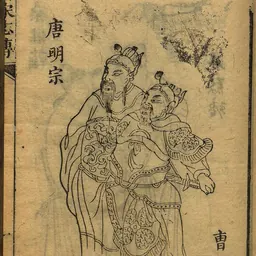



Contemporaries
People whose lives overlapped Empress Cao's


Frequently asked questions
Who was Empress Cao?
Later Tang empress in China
When was Empress Cao born?
Empress Cao was born in 801.
When did Empress Cao die?
Empress Cao died in 937.
Sources & further reading
· DBpedia: Empress Cao (Li Siyuan's wife)
Cite this page
APA: Biography.guide. (2026). Empress Cao. https://biography.guide/empress-cao-0801/
MLA: "Empress Cao." Biography.guide, https://biography.guide/empress-cao-0801/.
Chicago: "Empress Cao." Biography.guide. https://biography.guide/empress-cao-0801/.
Data last updated: 2026-09-20 · Spot an error? Report a correction.
Page generated 2026-09-27 05:11 UTC