
About Emmanuel Rougier
Lived 1864 – 1932 (aged 68). Emmanuel Rougier was a French missionary, businessperson and catholic priest.
Pierre Joseph Emmanuel Rougier (1864–1932), known as Emmanuel, was a French Catholic missionary priest, landowner and businessman in Fiji and Tahiti. He served as a priest in Fiji before embarking on business activities and amassing a fortune through his association with Gustave Cecille, a former French convict. Rougier bought Christmas Island (Kiritimati), the main atoll in Kiribati, and developed a coconut plantation there before later settling in Tahiti.
Early life Rougier was born on 26 August 1864 at La Chomette, a commune in the arrondissement of Brioude in the Auvergne region of France, to Benoît Rougier and Louise or Marie-Louise . In 1872 the Rougiers bought the Château des Isles at Lavaudieu, where Rougier enjoyed a pleasant childhood. Rougier was taught at home by his mother, then sent for six years to La Chartreuse, Le Puy before higher education at Riom and St. Chamond. He spent two years on divinity studies under the Sulpicians at Le Puy, and studied for two years in England and Spain. The arrival of the Catholics was seen as competition by the Methodist missionaries already in Fiji.
Naililili, Fiji Posted to the Rewa Catholic mission station at Naililili on the Rewa River delta, Rougier oversaw the construction of solid concrete buildings in 1895. A presbytery was built in 1896 and a convent in 1897. Rougier opened a school at Naililili in 1899, staffed by Marist brothers, where Fijian boys could learn English: at that time, Methodist mission schools only taught reading and writing in Fijian. The school proved popular, even with Methodist families. In connection with the conversions, Rougier was also accused of publicly burning hundreds of Methodist bibles at Naililili, but he stated that Catholic sisters at the mission had privately cremated Catholic linens and a kerosene tin full of old Methodist bibles, as it was Catholic practice to burn sacred items that were "worn out and useless". He said that Methodist bibles in good condition had not been burned. The mass conversion and rumours about the bible-burning earned Rougier the nickname "Poacher Rougier"
In the early 1900s, Rougier designed and supervised the building of a large church at Naililili, which was opened and consecrated by Bishop Vidal at Easter in 1905. The church had two towers at the front. It was long and wide and could seat over 800 people.
Bau, Fiji The district of Bau, led by Ratu Seru Cakobau, was considered the seat of Methodism in Fiji. Although Methodist missionaries protested to Ratu Kadavulevu, grandson of King Cakobau, A local teacher named Pierre was left in charge at Bau but failed to convert local people to Catholicism. Rougier was unavailable to help much because he was too often absent on other business, having by this time obtained access to the fortune of Gustave Cecille. Cecille said that he been serving a sentence at the French penal colony at New Caledonia, but had escaped in a small boat. Rougier was sympathetic and Cecille began working for him. Cecille remained in Fiji and married a local woman, Katarina Biaukula (also known as Katherine), in November 1906, with Rougier performing the ceremony. At some stage Cecille had disclosed that he came from a wealthy family and that there was a fortune waiting for him in trust in France. He did not want to return to France, and told Rougier that if he could effect a pardon for Cecille, he could have Cecille's fortune and Cecille would keep just an annuity. He sold all his assets in Fiji and moved to Fanning Island in August 1909. Rougier bought Fanning Island and Washington Island (now known as Teraina) from Greig's son George Greig for £25,000 in a complicated deal in November 1907.
Rougier minted his own aluminium one-dollar coins for use on Fanning and Washington Islands.
In October 1911, Rougier sold both islands to a Canadian syndicate for £70,000 . He then charted a schooner, Luka, to take himself and an inspector representing the purchaser from Honolulu to Fanning Island. Captain Frederick C Miller was master of the Luka. He took Rougier to court in May 1913, stating that he was owed commission on the sale of Fanning Island. Rougier had also made overtures to the Japanese government, suggesting that Fanning Island would be a good base for Japanese navy vessels. He published his findings in 1914 and 1917.
Rougier planted coconut trees on Christmas Island and leased the island from Levers Pacific Plantation Limited for 99 years.
In 1916, Rougier traveled to San Francisco with his niece and her companion. Traveling to Victoria, British Columbia, he bought a schooner, the Ysabel May. The schooner had been built in Lunenburg, Nova Scotia, in 1910, to hunt fur seals. Relocating to Victoria, the sealing industry declined, and the Ysabel May had had been laid up indefinitely. Once sold and re-outfitted, the schooner was loaded with supplies in Victoria and Oakland, California, with stores and supplies for life on Christmas Island, including two Model-T Fords.
In 1916 Rougier designed his own Christmas Island postage stamp. Printed in San Francisco, it portrays the Ysabel May approaching Christmas Island. The stamp was not recognized by the Universal Postal Union and was never valid for postage, but it was and is sought after by philatelists. The three men were starving and half-mad due to their privations. The men did not know that the war was over, and met the men of the New Zealand with a revolver, thinking they were German. A possible reason for the men being left alone on the island for so long is the 1918 influenza pandemic. The pandemic reached Tahiti on 16 November 1918 on the ship Navua, and within weeks up to 25% of the population of Tahiti had died.
Rougier was known for his full beard, described by Joe English: "I have never seen any one in the world with a beard like Rougier's, a vast, billowy mass of black hair, streaked with gray. It resembled a mass of seaweed flowing down to his waist, and the white in it was like drifting sea foam". As he aged, Rougier's beard turned white and earned him the nickname 'Santa Claus'. He was also known as 'The King of Christmas Island'.
In 1925, when Rougier was in bad health, he entrusted the administration of Christmas Island to his nephew Paul-Emmanuel Rougier.
In 1929, Rougier bought the schooner Fisherman from American author Zane Grey, renaming it the Marechal Foch. While Rougier owned it, Marechal Foch was used as a rum-runner, taking alcohol from Tahiti to mother ships on Rum Row at Cape Colnett in California during the Prohibition Era in the United States. It could carry about 15,000 cases of alcohol.
Personal life Rougier was interested in ethnography and was one of the founding members and fourth president of the Société des Études Océaniennes (Society of Oceanian Studies) which was established in Tahiti in 1917.
From 1916, the heirs of Gustave Cecille attempted unsuccessfully to sue Rougier for Cecille's fortune.
There were rumours about the relationship between Rougier and Katarina, the wife of Gustave Cecille, who stayed with Rougier after Gustave Cecille left her in 1907 to return to France. They stated that though Rougier had ceased to be a missionary, he remained a priest till the end of his life. The woman that the journalist had met and assumed was Rougier's daughter was actually his niece.
Don’t just read it —
keep it.
Full-length biographies made to live with: read them, listen on the way to work, watch them tonight.
- E-book
- Audio
- Video
Instant download · yours to keep · every purchase keeps this site free
Important facts
People in Emmanuel Rougier's life
Named in this biography and alive at the same time



Related people
Same field, nearest in time


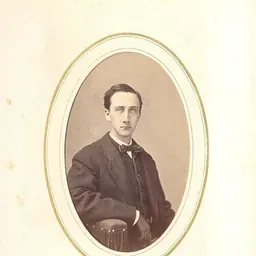
Contemporaries
People whose lives overlapped Emmanuel Rougier's


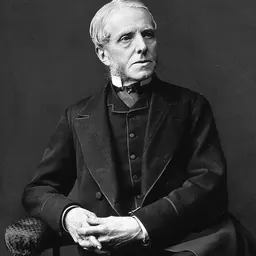


Frequently asked questions
Who was Emmanuel Rougier?
French missionary (1864-1932)
When was Emmanuel Rougier born?
Emmanuel Rougier was born on 26 August 1864 in La Chomette.
When did Emmanuel Rougier die?
Emmanuel Rougier died on 16 December 1932 in Tahiti.
What was Emmanuel Rougier's occupation?
Emmanuel Rougier was a missionary, businessperson and catholic priest.
What nationality was Emmanuel Rougier?
Emmanuel Rougier was French.
Sources & further reading
Cite this page
APA: Biography.guide. (2026). Emmanuel Rougier. https://biography.guide/emmanuel-rougier/
MLA: "Emmanuel Rougier." Biography.guide, https://biography.guide/emmanuel-rougier/.
Chicago: "Emmanuel Rougier." Biography.guide. https://biography.guide/emmanuel-rougier/.
Data last updated: 2026-09-20 · Spot an error? Report a correction.
Page generated 2026-09-27 05:07 UTC