
About Emirgûneoğlu Yusuf Pasha
Lived 1605 – 1641 (aged 36). Emirgûneoğlu Yusuf Pasha was a Turkish statesperson.
Tahmaspqoli Khan Qajar and later Emirgûneoğlu Yusuf Paşa was a Safavid official, governor of Chokhur-e Sa'd region (Erivan province) of Safavid Empire from Qajar tribe. He was a son and successor of Amir-Guna Khan Qajar. His tenure saw the fall of the region to Ottoman sultan Murad IV.
Life He was born to the family of Amir-Guna Khan Qajar, governor of Chokhur-e Sa'd region. His uncle Husain Quli beg (d. 1609/1610) was head of Safavid cannon corps, while his other uncle Alpan beg was leading a group of musketeers. According to Zakaria of Kanaker, he had "a handsome appearance, large eyes, thin eyebrows, a broad forehead, broad shoulders, a small mouth and small teeth, was pleasant in conversation and sweet-tongued, fair and just, truth-loving and impartial."
Under Safavid Empire According to Arakel of Tabriz, he was tasked by Shah Abbas to transfer Etchmiadzin Cathedral to Isfahan's New Julfa in 1615. Apparently he became a keeper of seal of Abbas but was returned to Erivan as acting beylerbey following the mortal injury of his father in 1625 during Battle of Marabda. Meanwhile, using the opportunity, Kurdish chiefs in Ottoman territory raided the Sharur valley. Reportedly incapable Amir-Guna recalled his son to defend territories, who managed to repel the attack. At the same time, he managed to repel an Ottoman attack near Karbi. This story is also corraborated by Isgandar beg Munshi. Zakaria later retells a rumor about Tahmasp killing his father: "Some say he strangled him with a rope, others claim he pressed a pillow to his face and sat on him until he suffocated. Yet others argue that Amir-Guna Khan died of his wounds, as doctors failed to heal him—despite applying numerous remedies, his wound worsened until he died in agony." However, he accepts that patricide story is doubtful. According to Arakel however, Tahmasp was still at Shah's court at the time of his death.
According to Zakaria, when Murad IV decided to march on Erivan, new Safavid shah Safi I ordered Rustam Khan Saakadze to counter the attack with capture of Van. He summonded Tahmaspqoli to join him but the khan refused, arguing that leaving his post would make the border vulnerable. Unable to take Van, Rostam complained about Tahmaspqoli to Safi, who ignored the complaint. However, according to Turkish sources, he launched an attack against the Kurdish Mahmudi tribe with an army of 10,000 men. Then, after capturing a lot of booty and prisoners towards Adilcevaz, he arrived around Khoy.
Jean-Baptiste Tavernier, who traveled to Safavid Iran alongside Johann Rudolf Stadler, recounted that Tahmaspqoli Khan received them with great enthusiasm. The Khan remarked that Stadler was the first watchmaker to ever set foot in the Safavid realm. Eager to test his skills, the Khan asked Stadler to repair a watch he had acquired from a merchant. However, Stadler never had the opportunity to complete the task, as the Khan constantly invited them to lavish banquets, leaving little time for work.
Ottoman invasion Zakaria reported Tahmaspqoli was sent against Teimuraz I sometime later, which must happened in 1633 when Rustam Khan Saakadze was campaigning to appoint Rostom of Kartli as new vassal. Using the opportunity, Ottoman army invaded Shirak and Nig regions, entering Kotayk and besieging Yeghvard. However Ottomans retreated to Kars as soon as Tahmaspqoli returned. Tahmaspqoli ordered Armenian recruits to ambush the Ottoman soldiers near the banks of the Arpa River. Kurdish emirs Bahaeddin and Muhammed Bey Mahmudi were wounded in this battle. Zakaria claims that reason for Murad IV's march on Erivan was that Tahmaspqoli's Armenian spy was compromised by a khan's steward Murad Agha who was loyal to Ottomans. Zakaria claims that Murad Agha secretly wrote a letter on Tahmaspqoli's name, declaring his allegiance to the Sultan, as well as inviting him to invade.
Murad IV's army left Constantinople on 16 March 1635 and reached outskirts of Erivan on 26 July 1635. Meanwhile Erivan was reinforced by 12,000 Mazanderani muskeeters led by Sadiq b. Mir-Fattah. Tahmaspqoli's soldiers almost killed Murad IV's with a cannon attack on the first day. Castle came under heavy cannon fire commanded by Canpolatoğlu Mustafa Pasha (governor of Rumeli and a nephew of Ali Janbulad), Gazi Hüseyin Pasha and Küçük Ahmed Pasha (governor of Aleppo) on 29 July. After a long siege, Tahmaspqoli sent his subordinate Khizir beg on 5 August to ask for 6 day ceasefire to surrender - an offer Murad refused. Sultan counter offered only one day and asked for Tahmaspqoli to personally surrender. Tahmaspqoli sent Murad Agha to negotiate the next day, himself meeting the sultan on 7 August and personally surrendering. According to official chronology of the Sultan written by an anonymous author, he was accompanied by Nowruz Sultan, Murad Agha, Muhammad Emin, Khizir Beg and Bozjalu Sultan, Reportedly Murad IV, often visited his mansion and spent some nights there during his illness. Evliya Çelebi met both the sultan and him on 6 March 1636 and thought of him as a drunkard. Contarini reported on 1 February 1640 that they drank so much that had to be carried away.
After his death on 8 February 1640, Tahmaspqoli's position came under question. Zakaria of Kanaker claimed that Tahmaspqoli wished to return to Iran and even penned a request to the Shah. According to his narrative, Rustam Khan Saakadze seeing him as a rival, requested Kemankeş Kara Mustafa Pasha to murder him. According to Turkish sources, a Safavid envoy named Ibrahim Khan of Mughan arrived in Constantinople on 14 July 1641 and asked for extradition of Tahmaspqoli. Reportedly, Sultan Ibrahim was enraged and declared that if "a man who does not appreciate the generosity of our empire has no reason to live!"
Tahmaspqoli was reportedly executed and buried in Izmit on July 17 according to Mustafa Naima, but a Ragusan doctor named Francesco Crasso reported his death date as 7 September 1641:
In popular culture In the Turkish TV series Magnificent Century Kösem, Emir Güne is portrayed by actor Eser Karabil.
Don’t just read it —
keep it.
Full-length biographies made to live with: read them, listen on the way to work, watch them tonight.
- E-book
- Audio
- Video
Instant download · yours to keep · every purchase keeps this site free
Important facts
People in Emirgûneoğlu Yusuf Pasha's life
Named in this biography and alive at the same time


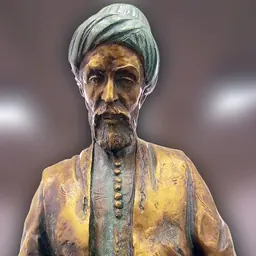
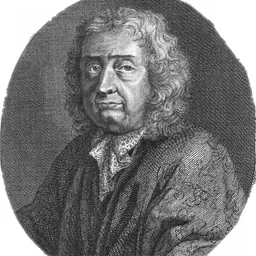
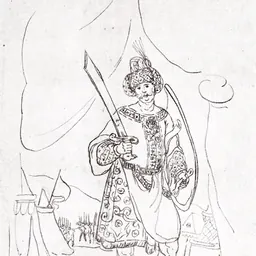


Related people
Same field, nearest in time
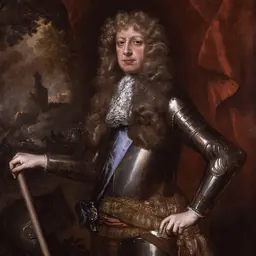


Contemporaries
People whose lives overlapped Emirgûneoğlu Yusuf Pasha's

Frequently asked questions
Who was Emirgûneoğlu Yusuf Pasha?
Turkish statesperson (1605–1641)
When was Emirgûneoğlu Yusuf Pasha born?
Emirgûneoğlu Yusuf Pasha was born on 28 January 1605 in Yerevan.
When did Emirgûneoğlu Yusuf Pasha die?
Emirgûneoğlu Yusuf Pasha died on 17 June 1641 in İzmit.
What was Emirgûneoğlu Yusuf Pasha's occupation?
Emirgûneoğlu Yusuf Pasha was a statesperson.
What nationality was Emirgûneoğlu Yusuf Pasha?
Emirgûneoğlu Yusuf Pasha was Turkish.
Sources & further reading
· Wikipedia: Emirgûneoğlu Yusuf Pasha
· DBpedia: Tahmaspqoli Khan Qajar
Cite this page
APA: Biography.guide. (2026). Emirgûneoğlu Yusuf Pasha. https://biography.guide/emirguneoglu-yusuf-pasha/
MLA: "Emirgûneoğlu Yusuf Pasha." Biography.guide, https://biography.guide/emirguneoglu-yusuf-pasha/.
Chicago: "Emirgûneoğlu Yusuf Pasha." Biography.guide. https://biography.guide/emirguneoglu-yusuf-pasha/.
Data last updated: 2026-09-20 · Spot an error? Report a correction.
Page generated 2026-09-27 05:03 UTC