
About Emilio Pujol
Lived 1886 – 1980 (aged 94). Emilio Pujol was a Spanish composer, music educator, musicologist, university teacher, classical guitarist and music arranger.
Emilio Pujol Vilarrubí (or Emili; 7 April 1886 – 15 November 1980) was a Spanish composer, guitarist and a leading teacher of the classical guitar.
Biography Emili Pujol was born in the little village of Granadella just outside Lleida, Spain. He began his studies with Francisco Tárrega in 1902, when he was sixteen years of age. At this time, Miguel Llobet was making his debut as a concert artist outside Barcelona. Pujol fondly remembered his first encounter with Tárrega and in his biography of his teacher, he described his mestre in very endearing, romantic terms.
During the war years 1914–1918 he did not travel much and mainly remained in Catalonia. In 1918 he undertook his first tour of South America, starting in Buenos Aires. The only major interruptions in his concert travels were his marriage to Matilde Cuervas in Paris, an Andalusian flamenco guitarist, and the period of time he devoted to historical research in Paris into the instrumental predecessors of the guitar. During this period he partnered with the publisher Max Eschig in publishing his "Bibliothèque de musique ancienne et moderne pour guitare" (from 1927), resulting in numerous works for solo guitar by historical and contemporary composers. The beginning signs of World War II also prevented him from continuing his concert career.
From 1935 through 1940, Pujol continued giving a few concerts and lectures as well as pursuing his research in Spain, London and Paris. By 1941 he was back in Spain to the end of his life, and he started preparing the volume covering the composer for vihuela, Luis de Narváez, for the series Monumentos de la Música Española (vol. III). The volume was eventually followed by volumes covering Alonso Mudarra (1949) and Valderrábano (1963). Prior to his death, Pujol had begun work on the largest of vihuela music books, the Orphenica Lyra by Miguel Fuenllana, published in 1554. He considered this book to be the pinnacle of the vihuela school and regarded Fuenllana as the final spokesman for this brief, courtly instrumental period in Spanish music.
In 1946, Pujol began his guitar classes at the Lisbon Conservatory of Music, which continued through to 1969. During this period he was involved in giving master classes (in 1953 he was personally invited by Andrés Segovia to give classes at the Accademia Musicale Chigiana) and adjudicating at guitar competitions. Notable students included Héctor García, Maria Luisa Anido and Miguel Ablóniz. Also at this time, Pujol's first wife Matilde Cuervas died (1956). Seven years later he married Maria Adelaide Robert, a noted Portuguese pianist and singer who greatly assisted him in his final years.
Beginning in the summer of 1965, Pujol launched his International Courses of Guitar, Lute and Vihuela in the city of Lleida, Spain. This event became quite popular and was attended by students and teachers from throughout the world. It was repeated every summer over a ten-year period, and in 1969 it was moved to the thirteenth-century village of Cervera.
His words on Tárrega's School of Guitar are also applicable to his own spirit, which constantly strived to "resolving in advance all the problems, which can arise out of the diverse elements which contribute to the performance of a work: instrument, hands and spirit."
Prominent students Alberto Ponce Pieter van der Staak Hopkinson Smith Giuliano Balestra Carles Trepat Armando Marrosu Hector Garcia Ned Sublette Manuel Cubedo (guitarist)
Selected list of compositions
Original compositions 124 original compositions (Joan Riera)
?? Escuela Razonada de la Guitarra Vol I-IV El Abejorro Ondinas Canción de Cuna Barcarolle Cubana Impromptu Piezas Españolas Pieza nº 2 (Guajira o Evocación Cubana) Pieza nº 3 (Tango Español) Preludios Scottish Madrileño Sevilla Danzas Españolas Tango Tonadilla Guajira La Libelula Etude Romantico Variations on a theme by Aguado Etude Romantico Festivola
Solo guitar (ME numbers refer to the catalogue number of his publisher, Max Eschig, Paris)
ME 7899 Aquelarre (Danse des sorcières - 1969) Pujol n°1246 ME 7028 Atardecer (Crépuscule) Pujol n°1229 ME 7238 Barcarolle Pujol n°1235 ME 7580 Becqueriana (Endecha) Pujol n°1240 ME 3130 Cancion de Cuna (Berceuse) Pujol n°1203 ME 7884 Canto de Otono (Chant d’automne) Pujol n°1245 ME 7939 Cap i Cua (Variation désuète sur l’exercice 19 d’Aguado) Pujol n°1248 ME 7848 Caprice varié sur un thème d’Aguado Pujol n°1242 ME 7541 Endecha a la Amada Ausente Pujol n°1238 ME 2186 Étude n°1 Pujol n°1200 ME 2187 Étude n°2 Pujol n°1201 ME 2188 Étude n°3 Pujol n°1202 ME 3128 Exercices en formes d’études, 1. Cahier Pujol n°1221 ME 7847 2. Cahier Pujol n°1243 ME 2189 Impromptu Pujol n°1206 ME 7579 La Libelula Pujol n°1239 ME 2586-88 Trois Morceaux espagnols: 1. Tonadilla; 2. Tango; 3. Guajira Pujol n°1204 ME 3129 Pequena Romanza Pujol n°1222 ME 7885 Pizzicato Pujol n°1247 ME 7236 Deux Préludes Pujol n°1233 ME 7027 Rapsodie Valenciana Pujol n°1228 ME 2190 Sevilla (Evocation) Pujol n°1205 ME 7030 Triquilandia (Jugando al Escondite) Pujol n°1231 ME 7237 2e Triquilandia: 1. Œdipe et le Sphinx; 2. Variation; 3. Jeu; 4. La Plume de perdreau; 5. Branle bourguignon Pujol n°1234 ME 7533 3e Triquilandia: 1. Le Petit Grenadier; 2. Cantilène; 3. Valse Pujol n°1241, ME 7991 Triptyque campagnard (1971): 1. Aube; 2. Bucolique; 3. Fête Pujol n°1249 ME 7883 Variations sur un thème obsédant Pujol n°1244 ME 7029 Veneciana Pujol n°1230
Guitar duos ME 8046 Canaries (Canarios), air de danse populaire ancienne Pujol n°1415 ME 8081-01 Duet (étude) Pujol n°1417a ME 6942 Manola del Avapies (Tonadilla) Pujol n°1403 ME 7239 Ricercare Pujol n°1409 ME 8081 Tyrolienne (Tirolesa) Pujol n°1417b
Transcriptions 275 transcriptions (Juan Riera)
Guitar duo Francis Poulenc (1899–1963). Waltzes, arr from the piano Paris : Editions M. Eschig, c1970.
Discography
Recordings by Emilio Pujol Musique instrumentale espagnole au 16e siècle; Paris, France [ca 1936] Romances et villancicos espagnols du 16e siècle; Anthologie Sonore, Disque No.17, Paris, France Spanish Songs - Historical Live Recording Of The 1954 Madrid Recital (Rosa Barbany, soprano; Emilio Pujol vihuela) (EMEC Discos; E-050)
Compositions by Emilio Pujol Emilio Pujol : Intégrale, 3CD (complete recording of Pujol compositions by students of Alberto Ponce), France, 1999. Emilio Pujol. Works for guitar, by Claudio Marcotulli, 1 CD Dynamic, Italy, 2002 [Program notes and biographical notes in Italian, English, and French and German (19p., portrs). Contents: Seguidilla—Canción amatoria—Tango—Studio in si minore—Barcarolle—Romanza—Preludio romantico—Guajira—Homenaje a Tárrega—Ondinas—Canción de cuna—Manola del Avapies (tonadilla) -- El cant dels Ocels—Paisaje—Cubana—Studio romantico—Festivola—Scottish madrilène—Salve] Emili Pujol. Obres per a guitarra / Guitar Works, by Josep Antoni Chic, 1 CD Là mas de guido, Spain, 2003. Maria Ribera Gibal interpreta Emili Puijol, 1 CD Audiovisuals de Sarrià, Barcelona, Spain, 2018. Emilio Pujol. Estudios, by Frank Bungarten, 1 CD MDG, Germany, 2019 Emilio Pujol Guitar Duets, by Duo Imbesi Zangarà (players : Carmelo Imbesi and Carmen Zangarà), 1 CD Classical Music 3.0, 2023
Don’t just read it —
keep it.
Full-length biographies made to live with: read them, listen on the way to work, watch them tonight.
- E-book
- Audio
- Video
Instant download · yours to keep · every purchase keeps this site free
Important facts
People in Emilio Pujol's life
Named in this biography and alive at the same time





Related people
Same field, nearest in time


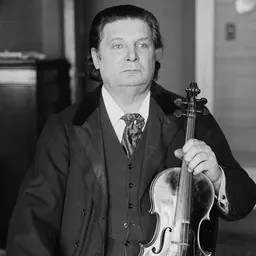
Contemporaries
People whose lives overlapped Emilio Pujol's
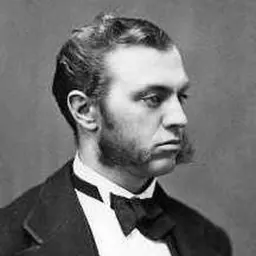




Frequently asked questions
Who was Emilio Pujol?
Catalan classical guitarist (1886–1980)
When was Emilio Pujol born?
Emilio Pujol was born on 10 September 1886 in La Granadella.
When did Emilio Pujol die?
Emilio Pujol died on 15 November 1980 in Barcelona.
What was Emilio Pujol's occupation?
Emilio Pujol was a composer, music educator, musicologist, university teacher, classical guitarist and music arranger.
What nationality was Emilio Pujol?
Emilio Pujol was Spanish.
Sources & further reading
Cite this page
APA: Biography.guide. (2026). Emilio Pujol. https://biography.guide/emilio-pujol/
MLA: "Emilio Pujol." Biography.guide, https://biography.guide/emilio-pujol/.
Chicago: "Emilio Pujol." Biography.guide. https://biography.guide/emilio-pujol/.
Data last updated: 2026-09-25 · Spot an error? Report a correction.
Page generated 2026-09-27 05:11 UTC