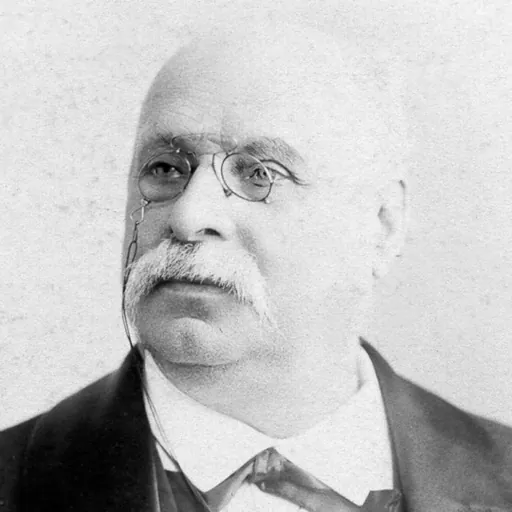
About Émile Waldteufel
Lived 1837 – 1915 (aged 77). Émile Waldteufel was a French conductor, composer, pianist, musicologist and musician.
Charles Émile Waldteufel (; ; ; 9 December 1837 – 12 February 1915) was a French composer, pianist, and conductor known for his numerous popular salon pieces. Among his best known works is "Les Patineurs", known as "The Skater's Waltz".
Life Waldteufel was born Charles Émile Lévy at 84 Grand'Rue in the centre of Strasbourg. From a Jewish Alsatian family of musicians, his grandfather, father, and two uncles were all dance musicians who had used the name "Waldteufel" (German for forest devil) professionally. His father, Lazare Levy, led a respected orchestra, and his brother Léon was a successful performer. When Léon won a place to study violin at the Conservatoire de Paris, the family followed him there. Waldteufel's mother Flora Neubauer, originally from Bavaria, had been a student of Hummel and had met Haydn; she was also a keen singer and dancer.
Waldteufel received his first lessons from his father and from the local musician Joseph Heyberger. After his arrival in Paris he could take classes from Laurent at the Conservatoire de Paris, followed by advanced studies under Marmontel. His appointment by Napoléon III as the musical director of the balls led him to participation in the events in Biarritz and Compiègne; at the latter he met many other musicians and artists and also accompanied the emperor playing the violin. A long-term contract with the London-based publisher Hopwood & Crew followed. Part of the company belonged to Charles Coote, director of the Coote & Tinney's Band, the first dance orchestra in London. Through these means, Waldteufel's music was performed at Buckingham Palace in front of Queen Victoria. Waldteufel was a major force in the music scene of London and became world-famous. During this period he composed his best known works, many of which are still heard today around the world. He became best known for the waltz "Les Patineurs" (The Ice Skaters), composed in 1882.
Waldteufel gave concerts in several European cities including London in 1885, Berlin in 1889 (where he enjoyed a friendly rivalry with Johann Strauss), and the Paris Opéra Balls in 1890 and 1891. He continued his career as conductor and composer of dance music for the presidential balls until retiring in 1899.
Waldteufel died at his home, 37 rue Saint-Georges in Paris, at the age of 77. He and his wife (who had died the year before) were buried in Père Lachaise.
Waldteufel composed at and for the piano (often for performance at court) before orchestrating many of the works. He conducted with a stick rather than the then-customary violin bow. The typical Waldteufel orchestra consisted of strings and a doubled woodwind section, two cornets, four horns, three trombones, and ophicleide or euphonium, along with percussion. Waldteufel's music can be distinguished from Johann Strauss II's waltzes and polkas in that he used subtle harmonies and gentle phrases, unlike Strauss's more robust approach.
A biography of the Waldteufel family by Andrew Lamb (Skaters' Waltz: The Story of the Waldteufels) was published in 1995.
His waltz Dolorès, Op. 170 (1880) was the basis for the Russian romance Honey, do you hear me .
Works (with opus number)
Kamiesch, march, Op. 5 Myosotis, waltz (Vergissmeinnicht), Op. 101 Jean qui pleure et Jean qui rit, polka burlesque, Op. 106 Bella, polka-mazurka, Op. 113 (1867) Dans les bois, polka-mazurka, Op. 119 Les Lointains, waltz, Op. 121 Mellow Waltz, Op. 123 (1866) Carolinen, polka, Op. 124 Dans les champs, polka-mazurka, Op. 125 (1868) Madeleine, waltz, Op. 126 Desirée, polka-mazurka, Op. 132 Térésa (also Antoinette), waltz, Op. 133 (1864) Joujou-Polka, Op. 135 Manolo, waltz, Op. 140 (1874?) Roses et marguerites, waltz, Op. 141 Tout à vous, waltz, Op. 142 (1875) Bien-aimés Waltz, Op. 143 (1875) Entre nous Waltz, Op. 144 (1876) Flots de joie, waltz, Op. 145 (1875) Grand vitesse, galop, Op. 146 (1876) Violettes waltz, Op. 148 (1876) Au revoir, waltz, Op.149 (1876) A toi, waltz, Op. 150 Mon rêve, waltz, Op. 151 (1877) Prestissimo, galop, Op. 152 (1877) Hommage aux dames, waltz, Op. 153 Les Sirènes, waltz, Op. 154 (1878) Pomona Waltz, Op. 155 (1877) Toujours ou jamais, waltz, Op. 156 (1877) Les Folies, polka, Op. 157 (1878) Très jolie, waltz, Op. 159 (1878) Pluie de diamants, waltz, Op. 160 (1879) La Berceuse, waltz, Op. 161 Brune ou blonde, waltz, Op. 162 (1878) Bonne bouche (also Bella bocca), polka, Op. 163 (1879) Gaîté waltz, Op. 164 (1878) Ma charmante waltz, Op. 166 (1879) Autres fois, waltz, Op. 167 Minuit, polka, Op. 168 Toujours fidèle, waltz, Op. 169 (1879) Dolores Waltz, Op. 170 (1880) Chantilly, waltz, Op. 171 (1880) Solitude, waltz, Op. 174 (1881) Jeunesse dorée, waltz, Op. 175 (1881) Je t'aime, waltz, Op. 177 (1882) La Barcarolle, waltz, Op. 178 (1882) Naples, waltz, Op. 179 La Source, waltz, Op. 180 (1882) Trictrac, polka, Op. 181 L'Esprit français, polka, Op. 182 (1882) Les Patineurs, waltz, Op. 183 (1882) Mariana, waltz, Op. 185 Les Sourires, waltz, Op. 187 (1883) Soirée d'été, waltz, Op. 188 (1883) En Garde!, polka militaire, Op. 189 Les Fleurs, waltz, Op. 190 (1883) Estudiantina, waltz, Op. 191 (1883) (arrangement from Paul Lacome's reputed "Duos") Près de toi, waltz, Op. 193 Nid d'amour, waltz, Op. 195 Jeux d'esprit, polka, Op. 196 Camarade, polka, Op. 197 Joie envolée, waltz, Op. 198 Trésor d'amour, waltz, Op. 199 (1885) Tout en rose, waltz, Op. 200 (1885) Un premier bouquet, waltz, Op. 201 (1885) Rêverie, waltz, Op. 202 (1885) Retour des champs, polka, Op. 203 (1885) Illusion, waltz, Op. 204 Ma Voisine, polka, Op. 206 (1886) The Grenadiers, waltz militaire, Op. 207 Dans les nuages, waltz, Op. 208 (1886) Idylle, waltz, Op. 209 Tendres baisers, waltz, Op. 211 La Cinquantaine, polka, Op. 215 (1886) Les Bohémiens, polka, Op. 216 (1887) Tendresse, waltz, Op. 217 Coquetterie, waltz, Op. 218 (1887) Tout ou rien, polka, Op. 219 (1887) Acclamations, waltz, Op. 223 (1888) Papillons bleus, waltz, Op. 224 Château en Espagne, polka, Op. 225 (1888) Dans tes yeux, waltz, Op. 227 Hébé, waltz, Op. 228 (1888) Etincelles, waltz, Op. 229 Roses de Noël, waltz, Op. 230 (1889) Rococo-Polka, Op. 232 (1888) Bagatelle, polka, Op. 233 Sur la plage, waltz, Op. 234 Vision, waltz, Op. 235 (1888) España, waltz, Op. 236 (1886) (after Chabrier) L'Étoile polaire, waltz, Op. 238 Par-ci, par-là, polka, Op. 239 (1883) Tout-Paris, waltz, Op. 240 (1889) Ange d'amour, waltz, Op. 241 (1889) Nuée d'oiseaux, polka, Op. 243 (1890) Retour de printemps, waltz, Op. 244 Invitation à la gavotte, Op. 246 (1891) Fontaine lumineuse, waltz, Op. 247 (1891) Zig-zag, polka, Op. 248 (1891) Sous la voûte étoilée, waltz, Op. 253 (1892) Souveraine, mazurka, Op. 255 (1893)
(without opus number) Amour et printemps, waltz (1880) Fleurs et baisers, waltz (1904) Béobile, pizzicato (1908?) La Fauvette du temple, waltz (1885) (after Messager)
In popular culture Waldteufel's 1886 waltz España is largely based on Chabrier's España but also includes a section from Chabrier's Une Éducation manquée. Chabrier's rhapsody is also the basis of the melody of the 1956 American popular song "Hot Diggity (Dog Ziggity Boom)" by Al Hoffman and Dick Manning, made popular by Perry Como in 1956.
The Retour de printemps waltz was used as incidental ballroom music during Orson Welles' and the Campbell Playhouse's 1939 adaptation of The Count of Monte Cristo.
A melody from the Estudiantina waltz was used as the tune of an advertising jingle for Rheingold Beer ("My beer, is Rheingold, the dry beer ..."). Estudiantina was played by I Salonisti in James Cameron's 1997 movie Titanic.
Don’t just read it —
keep it.
Full-length biographies made to live with: read them, listen on the way to work, watch them tonight.
- E-book
- Audio
- Video
Instant download · yours to keep · every purchase keeps this site free
Important facts
more
Charles Émile WaldteufelPeople in Émile Waldteufel's life
Named in this biography and alive at the same time







Related people
Same field, nearest in time


Contemporaries
People whose lives overlapped Émile Waldteufel's

Frequently asked questions
Who was Émile Waldteufel?
French composer (1837-1915)
When was Émile Waldteufel born?
Émile Waldteufel was born on 9 December 1837 in Strasbourg.
When did Émile Waldteufel die?
Émile Waldteufel died on 12 February 1915 in Paris.
What was Émile Waldteufel's occupation?
Émile Waldteufel was a conductor, composer, pianist, musicologist and musician.
What nationality was Émile Waldteufel?
Émile Waldteufel was French.
Sources & further reading
Cite this page
APA: Biography.guide. (2026). Émile Waldteufel. https://biography.guide/emile-waldteufel/
MLA: "Émile Waldteufel." Biography.guide, https://biography.guide/emile-waldteufel/.
Chicago: "Émile Waldteufel." Biography.guide. https://biography.guide/emile-waldteufel/.
Data last updated: 2026-09-22 · Spot an error? Report a correction.
Portrait: Wikimedia Commons · author & licence
Page generated 2026-09-27 05:04 UTC