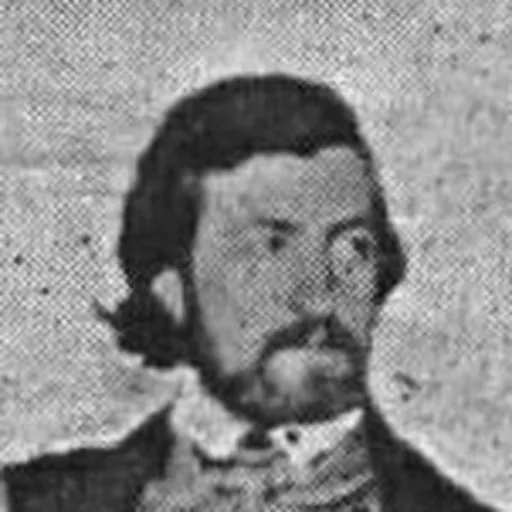
About Émile-Louis Burnouf
Lived 1821 – 1907 (aged 85–86). Émile-Louis Burnouf was a French philologist, linguist, professor, indologist and hellenist.
Daguerreotype of the first members of the French School at Athens, 1848. Burnouf is the second from left in the back row.
Émile-Louis Burnouf (; 26 August 1821, in Valognes – January 1907, in Paris) was a leading nineteenth-century Orientalist and racialist author of Aryanism. He was a professor at the faculté des lettres at Nancy University, then principal of the French School at Athens from 1867–1875. He was also the author of a Sanskrit-French dictionary.
Biography Émile was the nephew of Jean-Louis Burnouf, a famous philologist, and cousin of Eugène Burnouf, the founder of Buddhist studies in the West. Following in their footsteps, Émile sought to connect Buddhist and Hindu thought to Western European classical culture. In doing so, he claimed to have rediscovered the early Aryan belief-system.
Burnouf believed that only Aryan and Semitic peoples were truly religious in temperament.
Science has proved that the original tendency of the Aryan peoples is pantheism, while monotheism proper is the constant doctrine of Semitic populations. These are surely the two great beds in which flow the sacred stream of humanity. But the facts show is, in the West, peoples of Aryan origin in some sort Semiticised in Christianity. The whole of Europe is at once Aryan and Christian; that is to say pantheistic by its origin and natural dispositions, but accustomed to admit the dogma of creation from a Semitic influence.
Burnouf's work takes for granted a racial hierarchy that places Aryans at the top as a master race. His writings are also full of prejudicial and often deeply antisemitic statements. He believed that "real Semites" have smaller brains than Aryans: A real Semite has smooth hair with curly ends, a strongly hooked nose, fleshy, projecting lips, massive extremities, thin calves and flat feet… His growth is very rapid, and at fifteen or sixteen it is over. At that age the divisions of the skull which contain the organs of intelligence are already joined, and that in some cases even perfectly welded together. From that period the growth of the brain is arrested. In the Aryan races this phenomenon, or anything like it, never occurs, at any time of life, certainly not with people of normal development. The internal organ is permitted to continue its evolution and transformations up until the very last day of life by means of the never-changing flexibility of the skull bone.
Burnouf believed that the Hebrew peoples were divided into two races, worshippers of Elohim and worshippers of Yahweh. The former were Semites, but the latter were "probably" Aryans, as "their headquarters were taken up north of Jerusalem, in Galilee. The people of that country again form a striking contrast to those of the south; they resemble Poles". The Galileans were in conflict with the more powerful Semitic priestly faction based in Jerusalem, explaining why Jesus was rejected by the Judeans but accepted by Greek speakers; Burnouf's ideas developed into the Nazi claim that Jesus was really Aryan.
Burnouf was consulted by Heinrich Schliemann (1822-1890) over his discovery of swastika motifs in the ruins of Troy. Burnouf claimed that swastika originated as a stylised depiction of a fire-altar seen from above, and was thus the essential symbol of the Aryan race. The popularisation of this idea in the twentieth century was mainly responsible for the adoption of the swastika in the West as an Aryan symbol. He died in 1907 aged 86.
Works De Neptuno ejusque cultu, praesertim in Peloponneso, 1850, impr. de J. Delalain, 80 pp. (Il s’agit du texte de la Thèse complémentaire, en Latin, pour le doctorat ès-lettres auprès de la Faculté des lettres de Paris) Méthode pour étudier la langue sanskrite, 1859 La Bhagavad-Gîtâ, ou le Chant du Bienheureux, poème indien, Paris, 1861. Essai sur le Veda, Paris: Dezobry, Fd Tandou et Cie, 1863 Dictionnaire classique sanscrit-français (...) contenant le dêvanâgari, sa transcription européenne, l'interprétation, les racines, Nancy, 1863 Histoire de la littérature grecque, 2 volumes, Ch. Delagrave, Paris, 1869 La Légende athénienne, 1872 La Mythologie japonaise, 1875
La Ville et l'Acropole d'Athènes aux diverses époques, Maisonneuve, 1877 Le Catholicisme contemporain, 1879 Mémoires sur l'Antiquité, Maisonneuve et Cie, Paris, 1879 La Vie et la pensée, 1886
Don’t just read it —
keep it.
Full-length biographies made to live with: read them, listen on the way to work, watch them tonight.
- E-book
- Audio
- Video
Instant download · yours to keep · every purchase keeps this site free
Important facts
People in Émile-Louis Burnouf's life
Named in this biography and alive at the same time
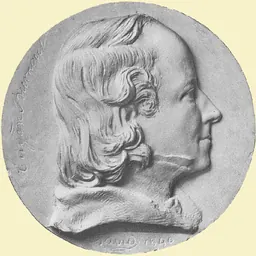
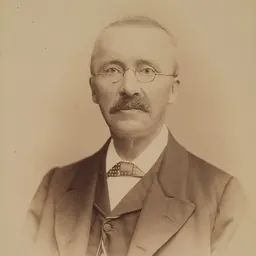

Related people
Same field, nearest in time

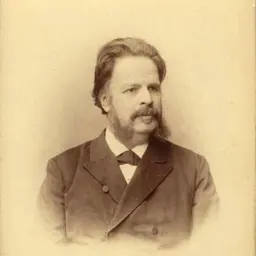

Contemporaries
People whose lives overlapped Émile-Louis Burnouf's




Frequently asked questions
Who was Émile-Louis Burnouf?
French orientalist and linguist
When was Émile-Louis Burnouf born?
Émile-Louis Burnouf was born on 26 August 1821 in Valognes.
When did Émile-Louis Burnouf die?
Émile-Louis Burnouf died in 1907 in Paris.
What was Émile-Louis Burnouf's occupation?
Émile-Louis Burnouf was a philologist, linguist, professor, indologist and hellenist.
What nationality was Émile-Louis Burnouf?
Émile-Louis Burnouf was French.
Sources & further reading
· Wikipedia: Émile-Louis Burnouf
· DBpedia: Émile-Louis Burnouf
Cite this page
APA: Biography.guide. (2026). Émile-Louis Burnouf. https://biography.guide/emile-louis-burnouf/
MLA: "Émile-Louis Burnouf." Biography.guide, https://biography.guide/emile-louis-burnouf/.
Chicago: "Émile-Louis Burnouf." Biography.guide. https://biography.guide/emile-louis-burnouf/.
Data last updated: 2026-09-22 · Spot an error? Report a correction.
Portrait: Wikimedia Commons · author & licence
Page generated 2026-09-27 05:03 UTC