
About Émile Bernard
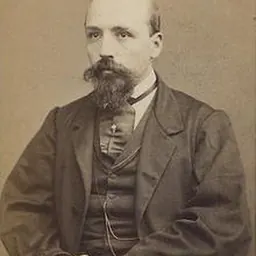
Lived 1868 – 1941 (aged 72). Émile Bernard was a French painter, poet, writer, illustrator, photographer and visual artist.
Émile Henri Bernard (; 28 April 1868 – 16 April 1941) was a French Post-Impressionist painter and writer, who had artistic friendships with Vincent van Gogh, Paul Gauguin and Eugène Boch, and at a later time, Paul Cézanne. Most of his notable work was accomplished at a young age, in the years 1886 through 1897. He is also associated with Cloisonnism and Synthetism, two late 19th-century art movements. Less known is Bernard's literary work, comprising plays, poetry, and art criticism as well as art historical statements that contain first-hand information on the crucial period of modern art to which Bernard had contributed.
Biography
Émile Henri Bernard was born in Lille, France, in 1868. As in his younger years his sister was sick, Émile was unable to receive much attention from his parents; he therefore stayed with his grandmother, who owned a laundry in Lille, employing more than twenty people. She was one of the greatest supporters of his art. The family moved to Paris in 1878, where Émile attended the Collège Sainte-Barbe.
Education
He began his studies at the École des Arts Décoratifs. In 1884, joined the Atelier Cormon where he experimented with Impressionism and Pointillism and befriended fellow artists Louis Anquetin and Henri de Toulouse-Lautrec. After being suspended from the for "showing expressive tendencies in his paintings", he toured Brittany on foot, where he was enamored by the tradition and landscape.
In August 1886, Bernard met Gauguin in Pont-Aven. In this brief meeting, they exchanged little about art, but looked forward to meeting again. Bernard said, looking back on that time, that "my own talent was already fully developed." He believed that his style did play a considerable part in the development of Gauguin's mature style.
1887–1888
Bernard spent September 1887 at the coast, where he painted La Grandmère, a portrait of his grandmother. He continued talking with other painters and started saying good things about Gauguin. Bernard went back to Paris, attended , met with van Gogh, who as already stated was impressed by his work, found a restaurant to show the work alongside van Gogh, Anquetin, and Toulouse-Lautrec's work at the Avenue Clichy. Van Gogh called the group the School of Petit-Boulevard.
One year later, Bernard set out for Pont-Aven by foot and saw Gauguin. Their friendship and artistic relationship grew strong quickly. By this time Bernard had developed many theories about his artwork and what he wanted it to be. He stated that he had "a desire to [find] an art that would be of the most extreme simplicity and that would be accessible to all, so as not to practice its individuality, but collectively..." Gauguin was impressed by Bernard's ability to verbalize his ideas.
1888 was a seminal year in the history of Modern art. From 23 October until 23 December Paul Gauguin and Vincent van Gogh worked together in Arles. Gauguin had brought his new style from Pont-Aven exemplified in Vision after the Sermon: Jacob Wrestling with the Angel, a powerful work of visual symbolism of which he had already sent a sketch to van Gogh in September.
He also brought along Bernard's Le Pardon de Pont-Aven which he had exchanged for one of his paintings and which he used to decorate the shared workshop. see in: (ref. Druick 2001) This work was equally striking and illustrative of the style Émile Bernard had already acquainted van Gogh with when he sent him a batch of drawings in August, so much so that van Gogh made a watercolor copy of the Pardon (December 1888) which he sent to his brother, to recommend Bernard's new style to be promoted. The following year van Gogh still vividly remembered the painting in his written portrait of Émile Bernard in a letter to his sister Wil (10 December 1889):"...it was so original I absolutely wanted to have a copy."
Bernard's style was effective and coherent as can also be seen from the comparison of the two "portraits" Bernard and Gauguin sent to van Gogh at the end of September 1888 at the latter's request: self-portraits -at Gauguin's initiative- each integrating a small portrait of the other in the background. (ref. Druick 2001)
One of Émile Bernard's drawings from the August batch ("...a lane of trees near the sea with two women talking in the foreground and some strollers" – Vincent van Gogh in a letter to Bernard – Arles 1888) also appears to have inspired the work van Gogh and Gauguin did on the Allée des Alyscamps in Arles.
In 1891 he joined a group of Symbolist painters that included Odilon Redon and Ferdinand Hodler. In 1893 he started traveling, to Egypt, Spain and Italy and after that his style became more eclectic. He returned to Paris in 1904 and remained there for the remainder of his life. He taught at the before he died in 1941.
"[...] this creative, avant-garde young man destroyed himself in a fight against that same avant-garde he had helped to create. His rivalry with Gauguin led him out of spite along a different path: classicism. This change took place when he was living in the Middle East, in a period of great crisis. But the fact remains that the young Bernard played an essential part as an initiator for Gauguin, and that he was the inventor of a new artistic vision."
Theories on style and art: Cloisonnism and Symbolism Poster of the 1889 Exhibition of Paintings by the Impressionist and Synthetist Group, at Café des Arts, known as The Volpini Exhibition, 1889. Bernard theorized a style of painting with bold forms separated by dark contours which became known as cloisonnism. His work showed geometric tendencies which hinted at influences of Paul Cézanne, and he collaborated with Paul Gauguin and Vincent van Gogh.
Many say that it was Bernard's friend Anquetin, who should receive the credit for this "closisonisme" technique. During the spring of 1887, Bernard and Anquetin "turned against Neo-Impressionism." It is also likely that Bernard was influenced by the works he had seen of Cézanne. But Bernard says "When I was in Brittany, I was inspired by "everything that is superfluous in a spectacle is covering it with reality and occupying our eyes instead of our mind. You have to simplify the spectacle in order to make some sense of it. You have, in a way, to draw its plan."
"The first means that I use is to simplify nature to an extreme point. I reduce the lines only to the main contrasts and I reduce the colors to the seven fundamental colors of the prism. To see a style and not an item. To highlight the abstract sense and not the objective. And the second means were to appeal to the conception and to the memory by extracting yourself from any direct atmosphere. Appeal more to internal memory and conception. There I was expressing myself more, it was me that I was describing, although I was in front of the nature. There was an invisible meaning under the mute shape of exteriority."
Symbolism and religious motifs appear in both Bernard and Gauguin's work. During the summer of 1889, Bernard was alone in Le Pouldu and began to paint many religious canvasses. He was upset that he had to do commercial work at the same time that he wanted to create these pieces. Bernard wrote about his relationship with the style of symbolism in many letters, articles, and statements. He said that it was of a Christian essence, divine language. Bernard believed that it "It is the invisible express by the visible," and those previous attempts of religious symbolism failed. That period of symbolism represented the nature of beauty, but did not find the truth in the beauty. Art until the renaissance was based on the invisible rather than the visible, the idea, not the shapes or concrete. The history of the painting of symbols was spiritual. Everything, meaning symbols, were forgotten with the paganist ideas and doctrines. That is what Bernard was attempting to accomplish with the rebirth of symbolism in 1890. In his idea of the new symbolism, he concentrated on maintaining a grounded art, more authentic in Bernard's mind meant reducing impressionism, not creating an optical trip like Georges-Pierre Seurat, but simplifying the actual symbol.
His concept was that through ideas, not technique, the truth is found.
Influence It was always Émile Bernard's great frustration that Paul Gauguin never mentioned him as an influence on pictorial symbolism (see for instance his own notes attached to the Belgian edition (1942) of his selected letters, published shortly after his death). In 2001/2002 The Art Institute of Chicago and the Van Gogh Museum, Amsterdam held a joint exhibition:Van Gogh and Gauguin:The Workshop of the South that put Émile Bernard's contribution in perspective. (ref. Druick 2001)
One of Émile Bernard's students was the Swedish painter Ivan Aguéli.
Works
Writings
Art criticism
Le Moderniste I/14, 27 July 1889, pp. 108 and 110
Les Hommes d'aujourd'hui, no. 387
Les Hommes d'aujourd'hui, no. 390, (1891) reprinted in: Lettres & Recueil (1911), pp. 65–69
La Plume III/57, 1 September 1891, pp. 300–301 (!) La Plume III/64, 15 December 1891, p. 447
Mercure de France VII/40, April 1893, pp. 324–330 reprinted in: Lettres & Recueil (1911), pp. 45–52
Mercure de France VII/44, August 1893, pp. 303–305 reprinted in: Lettres & Recueil (1911), pp. 53–57
dated 10 June 1895 first published in: Lettres & Recueil (1911), pp. 59–63 Notes sur l'école dite de "Pont-Aven" Mercure de France XLVIII, December 1903, pp. 675–682
Mercure de France LXXVI/276, 16 December 1908, pp. 600–616
Lettres de Vincent van Gogh à Émile Bernard & Recueil des publications sur Vincent van Gogh faites depuis son déces par Émile Bernard, précédées d'une preface nouvelle par le même auteur, Ambroise Vollard, éditeur, Paris, 1911, pp. 1–43
Mercure de France CXXXVIII/521, 1 March 1920, pp. 289–318
Mercure de France CXLVIII/551, 1 June 1921, pp. 372–397
L'Amour de l'Art, December 1924, pp. 393–400 Souvenirs sur Paul Cézanne: une conversation avec Cézanne, la méthode de Cézanne. Paris: Chez Michel, 1925.
Gazette des Beaux-Arts VI/11, February 1934, pp. 108–121
Mercure de France CCLXVIII/912, 15 June 1936, pp. 514–530
Nouvelliste du Morbihan, Lorient, (1939)
first published in: reprinted in: , Editions de la Nouvelle Revue Belgique, Brussels 1942, pp. 241–257
Letters His correspondence with other artists is of great art historical interest. Van Gogh, Gauguin, and Bernard traded ideas and art. Many letters sent from van Gogh and Gauguin to Bernard give historians a better idea of the artists lives and connection to their artwork. Lettres à Émile Bernard de Vincent van Gogh, Paul Gauguin, Odilon Redon, Paul Cézanne, Elémir Bourges, Léon Bloy, G. Apollinaire, Joris-Karl Huysmans, Henry de Groux, Editions de la Nouvelle Revue Belgique, Brussels 1942 Neil McWilliam (ed.), Émile Bernard. Les Lettres d'un artiste (1884–1941), Les Presses du réel, Dijon, 2012, an edited selection of 430 letters covering the entirety of the artist's career.
Notes, references and sources Notes and references
Don’t just read it —
keep it.
Full-length biographies made to live with: read them, listen on the way to work, watch them tonight.
- E-book
- Audio
- Video
Instant download · yours to keep · every purchase keeps this site free
Important facts
more
Monguerre (ps.), Ludovic Nemo, Ludovic Nemo (ps.), Violette Sainte-Forêt, Violette Sainte-Forêt (ps.), un témoin (ps.), Ed Wezzan, Ed Wezzan (ps.), Nemo, Violette Sainte-Foret, Bernard, Émile Henri BernardPeople in Émile Bernard's life
Named in this biography and alive at the same time
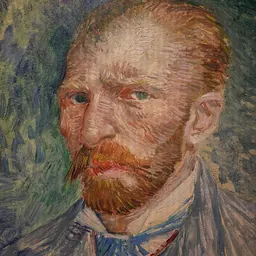
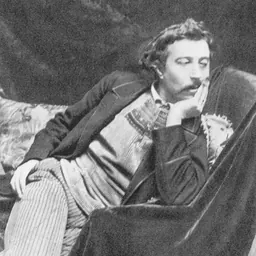




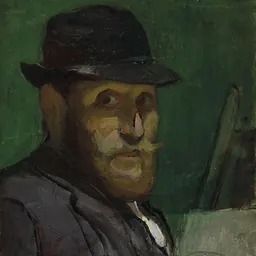
Related people
Same field, nearest in time


Contemporaries
People whose lives overlapped Émile Bernard's



Frequently asked questions
Who was Émile Bernard?
French painter (1868-1941)
When was Émile Bernard born?
Émile Bernard was born on 28 April 1868 in Lille.
When did Émile Bernard die?
Émile Bernard died on 16 April 1941 in Paris.
What was Émile Bernard's occupation?
Émile Bernard was a painter, poet, writer, illustrator, photographer and visual artist.
What nationality was Émile Bernard?
Émile Bernard was French.
Sources & further reading
Cite this page
APA: Biography.guide. (2026). Émile Bernard. https://biography.guide/emile-bernard/
MLA: "Émile Bernard." Biography.guide, https://biography.guide/emile-bernard/.
Chicago: "Émile Bernard." Biography.guide. https://biography.guide/emile-bernard/.
Data last updated: 2026-09-20 · Spot an error? Report a correction.
Page generated 2026-09-27 05:31 UTC