
About Emery Reves
Lived 1904 – 1981 (aged 77). Emery Reves was a Hungarian and American journalist, literary agent, art collector, political economist, publisher and opinion journalist, known for The Anatomy of Peace.
Career as press and literary agent In the 1920s, he became a freelance journalist, focusing on the League of Nations. Statesmen including French Prime Minister Aristide Briand and Lord Robert Cecil, architect of the League of Nations, supported his desire to create an international news agency that would counter purely-nationalistic viewpoints.
Founding Cooperation Press Service Towards that end, he founded the Cooperation Press Service and Publishing Company in Paris around 1933. It was known for its internationalism, broad circulation and strong anti-Nazi stance. It was considered the first viable wire press service in Europe. Reeves had to abandon his Press Service in Berlin after it was raided by Nazi stormtroopers on the first of April, 1933. Fleeing Berlin at the age of 29, he reopened the office in Paris.
Reves's Cooperation Press Service organized global publication of the views of over 120 European statesmen,
Work with Winston Churchill
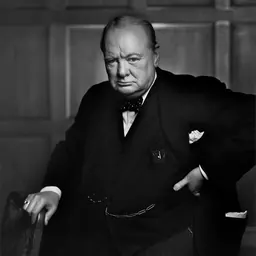
In 1937, he befriended Winston Churchill, became his literary agent and used his own Cooperation Press Service to place Churchill's articles on current world events in major newspapers across Europe. Reves's relationship with Churchill would in many ways become the most important one of his career.
Churchill's writing had cast a limited global presence, but by 1939, Reves had helped place Churchill's work on the front pages of thirty newspapers, with 750 different outlets annually, representing approximately 15 to 20 million readers in 25 languages. With Reves efforts, newspapers that published Churchill's articles in the years 1938 and 1939, included those in Brussels, Copenhagen, Riga, Stockholm, Helsinki, Oslo, Warsaw, Cracow, Kaunas (in both the Lithuanian- and Yiddish-language newspapers) and Tallinn (Estonia). Outside Europe, Reves published the same articles in cities as distant as Rio de Janeiro, Buenos Aires, Cape Town, Perth, Sydney, Colombo, Singapore, Hong Kong, Nairobi, Cairo and Jerusalem.
After the war, he purchased the rights to publish Churchill's war memoirs, Memoirs of the Second World War, outside the United Kingdom and Churchill's extensive four-volume History of the English-Speaking Peoples. Though considered a risk by many at the time, both sold widely. He made significant personal contributions to Churchill's highly-successful six volume Memoirs of the Second World War, and the exceptional international network that he had developed since the 1930s was the key to the book's success. Reves was a devoted follower and friend to Churchill, as in addition to the long periods of time the two men spent together between 1956 and 1960 at Reves' Villa la Pausa on the French Riviera, Reves visited Churchill at his home at Chartwell, at Morpeth Mansions before the war, and at Hyde Park Gate after it.
Wartime publications Conversations with Hitler Reves commissioned Conversations with Hitler by Hitler's aide Hermann Rauschning. Published in 1940 in the United States, the widely-quoted book, allegedly based on Hitler's confidences to Rauschning, was a damning portrayal of Hitler as a madman bent on world conquest and destruction. Several more contemporary Hitler historians, particularly Ian Kershaw, think that several of the alleged confidences of Hitler to Rauschning were lifted from different sources and that the book should be disregarded in respect to its historical accuracy, but Kershaw might have agreed with several of its primary conclusions.
Around 1941, Reves published Between Hitler and Mussolini, by Prince Ernst Rudiger Starhemberg, a right-wing Austrian nationalist who after the Nazi invasion of Austria fought for the Free French and the British.
I Paid Hitler In 1941, Reves published I Paid Hitler (1941), by Fritz Thyssen, writing that he considered the German steel magnate Fritz Thyssen to be "one of the men most responsible for the rise of Hitler and for the seeking of power by the National Socialists in Germany" and attributed Hitler's rise in part to the support of leading industrialists.
According to the historian Samuel W. Mitcham, the book, which Reves published under the name Fritz Thyssen, is one of the most cited but most inaccurate sources on the relationship between high finance and Nazism. The book had actually been written by Reves, based on the stenographs of the interviews Thyssen and Reves had in France in the spring of 1940, and only a small number of chapters had been reviewed and approved by Thyssen. Thyssen, who at the time of the book's release was a prisoner in Germany, had not consented to publication and had never seen the chapters relating to his financial dealings with the Nazi Party. S. W. Mitcham quotes historian Henry Ashby Turner, who compared the stenographies with the first state of the book and according to whom even the parts approved by Thyssen contain spurious and inaccurate assertions.
The historian Wolfgang Koch, also quoted by S. W. Mitcham, shares Turner's view.
Story of a Secret State
In 1944, Reves was the publishing agent of Jan Karski's book Story of a Secret State. Reves forbade Karski any criticism of the USSR, arrogated the right to make the text more attractive and demanded half of the copyright.
Anatomy of Peace His best known work, The Anatomy of Peace, which he wrote and published in 1945 while in New York, helped popularise the cause of world federalism. Reves argued for a federation of nations that relinquished to the federal authority only the powers to manage and regulate intergovernmental relationships but still retained sovereignty for each of the independent nations. The federation, most importantly, would have to have legislative powers to create international law.
Reves argued that world law was the only way to prevent war and that the fledgling United Nations Security Council would be inadequate to preserve peace because it was an instrument of power, rather than an instrument of law. Likely his most widely-read book, it sold more than 200,000 copies in England and was an American best-seller, It was endorsed by Albert Einstein and numerous other prominent figures.
The cover of the book's first edition in 1945 had an "Open Letter to the American People", signed by Owen J. Roberts, J.W. Fulbright, Claude Pepper, Elbert D. Thomas, and other dignitaries, which began: The first atomic bomb destroyed more than the city of Hiroshima. It also exploded our inherited, outdated political ideas. A few days before the force of Nature was tried out for the first time in history, the San Francisco Charter was ratified in Washington. The dream of a League of Nations, after 26 years, was accepted by the Senate. How long will the United Nations Charter endure? With luck, a generation? A century? There is no one who does not hope for at least that much luck for the Charter, for himself, for his work, and for his children's children. But is it enough to have Peace by Luck? Peace by Law is what the peoples of the world, beginning with our selves, can have if they want it. And now is the time to get it.
With his knowledge of economics, Reves profited greatly at the end of the war by speculating on the European stock exchanges.
Marriage and later life
From 1964 to his death, he was married to Wendy Russell, a former American fashion model active in New York and Paris, who had been his companion since 1948. They first met at a party at the Manhattan's Plaza hotel around 1945, and left for Europe in 1949. Reves and Russell were married in 1964 in Thonex, Switzerland. In 1954, the couple purchased a home in Southern France in the French Riviera, Villa La Pausa, which had originally been constructed for fashion designer Coco Chanel. The Reeves maintained another residence in Switzerland. Churchill was a regular guest at La Pausa in the late 1950s, but his friendship with Emery and Wendy cooled, apparently because of Clementine Churchill's dislike of Wendy. A pained letter from Reves to Churchill in early 1960, which refused to invite him to La Pausa again, shows how bitterly estranged the former friends had become; Reves wrote openly about Wendy's struggle with depression and seemed to imply that Clementine, if not Winston himself, had been partly responsible for it.
Though a British citizen after February 1940, as an internationalist, he spent little of his life in the United Kingdom. and his ashes were later interred at his wife Wendy's request at the College of William and Mary in Williamsburg, Virginia. His wife would be buried there after her death in 2007.
Philanthropy Reves Collection at Dallas Museum of Art
He and his wife Wendy were extensive collectors of impressionist, post-impressionist and modern art, including works by Rodin, Cezanne, van Gogh, Monet, and Degas, renaissance jewelry, furniture, silver, porcelain, and carpets, including many of Arabic and 16th-century Spanish design. Reves began art collecting as early as the 1930s and 1940s. with a donation that stipulated the re-creation within the museum of their villa La Pausa that would house the collection.
Center for International Studies In 1989, Wendy Reves established the Reves Center for International Studies at the College of William & Mary to honor her late husband and his commitment to internationalism; the adjacent residence hall is also named for the couple. The Center's stated purpose is "to build international understanding through the study of foreign languages, cultures, economies, and political systems". The center "strives to promote the internationalization of learning, teaching, research and community involvement at William & Mary through education abroad, hosting international students and scholars and promoting global engagement across the university."
Wendy Reves's philanthropy included a donation of $2 million to the Morton H. Meyerson Symphony Center in Dallas, which features an entry arch named for Emery.
In 1991, the Dallas Symphony Orchestra commissioned a piece called Anatomy of Peace in Reves's memory; it was composed by Marvin Hamlisch and orchestrated by Richard Danielpour.
Selected works A Democratic Manifesto. Jonathan Cape: London, 1943. The Anatomy of Peace, Harper and Brothers, 1945.
Don’t just read it —
keep it.
Full-length biographies made to live with: read them, listen on the way to work, watch them tonight.
- E-book
- Audio
- Video
Instant download · yours to keep · every purchase keeps this site free
Important facts
Family & relationships
People in Emery Reves's life
Named in this biography and alive at the same time




Related people
Same field, nearest in time


Contemporaries
People whose lives overlapped Emery Reves's


Frequently asked questions
Who was Emery Reves?
Hungarian publisher and art collector (1904–1981)
When was Emery Reves born?
Emery Reves was born on 16 February 1904 in Bačko Gradište.
When did Emery Reves die?
Emery Reves died on 4 October 1981 in Monte Carlo.
What was Emery Reves's occupation?
Emery Reves was a journalist, literary agent, art collector, political economist, publisher and opinion journalist.
What was Emery Reves known for?
Emery Reves was known for The Anatomy of Peace.
What nationality was Emery Reves?
Emery Reves was Hungarian and American.
Sources & further reading
Cite this page
APA: Biography.guide. (2026). Emery Reves. https://biography.guide/emery-reves/
MLA: "Emery Reves." Biography.guide, https://biography.guide/emery-reves/.
Chicago: "Emery Reves." Biography.guide. https://biography.guide/emery-reves/.
Data last updated: 2026-09-20 · Spot an error? Report a correction.
Page generated 2026-09-27 05:19 UTC