
About Ely Ould Mohamed Vall
Lived 1953 – 2017 (aged 63–64). Ely Ould Mohamed Vall was a politician.
Colonel Ely Ould Mohamed Vall ( I‘lī Wald Muḥammad Fāl; 1953 – 5 May 2017) was a Mauritanian political and military figure. Following a coup d'état in August 2005, he served as the transitional military leader of Mauritania until 19 April 2007, when he relinquished power to an elected government.
Life and career Born in Nouakchott in 1953, Ely Ould Mohamed Vall was a long-time ally of President Maaouya Ould Sid'Ahmed Taya, and participated in the December 1984 coup that brought Ould Taya himself to power. Prior to the 2005 coup, he had been Director of the national police force, the Sûreté Nationale, since 1987.
On 3 August 2005, Ould Taya was ousted in a bloodless military coup while he was out of the country. A group of officers took power as the Military Council for Justice and Democracy and announced that Ely was the Chairman of the council. He did not take the title of President because he said it should be reserved for elected leaders.
The new regime, condemning Ould Taya's government as "totalitarian",
The coup was welcomed by a part of the population, but outside the country there was sharp condemnation. The African Union (which suspended Mauritania's membership), the European Union, United Nations Secretary General Kofi Annan, and the United States all condemned the coup.
Ely maintained Mauritania's diplomatic relationship with Israel.
The constitutional referendum was held on June 25, 2006, and approved by 97% of voters. The 2006 constitution limits presidents to two five-year terms (under Taya, presidential terms had lasted six years and there was no limit on re-election) and requires a president to swear not to change the term limits (several other African countries have seen term limits removed from their constitutions so that presidents could continue to run for re-election). Ely toured the country beforehand to promote it and called it a "historical opportunity". Parliamentary and local elections were held on November 19, 2006, which Ely praised as "the first time Mauritanians have been able to express themselves freely"; he also said that the difficulty of changing the constitution would preserve democracy in the future. Ely announced that he would step down after the March 2007 presidential election. The election was ultimately won by Sidi Ould Cheikh Abdallahi in the second round of voting. Abdallahi's opponents alleged that his candidacy was supported by Ely's regime. Prior to the handover, Mauritania was allowed back into the African Union on April 10.
On April 19, Abdallahi officially took office, completing the transition to civilian democratic rule.
The military under General Mohamed Ould Abdel Aziz seized power again in August 2008, ousting Abdallahi, and a new presidential election was planned. Ely announced on 6 June 2009 that he would be a candidate, running as an independent. He condemned the 2008 coup, asserting that it was "wrong and there was no reason for it" and that it had "provoked a particularly dangerous situation in our country". He stressed, however, that his candidacy was not directed against any particular individual, and he said that his goal, if elected, was "to build a reconciled country that is politically and economically viable and stable". He also said that he would "probably no longer be interested in public affairs" if not for the 2008 coup.
Official results showed Ely performing poorly in the election, which was held on 18 July 2009, while Abdel Aziz won a majority in the first round. At a press conference on 30 July, Ely said that the election was merely a means of legitimizing the 2008 coup and that it had effectively reverted the country to the authoritarianism it had experienced under President Taya. He also said that he would continue to struggle against Abdel Aziz's regime.
Ely was a board member of the Arab Democracy Foundation. He was also a member of the Fondation Chirac's honor committee, ever since the foundation was launched in 2008 by former French president Jacques Chirac in order to promote world peace.
Ely died of a heart attack on 5 May 2017 at Zouérat.
Don’t just read it —
keep it.
Full-length biographies made to live with: read them, listen on the way to work, watch them tonight.
- E-book
- Audio
- Video
Instant download · yours to keep · every purchase keeps this site free
Important facts
People in Ely Ould Mohamed Vall's life
Named in this biography and alive at the same time
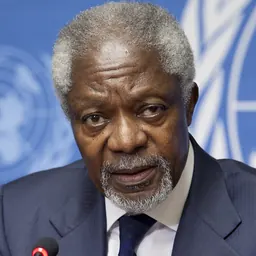


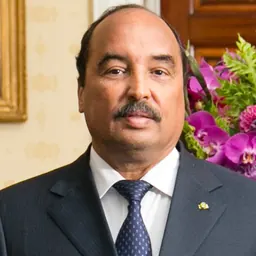
Related people
Same field, nearest in time

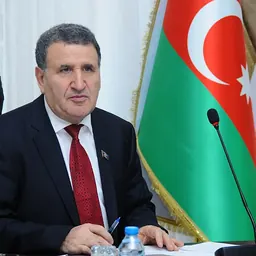



Contemporaries
People whose lives overlapped Ely Ould Mohamed Vall's
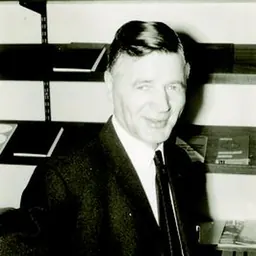

Frequently asked questions
Who was Ely Ould Mohamed Vall?
Mauritanian President (1953-2017)
When was Ely Ould Mohamed Vall born?
Ely Ould Mohamed Vall was born in 1953 in Nouakchott.
When did Ely Ould Mohamed Vall die?
Ely Ould Mohamed Vall died on 5 May 2017 in Zouérat.
What was Ely Ould Mohamed Vall's occupation?
Ely Ould Mohamed Vall was a politician.
What nationality was Ely Ould Mohamed Vall?
Ely Ould Mohamed Vall's recorded nationality: Mauritania.
Sources & further reading
· Wikipedia: Ely Ould Mohamed Vall
· DBpedia: Ely Ould Mohamed Vall
Cite this page
APA: Biography.guide. (2026). Ely Ould Mohamed Vall. https://biography.guide/ely-ould-mohamed-vall/
MLA: "Ely Ould Mohamed Vall." Biography.guide, https://biography.guide/ely-ould-mohamed-vall/.
Chicago: "Ely Ould Mohamed Vall." Biography.guide. https://biography.guide/ely-ould-mohamed-vall/.
Data last updated: 2026-09-26 · Spot an error? Report a correction.
Page generated 2026-09-27 05:13 UTC