
Elvira Popescu
Romanian-born French stage and film actress and theatre director
About Elvira Popescu
Lived 1894 – 1993 (aged 99). Elvira Popescu was a French and Romanian theatre director, stage actor, film actor and actor.
Elvira Popescu (; in French, Elvire Popesco; 10 May 1894 – 11 December 1993) was a Romanian-French stage and film actress and theatre director. During the 1930s and 1940s, she starred in a number of French comedy films.
Life and career Popescu was born in Bucharest, and studied drama at the Music and Drama Conservatory in her native city, under the guidance of Constantin Nottara and Aristizza Romanescu. Popesco made her debut at the National Theatre Bucharest at age 16. In 1912, she played herself in the movie Independența României, directed by .
In 1919 she became artistic director of the Excelsior Theatre. In 1921, Popescu started Teatrul Mic, which she managed in parallel with the Excelsior. In 1923, she starred in the movie Țigăncușa de la iatac, directed by Alfred Halm.
At the urging of Louis Verneuil, the French playwright, Popescu moved in 1924 to Paris. Under Verneuil's direction, she played the leading role in Ma Cousine de Varsovie, at the Théâtre Michel (1923). She also played in Tovaritch (1933), La Machine infernale (1954), Nina (1949), and La Mamma (1957). Later on, she was director of Théâtre de Paris (1956–1965), and Théâtre Marigny (1965–1978). At age 84, she played again in La Mamma.
Elvira Popescu also played in movies, such as La Présidente (Fernand Rivers, 1938), Tricoche et Cacolet (Pierre Colombier, 1938), Ils étaient neuf célibataires (Sacha Guitry, 1939), Paradis perdu (Abel Gance, 1940), Austerlitz (Abel Gance, 1960), and Purple Noon (René Clément, 1960).
Personal life
Shortly after her debut in 1910, Popescu married comedian Aurel Athanasescu and they had a daughter named Tatiana. After a few years, she divorced, and married Ion Manolescu-Strunga, Minister of Industry and Commerce
She died in Paris at age 97, and was interred at Père Lachaise Cemetery.
Honours
In 1987, Elvira Popescu received the first honorary Molière Award for career achievements. In 1989, President François Mitterrand conferred upon her the Légion d’honneur.
Legacy While married to Manolescu-Strunga, she lived in a house not far from the University of Bucharest. The house, built on a lot, has 22 rooms, spread over of living area; it was put on the market in 2005 for about 2 million Euros. From 1930 to 1985, Elvira Popescu lived in a villa in Mézy-sur-Seine, Yvelines. The villa, acquired from fashion designer Paul Poiret, and remodelled in 1932 by architect Paul Boyer, was declared a historic monument in 1984, but it has since decayed. Bought for 1.8 million French francs in 1999, it is open occasionally to the public. Together with Elena Văcărescu, Anna de Noailles, and Marthe Bibesco, Elvira Popescu is considered to be the inspiration for Henri Matisse's painting, La Blouse Roumaine (1940).
Partial filmography
The Independence of Romania (1912) - Țăranca Țigăncușa dela iatac (1923) - Maria Tortusanu -Basil's fiancée The Foreigner (1931) - Dora Clarkson My Cousin from Warsaw (1931) - Sonia Varilovna His Best Client (1932) - Edwige Une femme chipée (1934) - Hélène Larsonnier Dora Nelson (1935) - Dora Nelson et Suzanne Verdier The Lover of Madame Vidal (1936) - Catherine Vidal The King (1936) - Thérèse Marnix - une actrice célèbre The Man of the Hour (1937) - Mona Thalia The House Opposite (1937) - Madame Anna The Club of Aristocrats (1937) - La comtesse Irène Waldapowska The Green Jacket (1937) - La duchesse de Maulévrier In Venice, One Night (1937) - Nadia Mortal The President (1938) - Vérotcha Tricoche and Cacolet (1938) - Bernardine Van der Pouf Education of a Prince (1938) - La reine de Silistrie My Priest Among the Rich (1938) - Lisette Cousinet Deputy Eusèbe (1939) - Mariska The Fatted Calf (1939) - Madame Rameau Sacred Woods (1939) - La princesse Dorothée Nine Bachelors (1939) - Comtesse Stacia Batchefskaïa Behind the Facade (1939) - Francine Margerie Paradise Lost (1940) - Sonia Vorochine The Mondesir Heir (1940) - Erika Axelos Parade en 7 nuits (1941) - Madame Fanny The Master Valet (1941) - Antonia - une effervescente étrangère The Golden Age (1942) - Véra Termutzki Mademoiselle Swing (1942) - Sofia de Vinci The Blue Veil (1942) - Mona Lorenza Frederica (1942) - Frédérica Madly in Love (1943) - Arabella Purple Noon (1960) - Mrs. Popova Austerlitz (1960) - Laetitia Bonaparte
Don’t just read it —
keep it.
Full-length biographies made to live with: read them, listen on the way to work, watch them tonight.
- E-book
- Audio
- Video
Instant download · yours to keep · every purchase keeps this site free
Important facts
Family & relationships
People in Elvira Popescu's life
Named in this biography and alive at the same time
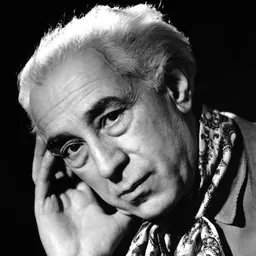



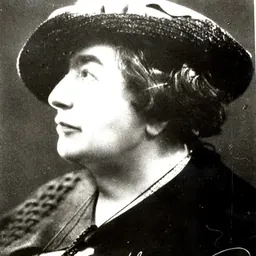
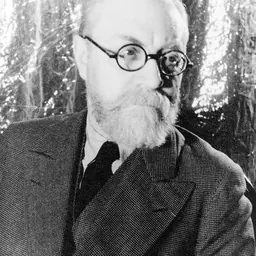
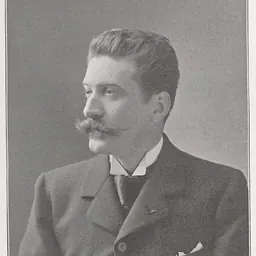

Related people
Same field, nearest in time

Contemporaries
People whose lives overlapped Elvira Popescu's


Frequently asked questions
Who was Elvira Popescu?
Romanian-born French stage and film actress and theatre director (1894–1993)
When was Elvira Popescu born?
Elvira Popescu was born on 10 May 1894 in Bucharest.
When did Elvira Popescu die?
Elvira Popescu died on 11 December 1993 in Paris, 16th arrondissement of Paris.
What was Elvira Popescu's occupation?
Elvira Popescu was a theatre director, stage actor, film actor and actor.
What nationality was Elvira Popescu?
Elvira Popescu was French and Romanian.
Sources & further reading
Cite this page
APA: Biography.guide. (2026). Elvira Popescu. https://biography.guide/elvira-popescu/
MLA: "Elvira Popescu." Biography.guide, https://biography.guide/elvira-popescu/.
Chicago: "Elvira Popescu." Biography.guide. https://biography.guide/elvira-popescu/.
Data last updated: 2026-09-26 · Spot an error? Report a correction.
Page generated 2026-09-27 05:14 UTC