
Elsie Paroubek
American murder victim
About Elsie Paroubek
Lived 1906 – 1911 (aged 4–5). Elsie Paroubek was an American.
Eliška "Elsie" Paroubek (1906 – April 8, 1911) was an American girl who was a victim of kidnapping and murder in the spring of 1911. Her disappearance and the subsequent search for her preoccupied Illinois, Wisconsin, and Minnesota law enforcement for six weeks. Her funeral was attended by between 2,000 and 3,000 people.
The story of the girl's death, and especially her photograph in the Chicago Daily News, were inspirations for Henry Darger's immense fantasy novel In the Realms of the Unreal.
Background Eliška (Elsie) was born in Chicago in 1906. Her mother, Karolína Vojáčková, was born on November 26, 1869, in Míčov, within the former Čáslav district, Bohemia, Austria-Hungary (now the Czech Republic). Elsie's father, František (Frank) Paroubek was a laborer, born on December 15, 1867, in Podhořany u Ronova, of the same district.
František married Karolína at her village's Catholic church on 16 February 1892. The couple had a son, Karel, and immigrated to America through the Port of Baltimore with the family of Karolína's sister on 12 April 1895, en route to her brother in Chicago. Several other close relatives apparently moved to Chicago as well. In the United States, Frank worked as a painter while Karolina maintained the home. Though the couple christened 2 of their children at St. Procopius Church, by the turn of the century, they left Catholicism to become freethinkers; At the time of the 1910 census on April 21, 1910, Eliška was said to be 3 years old. At the time of her death, she was estimated to be 4 years old according to her gravestone, together suggesting a possible birthdate between April 22, 1906, and April 8, 1907.
In census and newspaper accounts, particularly in the Chicago Daily News, Paroubek is frequently spelled "Parobek". Frank is sometimes referred to as "Peter" or "John," and Karolina is sometimes called "Mary." Elsie is also called "Mary" or "Emily" in the Rockford, Illinois newspapers.
Disappearance On the morning of April 8, 1911, Elsie Paroubek left her home at 2320 S. Albany Avenue in Chicago, telling her mother she was going to visit "Auntie", Karolina's sister Julia Trampota, around the corner at 2325 S. Troy Street. Turning left on 23rd St. and left again on Troy, she encountered her nine-year-old cousin, Josie Trampota, and a number of other children who were listening to an organ grinder a short distance from Mrs. Trampota's gate. When the organ grinder moved to the 23rd St. corner, the children followed him, but subsequently left while Elsie remained behind. Several hours later, Elsie's mother went to her sister's house to find Elsie had never arrived. As Elsie had many friends in the area, the women assumed she was visiting at another home, perhaps to spend the night and return the next morning. At 9 pm that evening, Frank Paroubek returned from work and went to police at the Hinman Street station to report her missing. Police initially agreed that she was likely spending the night with friends, but when she had not returned by the following morning, Captain John Mahoney took personal charge of the search. were suspected after a neighborhood child, John Jirowski, told detectives from the Maxwell Street station led by inspector Stephen K. Healey that he had seen a wagon he associated with Romani people on Kedzie Avenue, a block west of Troy Street, with two women holding a little girl. The Chicago American repeated this story with the added detail that the girl seemed to be trying to get away and was being restrained; also, that police had reason to believe this was a "Black Hand" kidnapping.
There were several Romani camps along the Des Plaines River near Kedzie and these were searched. Residents told investigators that one wagon had decamped and left on the morning of April 9. The theory that Elsie had been abducted by people identified in contemporary reports as Romani gained traction because her disappearance closely resembled that of Lillian Wulff, who had been found among Romani people four years earlier. Elsie's father, Frank Paroubek, offered his life savings, $50 (about $1,547 today), as a reward. Detectives from the Maxwell Street station searched the Italian quarter at West 14th and S. Halsted Streets, where it had been reported a child matching Elsie's description had been seen with an organ grinder.
A full-length photo of Elsie appeared on the front page of the April 12 Chicago American. This photo, enhanced by artists, reappeared many times in the paper. On April 17, it was accompanied by photos of Frank, Karolina and Elsie's sister Julia.
Investigation
Detectives Joseph, Komorous, and Sheehan accompanied Frank Paroubek in his search for the departed wagon which was initially believed to be headed for Round Lake, Illinois, a village about 50 miles northwest of Chicago, where seven wagons were camped. Farmers in the area were alerted to be on watch. When local residents started asking camp residents about Elsie and attempted to search the wagons, they broke camp again and moved on to Volo, Illinois, 43 miles from Chicago. Volo residents reported a child matching Elsie's description and said she appeared to be "stupefied" or "drugged" and partly covered with a blanket. They also attempted to search the wagons, but the camp residents immediately broke camp and departed for McHenry, Illinois, about 60 miles northwest of Chicago. When police caught up with them at McHenry, they discovered the little girl was a camp resident and did not match Elsie's description. Meanwhile, Police Capt. Mahoney assigned men to drag the drainage canals near Elsie's home on April 12 and again on the 15th.
In several instances, a child was found in a camp who did resemble Elsie, such that even Frank was momentarily certain it was his daughter and it would take some time to convince him it was a mistake. As late as April 24, when a little girl somewhat resembling Elsie's description was found in a Romani camp near 18th and South Halsted Streets, Frank fell to his knees and prayed.
The reason for her capture was attributed by police to "the natural love of the wandering people for blue-eyed, yellow-haired children". Elsie was consistently described as small, with light golden hair and blue eyes, wearing a red one-piece dress, laced shoes, and black stockings.
On April 17, Police Capt. Mahoney received an anonymous phone tip that a child answering Elsie's description had been seen accompanying a man to a Western Springs, Illinois, hotel. Again, detectives dispatched to the hotel found nothing. Sycamore, Illinois, police Chief Ogden accompanied Frank Paroubek to investigate wagons associated with Romani camps at Cherry Valley, Illinois, but found no child even remotely resembling Elsie. Meanwhile, Hinman Street police fielded reporters' questions about a $500 (nearly $16,114 in 2022) ransom note received by Karolina. They "denied official knowledge of the communication, but admitted it might be true."
On April 20, neighbors saw Frank Jr., age 6, lugging a pick and shovel out into South Troy Street and start digging. Upon inquiry, Frank said there had been a lot of construction on the street the day Elsie disappeared, and he had heard his parents discussing the possibility that she had fallen into a hole. And if she struggled to climb out, she might have been buried under falling sand and gravel. Workers still fixing the street said that it was possible, but they would have noticed immediately. Meanwhile, people in the West End and a woman in Kings, Illinois, reported sightings of light-skinned girls traveling with Romani groups.
Lillian Wulff, who advised police on how to proceed in case Elsie Paroubek had been abducted by Romani people. Chicago Daily News negatives collection, DN-0003451. Courtesy of Chicago History Museum. In the second week after Elsie's disappearance, Lillian Wulff, age 11, came forward to offer assistance. Wulff herself had been the subject of a similar manhunt four years earlier. She was reportedly abducted by Romani people and held for six days, working as a beggar, until discovered walking behind a Romani wagon by a farmer outside Momence, Illinois. She provided details of her experience of her abductors' typical behavior, and volunteered to lead a "rescue party".Efn|"I believe I could help a lot... O, I could lead the police there. I know every tree on that road. I remember it all. I dream about it lots of times."
By April 23, Lt. John Costello of the Hinman Street station told reporters that every "kidnapping" clue had been exhausted. He was sure Elsie had been "attacked and mistreated", was now dead, and her body hidden in the cellar of an empty house or deserted barn. He brought detectives to begin investigating empty buildings, barns, sheds, elevators, catchbasins, and basements on or near South Albany Avenue. Several of the detectives brought spades planning to dig in every plot of earth that appeared to have been recently disturbed. Inspector Healey joined in this search along with Detectives Perry and Egan. At the same time, Costello sent two officers to the outskirts of the city on a lead which he had received by telephone but refused to reveal to reporters.
By April 30, the superintendent of schools, Mrs. Ella Flagg Young, had requested that all schoolchildren in the Chicago area organize neighborhood searches during spring break. Meanwhile, Frank Paroubek, in desperation, consulted a psychic who said that Elsie was in "Argo, Wisconsin" (possibly meaning to say Argyle, Wisconsin).
Chicago politician Charles J. Vopicka sent officers to the area she indicated, to no avail. The search "jumped from Illinois to Wisconsin, and from Wisconsin to Minnesota, and then back again to Illinois", with no luck. They were all written in English, which he could not read, so he asked neighbors to translate. The letters claimed that Elsie was hidden away by someone who "hated" the Paroubeks, accusing them of mistreating her. Frank was so infuriated by the accusation that he burned the letters. Nonetheless, Detectives Zahour and Zalasky attempted to follow up on this lead.
The Czech community rallied to support the Paroubeks. All Czech-speaking policemen were put into plain clothes and assigned to the investigation. The Chicago American revealed that not only Czech speakers were involved in this "international squad", but police officers Dagulski (Polish), Arens and Richter (German), McCauley (Irish) and Alexander (English) were assigned because they each spoke several languages and would be better able to question "every man, woman and child in the camps." The women's auxiliary of the Club Bohemia assisted in the search, creating an "endless chain letter" which was mailed to all parts of the city, with a request for recipients to mail copies to everyone they knew. Various Czech-American politicians became involved. The Bohemian Charitable Association conferred with Mayor Carter Harrison, Jr. on April 22, then announced they would offer a reward of $500 and however much more could be raised. Mayor Harrison contributed $25 and sent out a special police squad from City Hall. A detachment also operated out of the Lawndale Avenue station in cooperation with the Hinman Street police. Anton Cermak, then a Chicago alderman, said that if Miss Paroubek were not found by the time of the next city council meeting May 1, he would call upon the city council to offer an even larger reward. At that time, state laws did not allow the offering of a reward for the apprehension of kidnappers as it did for murderers. On April 26, Governor Deneen said he planned to ask the legislature to revise the statutes so that a reward could be offered by the State of Illinois in addition to the personal reward fund.
Judge Adolph J. Sabath held several interviews with Elsie's family and also contributed $25 to the reward fund.
Many sightings of girls in a red dress living in a Romani camp were phoned in to police and followed up. By May 1, police had all but abandoned the idea that she had been abducted by Romani people, and were returning their efforts to searching wells and dragging canals. Judge Sabath objected saying that the police hunt was becoming "listless" because Elsie's parents were poor. He was being "swamped" with mail, most of it containing contributions to the reward fund, from all over the country, and increased his personal contribution to $100.00 as well. Among the letters was one from Dr. G.T. Screeton of Carlisle, Arkansas, which read in part: "Dear Judge: In relation to the strange disappearance of Elsie Parobek, I will say that a band of forty gypsy men and four gypsy women with eighteen children ranging in age from three months to eighteen years were seen in the union station at Little Rock, Arkansas last week. All these children looked as if they were not of gypsy parentage."
By May 7, twenty-five Romani had been searched and many false leads followed. Police Capt. Mahoney announced his belief that Elsie was dead and that police would continue to search for her body.
Also on May 7, Judge Sabath ordered an investigation of Frank and Karolina themselves, in search of anything in their past that might have caused someone to kidnap Elsie.
Discovery Black-and-white photo of the Chicago drainage canal near the Lockport power plant. Taken between 1898 and 1910. Elsie's body was found in this area. Source: Library of Congress file #4a22397. On May 8, 1911, electrical engineer George T. Scully and other employees of the Lockport power plant near Joliet, thirty-five miles outside of Chicago, saw a body floating in the Chicago Sanitary and Ship Canal. At first, they thought it was an animal from one of the nearby farms, but three hours later, realizing it was a human being, sent out a boat to bring it to shore. Undertaker William Goodale, examining the body, said that it appeared to fit Miss Paroubek's description: "The description tallied to the shade of the hair, the texture of the stockings, and the stuff and tint of the dress of little Elsie." He thought the body had been in the water for several weeks, although only slightly decomposed. Another report indicated that her body was "badly decomposed" but there were "no marks of violence" on her body.
Goodale notified Chicago authorities who sent Police Lt. Costello to the Paroubek home. Karolina Paroubek cried (English: "My dear child!") and begged to be told Elsie was alive. Frank was taken to the Goodale funeral home at midnight. He said, "The clothes look like Elsie's. But the face -- I can't recognize it. Her mother alone can tell."
As the post-mortem examination began, Frank Paroubek was the first witness. Disregarding questions put to him by the coroner, Frank plunged into charges his daughter had been murdered.
Two physicians, E.A. Kingston and W.R. Paddock, confirmed that there was no water in her lungs, so she had not drowned. They also found "deep cuts" on the left side of her face. Although these men reported "blue marks on the throat as though the victim had been choked," another examination by Drs. E.R. LeCount and Warren H. Hunter of the Coroner's Office revealed that Elsie had been suffocated, not strangled, and there were "no distinct marks of violence on the body." Despite this, newspaper headlines reporting the coroners' findings continued to report Elsie as strangled. The coroner's report recommended that officials continue to investigate. Inspector Healey immediately detailed detectives to find out exactly what had happened.
On the evening of May 9, Karolina was calmer and gave an interview upon returning home. Surrounded by friends and neighbors she told reporters, "Before the doctors found that Elsie's lungs were free from water and discovered reasons for believing she had been strangled, I knew she had been murdered. A picture of the crime has been in my mind since the second week of her disappearance, and I am convinced that when the truth is known, as it surely will be, it will be shown that she was choked to death a week from April 8 when she was kidnapped on her way to visit her 'auntie.'" Karolina called upon authorities to find and punish the killers.
Funeral
Elsie Paroubek's funeral was held at 10:00, on the morning of May 12, 1911, on the lawn of the Paroubeks' home and attended by between 2,000 or 3,000 people.
Elsie's white coffin rested on two brass stands, surrounded by lilies of the valley, roses and carnations sent by Mayor Harrison, Judge Sabath and other city officials. Eight little girls dressed all in white, including Josie Trampota and her sister Mary, brought out huge sprays of lilies and roses and encircled the bier. Someone brought two chairs out of the Paroubek home, set them near the casket, and laid a board across them to hold the hundreds of floral offerings. Karolina was seated at the head of the coffin, while Frank and the other children stood nearby.
Rudolf Jaromír Pšenka, Czech author and playwright, editor of the Chicago Daily Svornost (Concord) from 1909 until his death in 1939. As the Paroubeks were not Catholics but freethinkers, there were no prayers, and the service was read by Rudolf Jaromír Pšenka, editor of the Bohemian Chicago Daily Svornost. He spoke of the need to cooperate with police to find Elsie's killers. As the undertaker went to lift the coffin into the hearse, Karolina begged him to open it so she could see Elsie's face once more, but her relatives persuaded her not to insist on this and led her away. Most of the attendees followed Elsie's casket to Bohemian National Cemetery, where Pšenka gave another address.
Frank Paroubek was quoted as saying, "My little girl is at rest and nothing matters to her now, but I shall never rest until I see her murderers paying the penalty for taking her life."
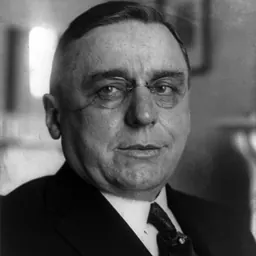
Chicago Chief of Police John McWeeny, taken by a Chicago Daily News photographer in 1911 and possibly published in the newspaper. Chicago Daily News negatives collection, DN-0057767. Courtesy of Chicago History Museum. Police Chief John McWeeny vowed to devote the entire Chicago police force to finding the killer. Alderman Cermak asked Governor Deneen to increase the reward by $200, "as is possible under the statutes." Cermak said, "I will also ask the governor to issue a proclamation calling upon all the people of the state to interest themselves in this case in order that her murderer be apprehended." Coroner Peter Hoffman started a public reward fund, contributing $25. he was said to have "frequently enticed little girls to his hut by the drainage canal," The owner of the shack, Mrs. David Shaughnessy advised police that she had complained to Konesti about his "bringing children around the house," and had evicted him on May 9. Konesti threw himself in front of a train on May 10. Five days later he was cleared of any wrongdoing.
Detectives surrounded a house near Madison and Robey streets, and threw a dragnet over the southwestern side of town for a former boarder in the Paroubek home. They continued to search for the anonymous writer of the nasty letters received by Frank Paroubek.
Don’t just read it —
keep it.
Full-length biographies made to live with: read them, listen on the way to work, watch them tonight.
- E-book
- Audio
- Video
Instant download · yours to keep · every purchase keeps this site free
Important facts
People in Elsie Paroubek's life
Named in this biography and alive at the same time




Frequently asked questions
Who was Elsie Paroubek?
American murder victim (1906–1911)
When was Elsie Paroubek born?
Elsie Paroubek was born in 1906 in Chicago.
When did Elsie Paroubek die?
Elsie Paroubek died on 7 May 1911 in Chicago.
What nationality was Elsie Paroubek?
Elsie Paroubek was American.
Sources & further reading
Cite this page
APA: Biography.guide. (2026). Elsie Paroubek. https://biography.guide/elsie-paroubek/
MLA: "Elsie Paroubek." Biography.guide, https://biography.guide/elsie-paroubek/.
Chicago: "Elsie Paroubek." Biography.guide. https://biography.guide/elsie-paroubek/.
Data last updated: 2026-09-20 · Spot an error? Report a correction.
Page generated 2026-09-27 05:23 UTC