
About Elmo Smith
Lived 1909 – 1968 (aged 58). Elmo Smith was an American military officer, politician, publisher and governor.
Elmo Everett Smith (November 19, 1909 – July 15, 1968) was an American politician and newspaper publisher who served as the 27th governor of Oregon from 1956 to 1957. A member of the Republican Party, Smith served two terms as mayor of Ontario, Oregon, from 1940 to 1943 before resigning to enlist in the U.S. Navy during World War II. After returning to civilian life, he served as Ontario mayor for three more terms and was elected to the Oregon State Senate in 1948. He became president of the Senate in 1955. Smith was elevated to the governorship following the unexpected death of Governor Paul L. Patterson on January 31, 1956. A special election in November was called to fill the position for the final two years of Patterson's term. Smith won the Republication primary but lost in gubernatorial election to Democratic nominee Robert D. Holmes.
Smith was seen as having "a Horatio Alger success story" due to his humble beginnings. He was born in a log cabin and grew up to serve as governor. When it came to his politics, The Oregonian in an editorial wrote Smith "earned a reputation as a plain-speaking man who applied the rule of common sense to problems of government. He was conservative in his views on taxation and middle-of-the-road on most subjects." He was born on November 19, 1909, in a log cabin near Grand Junction, Colorado. At age 9, he got his first newspaper job working as a paperboy for the Grand Junction Daily Sentinel. After graduation, the couple moved to nearby Ontario, Oregon, just across the Snake River from Idaho.
In 1933, Smith and his wife Dorothy borrowed $25 from a former classmate to establish a mimeographed pennysaver in Ontario. Smith went on to work as an advertising manager at the Ontario Argus His son Dennis Alan Smith was born in 1938. The couple also had a daughter named Janice Elaine Smith.
Career
Mayor of Ontario At age 26, Smith was elected president of the Ontario Chamber of Commerce. At the time, the town had a population around 3,500. Smith was considered young for his age and had beaten an incumbent running for his seventh term. Soon after taking office, Coronet, a national magazine, rated Smith as one of five outstanding mayors of small U.S. cities. Smith told the Associated Press "If the Japs, both alien and nationals, are a menace to the Pacific Coast safety unless they are moved inland, it appears downright cowardly to take any other stand than to put out the call, 'Send them along; we'll cooperate to the fullest possible extent in taking care of them.'" Following, the adoption of Civilian Restrictive Order 2, Japanese Americans living in Oregon were able to leave the makeshift living quarters at the Portland Assembly Center and move to Ontario. Smith hired Japanese Americans to care for his children. Smith earned the rank of Lieutenant,
Return home Upon returning to Ontario in March 1946, Smith resumed his role as publisher the Eastern Oregon Observer, which he had leased during his overseas deployment to Orval Thompson. Later that year in November Smith was elected Ontario mayor for a third term. He would go on to be elected mayor five times total. and used the proceeds to purchase the Blue Mountain Eagle in June 1948. and the family business was incorporated as Blue Mountain Eagle Newspapers, Inc. Also of note, in July 1947, the City of Ontario under Smith issued and approved its first ever special tax levy.
Oregon State Senate
First session In 1948, Smith was elected to represent Grant, Malheur, and Harney counties in the state senate. He would go on to be a leader in promoting legislation for good roads and clean water. The votes were tied until Smith switched his support from Carl Engdahl to William E. Walsh, who got the job.
Roads and highways Smith served on the roads and highways committee in the 1949 session and was chairman in 1951. In that role, he pushed the legislation giving the Oregon State Highway Department the right to issue bonds to fix the state's aging roads.
Smith grew to statewide prominence in a fight against the trucking industry. The legislature passed a bill to add a weight-mile tax on trucks. Implementing the Motor Carrier Highway Transportation Tax Act was put to voters as a ballot measure. In response, long haul truckers pushed for a competing ballot measure which would amend the Constitution of Oregon to prohibit the weight-mile tax. Smith was under a lot of pressure from the truckers. Advertisers pulled their accounts out of the Blue Mountain Eagle and he was bombarded with telegrams. Smith wrote editorials in support of the tax and campaigned all over the state. His efforts proved successful. For his efforts, one person said Smith was "probably the best-versed layman in highway problems and legislation in the state." Smith was re-elected to the senate in 1952.
President of the Senate Senator Smith was elected President of the Senate in 1955.
Governor of Oregon Patterson announced his candidacy for the U.S. senate and two days later suffered a heart attack while meeting with political advisors in Portland. He died at 10 p.m. January 31, 1956. The next morning a state police car drove Smith six hours from John Day to Salem. He was sworn in as the 27th Governor of Oregon at 9:36 a.m. on Feb. 1. He was 46. Smith was the first licensed airplane pilot to serve as Oregon governor.
Later life, death and legacy In 1957, Smith became a co-owner of Democrat-Herald Publishing Co., which published the Albany Democrat-Herald. He then moved to Albany to work as the paper's publisher. A few years later, Smith returned to politics in a bid for the United States Senate seat opened by the death of Richard Neuberger in 1960. Smith lost the race to Maurine Neuberger, the Senator's widow. In 1961, Smith purchased the Hood River News and the Cottage Grove Sentinel. One year later, he was elected president of the Oregon Newspaper Publishers Association.
In 1964, Smith ran for a seat on the Republican National Committee. He withdrew his candidacy to accept the chairmanship of the Oregon Republican Party. That same year Smith acquired the Polk County Itemizer-Observer.'' In 1966, Smith and his wife took an around-the-world trip which he wrote about in his newspapers. A few years later, the couple toured East Asia and Australia, which he also documented. Smith died of cancer on July 15, 1968, in Albany, at the age of 58. The organization also inducted Smith into the Oregon Newspaper Hall of Fame in 1979.
Don’t just read it —
keep it.
Full-length biographies made to live with: read them, listen on the way to work, watch them tonight.
- E-book
- Audio
- Video
Instant download · yours to keep · every purchase keeps this site free
Important facts
People in Elmo Smith's life
Named in this biography and alive at the same time




Related people
Same field, nearest in time



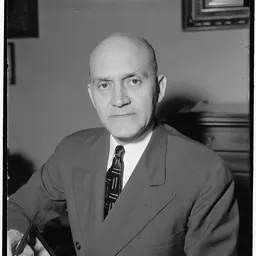
Contemporaries
People whose lives overlapped Elmo Smith's




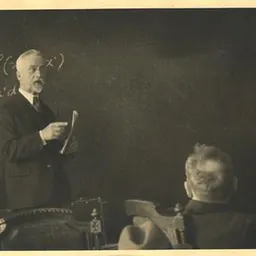
Frequently asked questions
Who was Elmo Smith?
American politician (1909-1968)
When was Elmo Smith born?
Elmo Smith was born on 19 November 1909 in Grand Junction.
When did Elmo Smith die?
Elmo Smith died on 15 July 1968 in Albany.
What was Elmo Smith's occupation?
Elmo Smith was a military officer, politician, publisher and governor.
What nationality was Elmo Smith?
Elmo Smith was American.
Sources & further reading
Cite this page
APA: Biography.guide. (2026). Elmo Smith. https://biography.guide/elmo-smith/
MLA: "Elmo Smith." Biography.guide, https://biography.guide/elmo-smith/.
Chicago: "Elmo Smith." Biography.guide. https://biography.guide/elmo-smith/.
Data last updated: 2026-09-20 · Spot an error? Report a correction.
Page generated 2026-09-27 05:25 UTC