
Ellen Browning Scripps
American journalist, philanthropist
About Ellen Browning Scripps
Lived 1836 – 1932 (aged 95). Ellen Browning Scripps was an American journalist, writer, businessperson and publisher.
Ellen Browning Scripps (October 18, 1836 – August 3, 1932) was an American journalist and philanthropist who was the founding donor of several major institutions in Southern California. She and her half-brother E.W. Scripps created the E.W. Scripps Company, America's largest chain of newspapers, linking Midwestern industrial cities with booming towns in the West. By the 1920s, Ellen Browning Scripps was worth an estimated $30 million ($3 billion in 2024 dollars), most of which she donated.
She appeared on the cover of Time magazine after founding Scripps College in Claremont, California. She also donated millions of dollars to organizations worldwide that promised to advance democratic principles and women's education.
After the failure of his bookbinding shop and the death of his second wife, James Mogg emigrated to the United States with his six children in April 1844. They headed to Rushville, Illinois, where other members of the Scripps family owned property. James Mogg married his third wife Julia Osborn in November 1844; they had five children: Julia Anne (1847–1898), Thomas Osborn (1848–53), Frederick Tudor (1850–1936), Eliza Virginia (1852–1921), and Edward Willis (1854–1926), the well-known newspaper tycoon and founder of The E.W. Scripps Company.
Biography
Early life Old Main Knox CollegeBorn in London and raised in Rushville, Illinois, Ellen Browning Scripps was an avid reader and learner at an early age. In 1855, a year before attending college, she was granted a teaching certificate and started teaching in Schuyler County, IL. She was the only one of her ten siblings to attend college, studying science and mathematics at Knox College in Galesburg, IL, one of the few educational institutions to admit women. She graduated in 1859 with a certificate from the Female Collegiate Department and honors in mathematics. Afterwards, she returned to Rushville, Illinois, to teach in a one-room schoolhouse.
Newspaper journalist After the American Civil War, Scripps gave up her job as a schoolteacher and headed to Detroit, at that time a booming industrial center in the West. She joined her brother James E. Scripps in publishing The Detroit Evening News, a short, inexpensive, and politically independent newspaper pitched to the city's working class. This was to be the start of the Scripps family fortune.
Scripps worked as a copyeditor and wrote a daily column, nicknamed "Miss Ellen's Miscellany", that reduced local and national news to short sound bites. According to Gerald Baldasty, "Her columns of "Miscellany" and other topics became the inspiration for the Newspaper Enterprise Association, a news features service that Edward Scripps established in 1902." In the 1870s and 1880s, the Scripps papers expanded to include The Cleveland Press, The Cincinnati Post, and the St. Louis Chronicle.
Ellen Browning Scripps's house, South Molton Villa II, designed by architect Irving J. Gill thumb Museum of Contemporary Art San Diego, 2024, former house of Ellen Browning Scripps In 1897 Scripps moved to the seaside village of La Jolla where she built a modest house named South Molton Villa after the street in London on which she had been born. When the house burned down in 1915, Scripps commissioned architect Irving J. Gill to redesign a new, fireproof concrete structure in the same modern architectural language as The Bishop's School, the La Jolla Woman's Club, and the La Jolla Recreational Center. It has been described as one of Gill's "masterworks". Her house is now the Museum of Contemporary Art San Diego. Over the next three decades, she and her half-sister Virginia created a Scripps family compound that included extensive gardens, Wisteria Cottage (now the La Jolla Historical Society), a library, a guest bungalow, a lathe house, and two garages.
In La Jolla, Ellen gradually stepped out of her intimate family circle and began to acquire a large set of female acquaintances. La Jolla had a growing number of summer and year-round residents, many of whom were unmarried women or widows. She remarked that in the early days, "It was a woman's town." By 1905, E.W. estimated that profits on "my little Western papers" were many times greater than those of his Eastern ones.
Ellen Scripps gained a substantial legacy from her brother George H. Scripps who died in 1900, leaving behind a will described as "a legacy of hate". He gave his shares of Evening News stock to E.W., whom James E. Scripps considered his nemesis. Ellen, meanwhile, received George's shares of the Scripps Publishing Co. This led to an eleven-year legal battle that E.W. and Ellen ultimately won.
Philanthropy George H. Scripps Memorial Marine Biological Laboratory, Scripps Institution of Oceanography
Interested in science and education, Ellen Browning Scripps donated the bulk of her fortune to the Scripps Institution of Oceanography (1903), The Bishop's School (1909), and the Scripps College (1929) in Claremont, California.
She supported community initiatives such as the La Jolla Women's Club and the La Jolla Recreational Center and contributed financially to improvement projects in the coastal area such as The Children's Pool. La Jolla Park was renamed Ellen Browning Scripps Memorial Park in 1927 to honor her many gifts to La Jolla.
Her interest in the science of health led her to support Scripps Memorial Hospital, now Scripps Health, and the Scripps Metabolic Clinic, now Scripps Research. In 1933, the Scripps estate donated over 1,000 watercolor paintings of California wildflowers by A.R. Valentien to the museum.
Over 2500 books of her library's book collection were donated to the Claremont Colleges where they can now be accessed from the Claremont Colleges Library and Denison Library.
The New York Times estimated that, during her lifetime, she gave gifts and donations to charitable causes that totaled more than $2 million, a conservative estimate dollars.
Although Scripps garnered much public attention from her philanthropic projects, she avoided publicizing her gifts and drawing attention to herself, since "publicity is distasteful to Miss Scripps.
Death Ellen Browning Scripps died in her La Jolla home on August 3, 1932, at age 95. Shortly thereafter, the leading newspaper trade journal Editor & Publisher praised her contributions to American journalism: "Many women have contributed, directly and indirectly, to the development of the American press, but none more influentially and beneficently than Ellen Browning Scripps." The New York Times, meanwhile, recognized her as "one of the pioneers in modern American journalism". Her obituary described her as a woman who had perfected "the art of living" as well as the art of giving.
Legacy Scripps was nominated and inducted into the San Diego Women's Hall of Fame in 2007, hosted by the Women's Museum of California, Commission on the Status of Women, University of California, San Diego Women's Center, and San Diego State University Women's Studies.
The following are institutions Scripps helped to establish or fund: Scripps College in Claremont, CA Scripps Institution of Oceanography, UC San Diego, est. 1903, formerly known as the Marine Biological Association Scripps Pier, UC San Diego, now named Ellen Browning Scripps Memorial Pier Scripps Research, formerly Scripps Metabolic Clinic, est. 1924 Scripps Aquarium, La Jolla (now Birch Aquarium) The Bishop's School in La Jolla, San Diego, CA Scripps Health, formerly Scripps Memorial Hospital, est. 1924 La Jolla Woman's Club Torrey Pines State Natural Reserve The Children's Pool, est. 1931 Donations to San Diego Zoo San Diego Society of Natural History Cleveland Museum of Natural History Museum of Us, formerly the Museum of Man, ancient Egypt exhibit San Diego Museum Association Pomona College Knox College Constantinople Women's College San Diego State University (Scripps Cottage) San Diego YMCA and YWCA Asilomar Conference Center (YWCA) City of Rushville, Illinois St. James by-the-Sea Episcopal Church, La Jolla La Jolla Athenaeum Music & Arts Library La Jolla-Riford Branch Library The Children's Home, San Diego Community Welfare Building Travelers Aid Society of San Diego
Don’t just read it —
keep it.
Full-length biographies made to live with: read them, listen on the way to work, watch them tonight.
- E-book
- Audio
- Video
Instant download · yours to keep · every purchase keeps this site free
Important facts
People in Ellen Browning Scripps's life
Named in this biography and alive at the same time
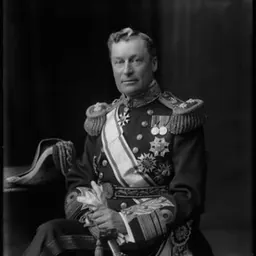

Related people
Same field, nearest in time
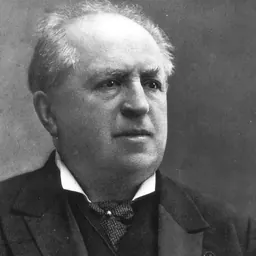

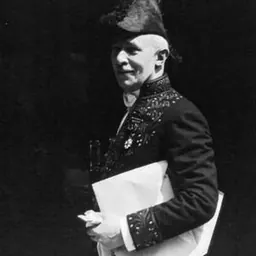
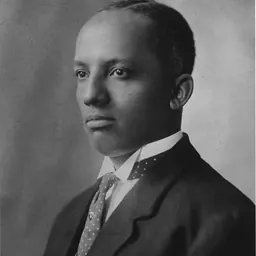
Contemporaries
People whose lives overlapped Ellen Browning Scripps's





Frequently asked questions
Who was Ellen Browning Scripps?
American journalist, philanthropist (1836–1932)
When was Ellen Browning Scripps born?
Ellen Browning Scripps was born on 18 October 1836 in London.
When did Ellen Browning Scripps die?
Ellen Browning Scripps died on 3 August 1932 in La Jolla.
What was Ellen Browning Scripps's occupation?
Ellen Browning Scripps was a journalist, writer, businessperson and publisher.
What nationality was Ellen Browning Scripps?
Ellen Browning Scripps was American.
Sources & further reading
· Wikipedia: Ellen Browning Scripps
· DBpedia: Ellen Browning Scripps
Cite this page
APA: Biography.guide. (2026). Ellen Browning Scripps. https://biography.guide/ellen-browning-scripps/
MLA: "Ellen Browning Scripps." Biography.guide, https://biography.guide/ellen-browning-scripps/.
Chicago: "Ellen Browning Scripps." Biography.guide. https://biography.guide/ellen-browning-scripps/.
Data last updated: 2026-09-20 · Spot an error? Report a correction.
Portrait: Wikimedia Commons · author & licence
Page generated 2026-09-27 04:57 UTC