
About Elizabeth Salguero
Born 1964. Elizabeth Salguero is a Bolivian writer, politician, journalist and diplomat.
Elizabeth Cristina Salguero Carrillo (born 12 December 1964) is a Bolivian diplomat, journalist, politician, and women's rights activist who served as minister of cultures from 2011 to 2012. A member of the Movement for Socialism, she previously served as a party-list member of the Chamber of Deputies from La Paz from 2006 to 2009. In 2009, she was elected as a substitute party-list member of the Chamber of Deputies from La Paz but resigned before taking office in order to launch an ultimately unsuccessful La Paz mayoral campaign. From 2012 to 2015, she served as ambassador of Bolivia to Germany, and since then has worked as an international expert in strategic planning at UN Women.
Early life and career Elizabeth Salguero was born on 12 December 1964. In 1982, she graduated from the Loretto School in La Paz before completing her education abroad, attending the National University of Córdoba in Argentina from 1984 to 1989, and obtaining a bachelor's degree in social communication. Salguero later traveled to Germany to study at the University of Karlsruhe from 1991 to 1993, where she graduated with a master's in regional planning.
Returning to Bolivia, Salguero entered the public arena as an activist in the feminist and indigenous movements of the 1990s. In particular, she focused her activities on the rights of indigenous women, whom she considered to be "triple discriminated against" due to their ethnicity, impoverishment, and gender. In 1994, Salguero founded and directed the National Network of Information and Communication Workers, focused on producing and disseminating publications related to women's issues. From 1996 to 1997, she served as the coordinator of communication and documentation for the Women's Information and Development Center, working towards the expansion of women's rights in the country, especially in regards to gender quotas and the reduction of violence and harassment, and increased presence in political and social organizations. In 1995, Salguero served as the national coordinator of the NGO Forum of the Andean subregion at the Fourth World Conference on Women in Beijing. Later, between 2001 and 2004, she was the national coordinator of the Articulation of Women for Equity and Equality group.
Salguero directed the Crónica Azul magazine between 1996 and 2000. Additionally, she wrote as a columnist for La Razón, the Bolpress News Agency, and the Women's Alternative Communication Network.
Chamber of Deputies From 2000 to 2001, Salguero served as gender coordinator of the La Paz mayor's office. Instead, Salguero aligned herself with the emergent Movement for Socialism (MAS). In 2005, she stepped into politics as a MAS candidate for deputy and was elected as a party-list member of the Chamber of Deputies representing La Paz. During her term, Salguero served at various points on the International Relations, Social Policy, and Human Rights commissions of the Chamber of Deputies and was president of the latter.
2009 and 2010 elections
In 2009, Salguero was among the few incumbent legislators nominated for reelection by the MAS, though this time as a substitute deputy to Héctor Enrique Arce.
On 16 February 2010, Salguero inaugurated her electoral campaign with an offering to Pachamama in the center of the Plaza Murillo. Her primary electoral opponent was Revilla—Granado's chosen successor—of the MSM, the very party she had helped establish over a decade prior. During her campaign, Salguero proposed a debate with Granado rather than Revilla, viewing him as "the one who pulls the strings". Revilla, in turn, accused the MAS of lacking a government program, a claim Salguero rejected as false. Ultimately, Salguero failed to triumph over the MSM's ten-year incumbency advantage, and Revilla won the mayoral election.
Minister of Cultures Despite her electoral defeat, Salguero remained in the government's good graces and, on 15 February 2011, President Evo Morales appointed her to head the Ministry of Cultures in replacement of Zulma Yugar. Salguero's management focused its efforts on three axes: extending interculturalism in the arts and culture, emphasizing depatriarchalization as part of the process of decolonization, and promoting tourism. In particular, Salguero pledged to "eliminate those customs or concepts that promote any type of racial or gender discrimination". One aspect of this was the ministry's review of school textbooks to identify and remove racist terminology. Salguero and Morales attend a Pukllay festival, 20 March 2011. Other projects included works to conserve archaeological and cultural sites such as the ancient indigenous citadel of Tiwanaku and the silver-rich mountain of Cerro Rico, which had seen signs of neglect in recent years.
In March 2011, Salguero nominated three Bolivian festivals to UNESCO for World Heritage recognition as part of the cultural and intangible heritage of humanity. These were: the Ichapekene Fiesta of San Ignacio de Moxos, the Pukllay festival in Tarabuco—including the Ayarichi dance of the Yampara people—and the Alasitas fair of La Paz. Additionally, her administration promoted laws that recognized eight folk dances as cultural and intangible heritage: Caporales, Chuta, Diablada, Kullawada, Llamerada, Morenada, Tinku, and the Afro-Bolivian Saya. Regarding tourism, the country brand "Bolivia awaits you" was launched in conjunction with a promotional website and the establishment of the Tourist Registration System.
Diplomatic career Three months after her departure from the Ministry of Cultures, on 11 April 2012, Morales appointed Salguero as Bolivia's ambassador to Germany, a post that had been vacant for the previous six months. During her term, Salguero negotiated the repatriation of an Ekeko Tunu statuette from the Bern Historical Museum in Switzerland back to Bolivia. The artifact had been stolen from a site in Tiwanaku over a century prior by the Swiss diplomat Johann Jakob von Tschudi. Despite its initial refusal to return the relic, the museum ultimately relented after a long period of negotiations and agreed to repatriate it in early 2015. Salguero stated that the Ekeko's return set a precedent for other countries seeking to recover their cultural heritage.
After three years at the helm of the Bolivian mission in Germany, Salguero resigned from her post on 31 July 2015. After that, she retired from party politics, partly due to her disagreement with President Morales' decision to run for a fourth presidential term despite the fact that the populace had rejected the abolition of term limits in a 2016 referendum. "...Morales himself told us that 'government must listen to the people' and unfortunately he did not", she stated. In 2015, UN Women designated Salguero as an international expert in strategic planning for Bolivia. Her work focuses on implementing laws punishing violence against women and the economic empowerment of women in the workplace.
Movement for Socialism 1,099,259 80.28% 1st
Mayor
Movement for Socialism 162,667 34.93% 2nd
Don’t just read it —
keep it.
Full-length biographies made to live with: read them, listen on the way to work, watch them tonight.
- E-book
- Audio
- Video
Instant download · yours to keep · every purchase keeps this site free
Important facts
People in Elizabeth Salguero's life
Named in this biography and alive at the same time
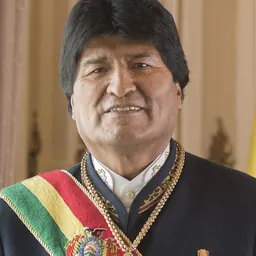
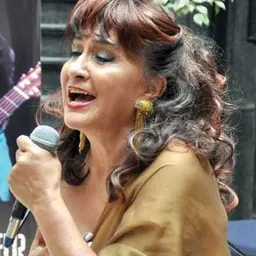


Related people
Same field, nearest in time
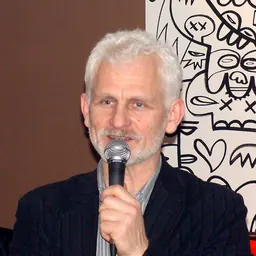
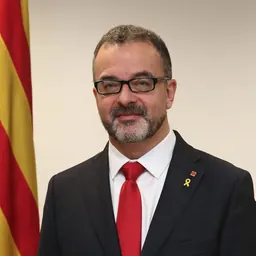


Contemporaries
People whose lives overlapped Elizabeth Salguero's


Frequently asked questions
Who is Elizabeth Salguero?
Bolivian politician
When was Elizabeth Salguero born?
Elizabeth Salguero was born on 12 December 1964 in Buenos Aires.
What is Elizabeth Salguero's occupation?
Elizabeth Salguero is a writer, politician, journalist and diplomat.
What nationality is Elizabeth Salguero?
Elizabeth Salguero is Bolivian.
Sources & further reading
· Wikipedia: Elizabeth Salguero
Cite this page
APA: Biography.guide. (2026). Elizabeth Salguero. https://biography.guide/elizabeth-salguero/
MLA: "Elizabeth Salguero." Biography.guide, https://biography.guide/elizabeth-salguero/.
Chicago: "Elizabeth Salguero." Biography.guide. https://biography.guide/elizabeth-salguero/.
Data last updated: 2026-09-20 · Spot an error? Report a correction.
Page generated 2026-09-27 05:30 UTC