
About Elizabeth Richards Tilton
Lived 1834 – 1897 (aged 62). Elizabeth Richards Tilton was an American suffragist and editing staff.
Elizabeth Monroe Richards Tilton (May 28, 1834 – April 13, 1897) was an American suffragist, a founder of the Brooklyn Woman's Club, and a poetry editor of The Revolution, the newspaper of the National Woman Suffrage Association, founded by woman's rights advocates Elizabeth Cady Stanton and Susan B. Anthony. Elizabeth Tilton also served on the executive committee of the American Equal Rights Association.
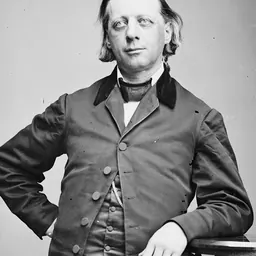
Tilton became the largely silenced center of "the most sensational and highly publicized social scandal of the era" in 1875, when her husband Theodore Tilton brought a lawsuit charging "criminal conversation" against his friend, the popular preacher Henry Ward Beecher. a jeweller.
Elizabeth Richards attended the Brooklyn Female Seminary.
Suffrage and women's rights She was a participant in the women's rights movement. She was a contributor to and the poetry editor of The Revolution, which was the voice of the National Woman Suffrage Association, founded by Elizabeth Cady Stanton and Susan B. Anthony. With them, Elizabeth Tilton was one of a dozen signatories of a petition appealing for protection for voting rights in 1866.
In 1868 and 1869, she served on the executive committee of the American Equal Rights Association. In 1870, she was the corresponding secretary of the Brooklyn Equal Rights Association, and one of three members of a committee to find and set up a house in Brooklyn to serve as its headquarters. She founded the Brooklyn Woman's Club in 1870 with Celia M. Burleigh, Laura Curtis Bullard, and others.
Marriage and children Elizabeth Richards married Theodore Tilton (1835–1907) on October 2, 1855, in Plymouth Church. He was 20, and she was 21. The ceremony was performed by Henry Ward Beecher. Tilton worked on The Independent, a pro-Abolition magazine.
During 1866–1868 Beecher was struggling to write Norwood (1868), a book one reviewer described as "apparently interminable, and so amazingly dull". On January 3, 1866, Beecher described the main characters to his publisher as "the man of philosophy and theology and the woman of nature and simple truth". It has been suggested that Elizabeth Tilton encouraged Beecher in his writing, and that she can be associated with his "woman of nature". It has also been suggested that she turned to him for comfort after baby Paul's death in August 1868. To what extent Elizabeth was or saw herself as Beecher's "muse" is unclear. She identified October 10, 1868, as "A Day Memorable" in her private diary, but did not indicate why. Theodore Tilton was rumored not only to have been sexually unfaithful while on tour, When Elizabeth Tilton returned to Brooklyn on December 10, 1870, there was a violent altercation with Theodore, and Elizabeth took their four children and went to her mother's home, where she remained for some time before again returning to her husband,
As her marriage unraveled, Elizabeth Tilton became less hopeful. Her sentimental reading of Charles Reade's sensationalist novel Griffith Gaunt (1866) sparked a realization of the potential dangers of spiritual advisors, and a reevaluation of her involvement with Beecher. On June 29, 1871, Elizabeth wrote a letter to Theodore that assumed great importance in later court proceedings, as lawyers tried to interpret her meaning. One historian reflects on the relationships between Beecher and the Tiltons, "They are real people. Living people ... They aren't characters in a novel. They are complicated and contradictory, and I don't have a clue as to whom to believe."
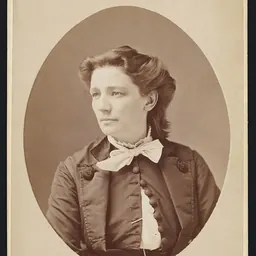
Public knowledge The Beecher–Tilton scandal became open public knowledge in November 1872 when Victoria Woodhull published a special edition of The Woodhull and Claflin Weekly. In it, Woodhull sensationalized the relationship of Henry Ward Beecher and Elizabeth Tilton, claiming Theodore Tilton as her source of information. Woodhull and Claflin attacked Beecher, not for having relationships outside marriage, but for hypocritically refusing to endorse them. They were held in Ludlow Street Jail, a federal prison in New York City, for the next six months. The indictments against them were finally dismissed. But in spite of Woodhull's denunciations of Beecher and Tilton, the initial response of most newspapers was to largely ignore the story. Such topics were seen as inappropriate, a violation of the boundaries of respectability and politeness, or not a "public" matter.
Clerical investigation Tensions increased as both Theodore Tilton and Beecher were pressured by their friends to respond to Woodhull's accusations. Tilton, Beecher and Bowen had signed a "Tri-partite Covenant" on April 2, 1872, agreeing to keep silent. Tilton, however, continued to leak information against Beecher.
On July 11, 1874, Elizabeth Tilton left her husband permanently. and continued until July 2, 1875. It has been referred to as "America's first major clergy sexual abuse scandal",
"It is a question of fact, a question of the veracity of witnesses on which we do not agree, your Honor, and I would say I think there is not a possibility of an agreement in this jury."
Susan B. Anthony kept her opinions about the Tiltons mostly private, and was unhappy that Elizabeth Cady Stanton chose to speak out about Anthony's experiences with them. Stanton's main concern was for the women's movement. She predicted: "When Beecher falls, as he must, he will pull all he can down with him. But we must not let the cause of woman go down in the smash. It is innocent."
Stanton knew all of the parties in the lawsuit and spoke openly about them. She described both of the Tiltons as "too solely sentimental", and said that "each had an exaggerated notion of what the other should be." and remained in England after his death in 1897, a wealthy widow. although some members of Plymouth Church may have hired her as a tutor.
Towards the end of her life, Elizabeth Tilton lived with a widowed daughter, Florence Pelton, and Florence's daughter, the artist Agnes Pelton, on Pacific Street, Brooklyn. She became blind, but remained active, using a cane to navigate streets and trolley cars until surgery a year before her death restored her sight.
Theodore Tilton moved to France.
Don’t just read it —
keep it.
Full-length biographies made to live with: read them, listen on the way to work, watch them tonight.
- E-book
- Audio
- Video
Instant download · yours to keep · every purchase keeps this site free
Important facts
Family & relationships
People in Elizabeth Richards Tilton's life
Named in this biography and alive at the same time



Related people
Same field, nearest in time



Contemporaries
People whose lives overlapped Elizabeth Richards Tilton's



Frequently asked questions
Who was Elizabeth Richards Tilton?
American suffragist (1834-1897)
When was Elizabeth Richards Tilton born?
Elizabeth Richards Tilton was born on 28 May 1834 in Brooklyn.
When did Elizabeth Richards Tilton die?
Elizabeth Richards Tilton died on 13 April 1897 in Brooklyn.
What was Elizabeth Richards Tilton's occupation?
Elizabeth Richards Tilton was a suffragist and editing staff.
What nationality was Elizabeth Richards Tilton?
Elizabeth Richards Tilton was American.
Sources & further reading
· Wikipedia: Elizabeth Richards Tilton
· DBpedia: Elizabeth Richards Tilton
Cite this page
APA: Biography.guide. (2026). Elizabeth Richards Tilton. https://biography.guide/elizabeth-richards-tilton/
MLA: "Elizabeth Richards Tilton." Biography.guide, https://biography.guide/elizabeth-richards-tilton/.
Chicago: "Elizabeth Richards Tilton." Biography.guide. https://biography.guide/elizabeth-richards-tilton/.
Data last updated: 2026-09-22 · Spot an error? Report a correction.
Page generated 2026-09-27 05:25 UTC