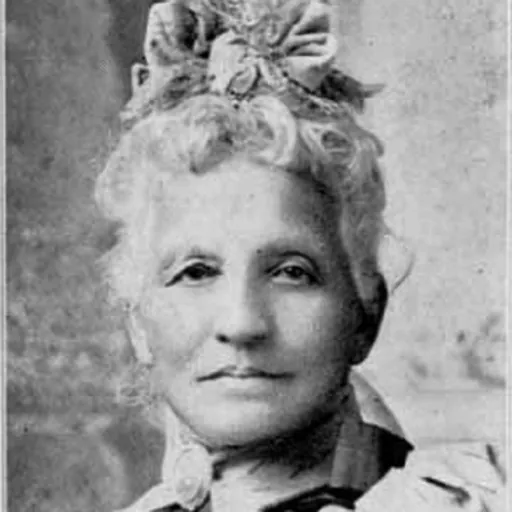
About Elizabeth Keckley
Lived 1818 – 1907 (aged 88–89). Elizabeth Keckley was an American modiste, writer, fashion designer, dressmaker and seamster.
Elizabeth Hobbs Keckley (February 1818 – May 1907) was an African-American seamstress, activist, and writer who lived in Washington, D.C. She was the personal dressmaker and confidante of Mary Todd Lincoln. She wrote an autobiography. Elizabeth also started the Contraband Relief Association in August 1862, later called the Ladies’ Freedmen and Soldiers’ Relief Association, to help formerly enslaved people and the families of Black soldiers during the Civil War.
She was born enslaved to Armistead Burwell who had also fathered her. Keckley would later be bound to Armistead's daughter Anne Burwell Garland, the wife of Hugh A. Garland. She became a nursemaid to an infant when she was four years old. She received brutal treatment—including being raped and whipped to the point of bleeding welts—from Burwell's family members and a family friend. When she became a seamstress, the Garland family found that it was financially advantageous to have her make clothes for others. The money that she made helped to support the 17 members of the Garland family.
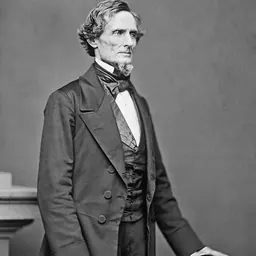
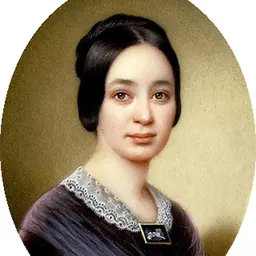
In November 1855, she purchased her and her son's freedom in St. Louis, Missouri. Keckley moved to Washington, D.C., in 1860. She established a dressmaking business that grew to include a staff of 20 seamstresses. Her clients were the wives of elite politicians, including Varina Davis, the wife of Jefferson Davis, and Mary Anna Custis Lee, the wife of Robert E. Lee.
After the American Civil War, Keckley wrote and published an autobiography, Behind the Scenes: Or, Thirty Years a Slave and Four Years in the White House, in 1868. It was both a slave narrative and a portrait of the first family, especially Mary Todd Lincoln, and it was controversial because of information it disclosed about the Lincolns' private lives.
Slavery
Early life Elizabeth Keckley (or Keckly) was born into slavery in February 1818, in Dinwiddie County Court House, Dinwiddie, Virginia, just south of Petersburg. She was the only child of her mother Agnes, a light-skinned Black woman whose white ancestors were members of the planter class. Her mother, nicknamed "Aggy", was a "house slave" who had learned to read and write even though it was illegal for enslaved people. She made clothes for 82 people: 12 members of the Burwell family and the 70 people they enslaved.
Adulthood
She was returned to Virginia where she served Mary and Armistead Burwell's daughter, Ann Burwell Garland and her husband, Hugh A. Garland. Ann was her half-sister. who suffered significant financial reverses by that time.
Road to freedom
Keckley met her future husband James in St. Louis, but refused to marry him until she and her son were free, because she did not want to have another child born into slavery. His wife, Anne, put the conditions in writing in 1855. Elizabeth (Lizzie) Le Bourgeois, said, "It would be a shame to allow you to go North to beg for what we should give you." Elizabeth "Lizzie" Le Bourgeois, her patron, took up a collection among her friends to loan to Keckley, who was then able to buy her and her son's freedom and was manumitted on November 15, 1855. The papers indicate that she was married to James Keckley by that date. She stayed in St. Louis until she repaid the $1,200 loan,
Career Early years In 1860, she enrolled her son, George Kirkland, in the newly established Wilberforce University in Ohio.
Seamstress in Washington
Keckley planned to work as a seamstress in Washington, but she could not afford the required license for a free black to remain in the city for more than 10 or 30 days. One of her patrons, a woman by the name of Miss Ringold, petitioned Mayor James G. Berret for a license for Keckley, which he granted to her free of charge. Ringold, a member of General John Mason's family from Virginia, also vouched that Keckley was a free woman, another requirement for residence. Keckley later became the favored family seamstress of Varina Davis, the wife of then Senator Jefferson Davis, who with her husband discussed the prospects of war in her presence. She made clothing for Davis and her children. Keckley hired seamstresses to finish the dress for McLean, who arranged a meeting the following week for her with Mary Todd Lincoln.
Mary Todd Lincoln
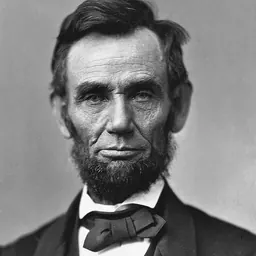
Keckley met Mary Todd Lincoln on March 4, 1861, the day of Abraham Lincoln's first inauguration and had an interview the following day. Lincoln chose her as her personal modiste and personal dresser, Lincoln was known for having clothes with floral patterns, bright colors, and youthful styling. The dresses made by Keckley for her were more sophisticated.
Keckley, who was ladylike and had a regal bearing, became Lincoln's best friend. She often visited the Lincolns' living quarters and was in attendance during private family conversations by 1862.
In April 1862, the District of Columbia emancipated enslaved persons. Although Keckley had much earlier purchased her own freedom in St. Louis, she was featured in a syndicated newspaper article about previously enslaved people who had made a success of their lives. As there was an influx of previously enslaved people in Washington, she established the Ladies' Freedmen and Soldier's Relief Association to assist people until they were able to establish a life for themselves. The Lincolns assisted her and visited the contrabands camps. Keckley, who lost her son during a Civil War battle in August 1861, was a source of strength and comfort for Lincoln after Willie died of typhoid fever in February 1862 and after President Lincoln's assassination. Keckley was among the recipients of Lincoln's effects. She acquired Mary Lincoln's dress from the second inauguration, the blood-spattered cloak and bonnet from the night of the assassination, as well as some of the President's personal items.
Keckley accompanied Lincoln and her children to Illinois after the assassination.
By writing the book, it was her intention to improve Lincoln's reputation and to explain what led to Lincoln's old clothes scandal of 1867. She also hoped that the income from the book would provide some financial support for Lincoln.
At a time when the white middle class struggled over "genteel performance", Keckley unveiled and revealed a white woman by the very title of her book, showing what went on behind the public scenes and revealing "private, domestic information involving, primarily, white women."
There was an immediate reaction when the book was published. Keckley has been seen by historians to have lost her friendship with Lincoln She lost many dressmaking clients. Robert Lincoln convinced the publisher to halt production of the book, which he felt was an embarrassment to his family. (Keckley's autobiography prompted controversy and questions about the veracity of her portrayals.) In 1935, the journalist David Rankin Barbee wrote that Keckley had neither written her autobiography nor even existed as a person; he asserted the abolitionist writer Jane Swisshelm wrote the slave narrative to advance her abolitionist cause. Many people who read the article challenged his claim, citing personal and/or secondary acquaintance with Keckley. Barbee modified his statement, saying: "no such person as Elizabeth Keckley wrote the celebrated Lincoln book." The following year, she held an exhibit at the Chicago World's Fair, representing Wilberforce. The organization changed its name in July 1864 to the Ladies' Freedmen and Soldier's Relief Association, to "reflect its expanded mission" after blacks started serving in the United States Colored Troops. The organization provided food, shelter, clothing, and medical care to recently freed persons, who were called contrabands because they were not legally free people and considered seized property, or contrabands, of war. She saw that "[their] appeal for help too often was answered by cold neglect." She thought the free blacks could do something similar to benefit the poor and suggested to her colored friends "a society of colored people be formed to labor for the benefit of the unfortunate freedmen." The organization held fundraisers, with concerts, speeches, dramatic readings, and festivals. Keckley sought out prominent black figures to support the organization including Frederick Douglass, Henry Highland Garnet, J. Sella Martin, It affirmed in its first annual report that "every effort made by us to obtain funds to alleviate in any way the distresses of our afflicted brethren has been crowned with success."
The association distributed clothes, food, and shelter among the freedmen and sent funds to many. Jean Fagan Yellin notes that the association sent $50 to the sick and wounded soldiers at Alexandria, Virginia. The association hosted Christmas dinners for sick and wounded soldiers. It distributed food to other organizations. The organization helped to place African-American teachers in the newly built schools for blacks. The entire community had recognized, valued, and thanked "the officers and the members of the Association for their kindness and attentive duties to the sick and wounded;" but it was overlooked in later histories.
The association became lost to history, but it set the standards and showed the need for relief organizations to provide aid to the poor and displaced black community. The work of the association within the black community helped create black autonomy. Through intra-ethnic networking, the association created an organization by and for African Americans. More than three-quarters white, he enlisted as a white in the Union Army in 1861 after the war broke out. He was a private in the 1st Missouri Infantry Regiment, Company D, led by Captain Richardson. He died on August 10, 1861, during the Battle of Wilson's Creek. After difficulties in establishing her son's racial identity, Keckley gained a pension as his survivor; it was $8 monthly and was later raised to $12 for the remainder of her life. After she was unable to work, the pension was her only income. who was a successful caterer After Lewis died, she raised the girls.
Legacy and honors The dress that Keckley designed for Mary Todd Lincoln to wear at her husband's second inauguration ceremony and reception is held by the Smithsonian's National Museum of American History. Keckley designed a quilt made from scraps of materials left over from dresses she made for Mrs. Lincoln. It is held by the Kent State University Museum and is shown in the book, The Threads of Time, The Fabric of History (2007), by Rosemary E. Reed Miller, which features Keckley among numerous African-American designers. The former school in Hillsborough, North Carolina, where Keckley worked for Rev. Robert Burwell, is now owned and operated as a house museum, the Burwell School Historic Site, by the Historic Hillsborough Commission. Its website discusses Keckley's life and times. On December 12, 2018, The New York Times published an obituary for Keckley, as a part of its Overlooked series of stories of remarkable individuals whose deaths went unreported by the newspaper. In 2022, Sarah Jessica Parker wore a dress to the Met Gala based on one of Keckley's designs from 1862 for Mary Todd Lincoln.
Representations in culture Films In Steven Spielberg's film Lincoln (2012), Keckley is portrayed by Gloria Reuben. Television In 1988's Lincoln (miniseries) she was portrayed by Ruby Dee, who received an Emmy nomination for the role. In Apple TV+ miniseries' Manhunt (2024), Keckley is portrayed by Betty Gabriel. Literature Tim Jorgenson's novel Mrs. Keckley Sends Her Regards (2007) portrays Keckley's intimate friendship with both of the Lincolns. Jennifer Chiaverini's novel Mrs. Lincoln's Dressmaker (2013) focuses on Mrs. Keckley's friendship with Mrs. Lincoln. George Saunders' novel, Lincoln in the Bardo (2017), quotes several passages from Mrs. Keckley's autobiography.
Plays Tazewell Thompson's play Mary T. & Lizzy K. opened in March 2013 at the Mead Center for American Theater in Washington, D.C.
Don’t just read it —
keep it.
Full-length biographies made to live with: read them, listen on the way to work, watch them tonight.
- E-book
- Audio
- Video
Instant download · yours to keep · every purchase keeps this site free
Important facts
more
Elizabeth Hobbs Keckly, Elizabeth (Lizzy) Hobbs KecklyPeople in Elizabeth Keckley's life
Named in this biography and alive at the same time





Related people
Same field, nearest in time
Contemporaries
People whose lives overlapped Elizabeth Keckley's


Frequently asked questions
Who was Elizabeth Keckley?
American dressmaker and author (1818–1907)
When was Elizabeth Keckley born?
Elizabeth Keckley was born in 1818 in Dinwiddie County Court House.
When did Elizabeth Keckley die?
Elizabeth Keckley died on 26 May 1907 in Washington, D.C..
What was Elizabeth Keckley's occupation?
Elizabeth Keckley was a modiste, writer, fashion designer, dressmaker and seamster.
What nationality was Elizabeth Keckley?
Elizabeth Keckley was American.
Sources & further reading
· Wikipedia: Elizabeth Keckley
Cite this page
APA: Biography.guide. (2026). Elizabeth Keckley. https://biography.guide/elizabeth-keckley/
MLA: "Elizabeth Keckley." Biography.guide, https://biography.guide/elizabeth-keckley/.
Chicago: "Elizabeth Keckley." Biography.guide. https://biography.guide/elizabeth-keckley/.
Data last updated: 2026-09-22 · Spot an error? Report a correction.
Portrait: Wikimedia Commons · author & licence
Page generated 2026-09-27 05:01 UTC