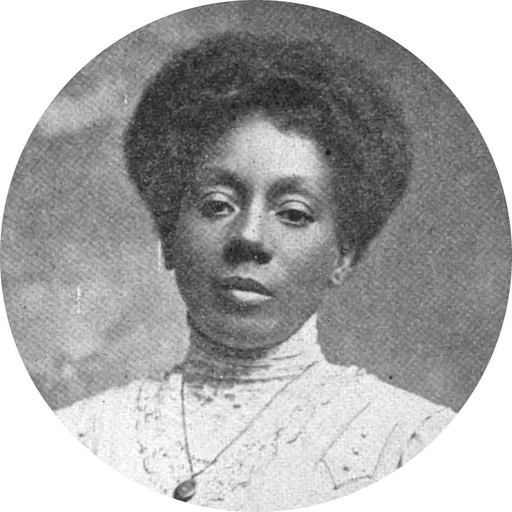
Elizabeth Carter Brooks
American educator, activist, architect
About Elizabeth Carter Brooks
Lived 1867 – 1951 (aged 83–84). Elizabeth Carter Brooks was an American architect, educator, social activist and suffragist.
Elizabeth Carter Brooks (1867–1951), was an American educator, social activist and architect. She was passionate about helping other African Americans achieve personal success and was one of the first to recognize the importance of preserving historical buildings in the United States. Brooks was "one of the few Black women of the era who could be considered both architect and patron." Her mother, Martha Webb, had been a former slave, owned by President John Tyler.
Brooks attended New Bedford High School, and then went on to the Swain Free School, which provided students with a strong foundation in design and architecture skills. She became the secretary of the Convention in 1896 and vice-president from 1906 to 1908. She succeeded Lucy Thurman as the 4th president of NACWC from 1908 until 1912. Brooks also joined the National Association for the Advancement of Colored People (NAACP) shortly after it was founded and later created her own NAACP chapter in New Bedford. Brooks eventually designed the Colonial style permanent home for its final location at 396 Middle Street. The building itself is still standing in New Bedford and is two and half stories tall, topped with a hip roof, six dormers and a front facade with a flat-roofed portico.
Brooks began teaching again, this time in 1901 at the Taylor School, where she became the first African American teacher in New Bedford.
In 1918, she was recruited by the War Council of the National board of the YWCA to supervise and oversee the building of the Phillis Wheatley YWCA in Washington, D.C.
In 1929, she retired from teaching. That same year, she married W. Sampson Brooks, who was the bishop of the African Methodist Episcopal denomination of the Bethel Church. She and her husband moved to San Antonio, where they lived together until her husband's death in 1934. After that, she moved back to New Bedford.
In 1939, she began her work on preserving Black heritage. Brooks felt that "monuments to 'race history' were an important part of the African American landscape and deserved to be preserved. She bought the home of William H. Carney and turned the home into a memorial.
After her death in 1951, the city of New Bedford honored her by naming a school after her in 1957.
Don’t just read it —
keep it.
Full-length biographies made to live with: read them, listen on the way to work, watch them tonight.
- E-book
- Audio
- Video
Instant download · yours to keep · every purchase keeps this site free
Important facts
People in Elizabeth Carter Brooks's life
Named in this biography and alive at the same time

Related people
Same field, nearest in time



Contemporaries
People whose lives overlapped Elizabeth Carter Brooks's




Frequently asked questions
Who was Elizabeth Carter Brooks?
American educator, activist, architect (1867-1951)
When was Elizabeth Carter Brooks born?
Elizabeth Carter Brooks was born in 1867 in New Bedford.
When did Elizabeth Carter Brooks die?
Elizabeth Carter Brooks died in 1951 in New Bedford.
What was Elizabeth Carter Brooks's occupation?
Elizabeth Carter Brooks was an architect, educator, social activist and suffragist.
What nationality was Elizabeth Carter Brooks?
Elizabeth Carter Brooks was American.
Sources & further reading
· Wikipedia: Elizabeth Carter Brooks
· DBpedia: Elizabeth Carter Brooks
Cite this page
APA: Biography.guide. (2026). Elizabeth Carter Brooks. https://biography.guide/elizabeth-carter-brooks/
MLA: "Elizabeth Carter Brooks." Biography.guide, https://biography.guide/elizabeth-carter-brooks/.
Chicago: "Elizabeth Carter Brooks." Biography.guide. https://biography.guide/elizabeth-carter-brooks/.
Data last updated: 2026-09-21 · Spot an error? Report a correction.
Portrait: Wikimedia Commons · author & licence
Page generated 2026-09-27 05:00 UTC