
About Elisheva Bichovsky
Lived 1888 – 1949 (aged 60). Elisheva Bichovsky was a Russian writer, poet, translator and literary critic.
Hebrew education Pre-revolutionary times Elisheva recalls in her memoir that already in elementary school she had become familiar with names of places that featured in adventure books for young people, including several Latin American cities and Galveston, Texas. Her interest in Hebrew was kindled after she chanced upon a Hebrew-language newspaper and saw an advertisement for a steamship company recommended as an easy, convenient way to cross the Atlantic Ocean. At that time Galveston was a major port of entry to the United States for European emigrants, and with the aid of a German-language textbook for scholars of Biblical Hebrew, she was able to puzzle out first the name of Galveston and later the names of other geographical locations from which telegrams were sent for newspaper publication, such as London, Saint Petersburg and Berlin. But except for the datelines at the tops of news stories, she was unable to comprehend anything from that newspaper. Eventually, she writes, someone explained that there were two separate “Jewish” languages, both written in the same letters but very, very different in vocabulary and grammar. who also began the publishing house Nisyonot (“Experiments”) in that year. For the first three months she had a young teacher whom she characterized as “both incredibly gifted and infinitely devoted to his cause.” The lessons were conducted by the direct method of , mainly through oral instruction and without a textbook.
"From the first lesson, I left with a precise knowledge of only two Hebrew words, but of the truth of this knowledge I did not have the slightest doubt. I knew what it means when the teacher turns to his pupils and asks, , Atem mevinim? ('Do you understand?'). I had not seen the Hebrew letters yet, and only learned the sounds by ear. But this knowledge — as well as what was added over time in these lessons — was solid and thorough. It was systematic and correct knowledge that was impossible for me to lose."
Although that teacher was popular with his pupils, he aroused suspicion for going about in Moscow with a light summer coat and without galoshes. He had invited some of his students, who did not know enough Hebrew to be able to study on their own, to take Russian-language lessons in the Tanakh, or Jewish scriptures. The lessons, sporadic and conducted at the homes of various students, led to the group's being perceived as a new and possibly dangerous revolutionary group, and arrests and an inquiry followed. Lacking the required “право жительства”, pravo zhitel'stva (right of residence) in the capital, the teacher was regarded as living there illegally and was forced to leave Moscow, but Elisheva continued to learn Hebrew off and on during the next two years. These are mainly short stories by Hersh Dovid Nomberg (1876–1927), poems by Shmuel-Yankev Imber (1889–1942?) and indirect translations, via Hayim Nahman Bialik's Yiddish version, of the Hebrew poems of the 12th-century Judah Halevi. Later she began to translate into Russian the works of contemporary Hebrew writers such as Gershon Shofman (1880–1972) and Yosef Haim Brenner (1881–1921). and her employment of Sephardic pronunciation in her poetry became the accepted norm. As one of Palestine's first Hebrew poets, Elisheva helped give form to the literary life of the emerging country,
Don’t just read it —
keep it.
Full-length biographies made to live with: read them, listen on the way to work, watch them tonight.
- E-book
- Audio
- Video
Instant download · yours to keep · every purchase keeps this site free
Important facts
People in Elisheva Bichovsky's life
Named in this biography and alive at the same time

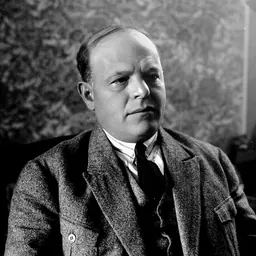
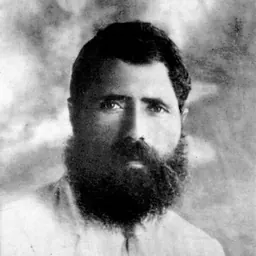
Related people
Same field, nearest in time
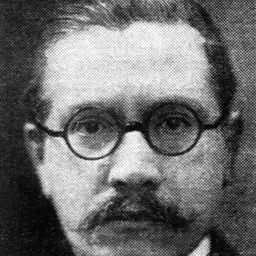
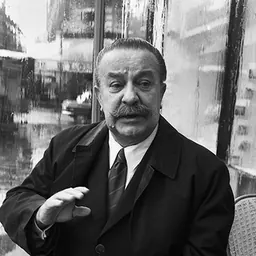


Contemporaries
People whose lives overlapped Elisheva Bichovsky's




Frequently asked questions
Who was Elisheva Bichovsky?
Russian and Israeli poet (1888-1949)
When was Elisheva Bichovsky born?
Elisheva Bichovsky was born on 20 September 1888 in Spassk-Ryazansky.
When did Elisheva Bichovsky die?
Elisheva Bichovsky died on 26 March 1949 in Tiberias.
What was Elisheva Bichovsky's occupation?
Elisheva Bichovsky was a writer, poet, translator and literary critic.
What nationality was Elisheva Bichovsky?
Elisheva Bichovsky was Russian.
Sources & further reading
· Wikipedia: Elisheva Bichovsky
Cite this page
APA: Biography.guide. (2026). Elisheva Bichovsky. https://biography.guide/elisheva-bichovsky/
MLA: "Elisheva Bichovsky." Biography.guide, https://biography.guide/elisheva-bichovsky/.
Chicago: "Elisheva Bichovsky." Biography.guide. https://biography.guide/elisheva-bichovsky/.
Data last updated: 2026-09-26 · Spot an error? Report a correction.
Page generated 2026-09-27 05:14 UTC