
About Elisabet Ney
Lived 1833 – 1907 (aged 74). Elisabet Ney was a German and American sculptor and artist.
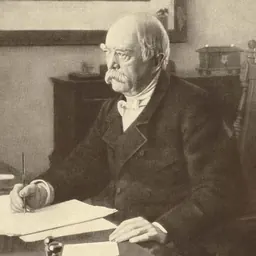
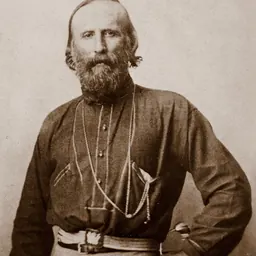
Bernadina Wilhelmina Elisabeth Ney (January 26, 1833 – June 29, 1907) was a German-American sculptor who spent the first half of her life and career in Europe, producing portraits of famous leaders such as Otto von Bismarck, Giuseppe Garibaldi and King George V of Hanover. At age 39, she immigrated to Texas with her husband, Edmund Montgomery, and became a pioneer in the development of art there. Among her most famous works during her Texas period were life-size marble figures of Sam Houston and Stephen F. Austin, commissions for the Texas State Capitol. A large group of her works are housed in the Elisabet Ney Museum, located in her home and studio in Austin. Other works can be found in the United States Capitol, the Smithsonian American Art Museum, and numerous collections in Germany.
Early life
Ney was born in Münster, in the Province of Westphalia, to Johann Adam Ney, a stonecarver and alleged nephew of Field Marshal Michel Ney, The only other surviving child in the Ney family was her older brother, Fritz. Her parents were Catholics of Alsatian-Polish heritage. She was the great-niece of Michel Ney, Marshal of France. Early in life, she declared that her goal was "to know great persons."
United States In the early 1880s, Ney, by then a Texas resident, was invited to Austin by Governor Oran M. Roberts, which resulted in the resumption of her artistic career. In 1892, she built a studio named Formosa in the Hyde Park neighborhood north of Austin and began to seek commissions. Ney missed the deadline and the sculptures were not shown at the Exhibition. The marble sculptures of Houston and Austin can now be seen in both the Texas State Capitol in Austin and in the National Statuary Hall Collection in the U.S. Capitol in Washington, D.C. She was commissioned to sculpt a memorial to the career military officer and war hero Albert Sidney Johnston for his grave in the Texas State Cemetery. One of her signature works was the figure of Lady Macbeth; the plaster model is in the Elisabet Ney Museum and the completed marble is in the Smithsonian American Art Museum collection. What is considered to be possible the last known work of Ney, a sculpture of a tousled haired cherub resting over a grave and known as the 1906 Schnerr Memorial, can be found at Der Stadt Friedhof in Fredericksburg, Texas.
In addition to her sculpting activities, Ney was also active in cultural affairs in Austin. Formosa become a center for cultural gatherings and curiosity seekers. The composer Paderewski and the Russian ballerina Anna Pavlova were among her visitors. named Edmund Montgomery. They kept in touch, and, although she viewed the institution of marriage as a state of bondage for women, after he established a medical practice in Madeira, they were married at the British consulate there on November 7, 1863.
Ney, however, remained outspoken about women's roles. She refused to use Montgomery's name, often denied she was even married, and once remarked:
She wore pants and rode her horses astride as men did. She liked to fashion her own clothes, which, in addition to the slacks, included boots and a black artist frock coat. On January 14, 1871, Ney and Montgomery, accompanied by their housekeeper, Cenci, immigrated to Georgia, to a colony promoted as a resort for consumptives. Their first son, Arthur, was born there in 1871, but died two years later (possibly of diphtheria, but the cause of death is disputed). Unfortunately, the Thomasville colony did not work out as they had hoped. Baron and Baroness von Stralendorff returned to Wismar, Germany where he died on July 1, 1872.
Ney and Montgomery looked elsewhere in the United States for a place to live, including Red Wing, Minnesota, where their second son, Lorne (1872–1913), was born. Later that year, Ney traveled alone to Texas. With the help of Julius Runge a businessman in Galveston, she was shown Liendo Plantation near Hempstead in Waller County. On March 4, 1873, Montgomery and the rest of the family arrived, and they purchased the plantation. While he tended to his research, she ran it for the next twenty years.
Ney participated in the woman's suffrage movement in Texas, when speaking on behalf of a bill to give women the vote in Texas in 1907. Though Texas had no official suffrage organization at the time, herself and several other women attended the committee hearing at the state capitol and spoke. The resolution failed.
Death and legacy
Ney died in her studio on June 29, 1907, and is buried next to Montgomery, who died four years later, at Liendo Plantation.
Upon her death, Montgomery sold the Formosa studio to Ella Dancy Dibrell. As per her wishes, its contents were bequeathed to the University of Texas at Austin, but were to remain in the building. On April 6, 1911, Dibrell and other friends established the Texas Fine Arts Association (after more than a century in existence, the organization is now known as the Contemporary Austin) in her honor. It is the oldest Texas-wide organization existing for support of the visual arts. Formosa is now the home of the Elisabet Ney Museum. In 1941, the City of Austin took over the ownership and operation.
In 1961, Lake Jackson Primary School in Lake Jackson, Texas was renamed Elisabet Ney Elementary School in her honor.
Gallery
Works Below is a partial listing of her works.
Don’t just read it —
keep it.
Full-length biographies made to live with: read them, listen on the way to work, watch them tonight.
- E-book
- Audio
- Video
Instant download · yours to keep · every purchase keeps this site free
Important facts
more
Franzisca Bernardina Wilhelmina Elisabet NeyFamily & relationships
People in Elisabet Ney's life
Named in this biography and alive at the same time



Related people
Same field, nearest in time


Contemporaries
People whose lives overlapped Elisabet Ney's


Frequently asked questions
Who was Elisabet Ney?
German-born American sculptor (1833-1907)
When was Elisabet Ney born?
Elisabet Ney was born on 26 January 1833 in Münster.
When did Elisabet Ney die?
Elisabet Ney died on 29 June 1907 in Austin.
What was Elisabet Ney's occupation?
Elisabet Ney was a sculptor and artist.
What nationality was Elisabet Ney?
Elisabet Ney was German and American.
Sources & further reading
Cite this page
APA: Biography.guide. (2026). Elisabet Ney. https://biography.guide/elisabet-ney/
MLA: "Elisabet Ney." Biography.guide, https://biography.guide/elisabet-ney/.
Chicago: "Elisabet Ney." Biography.guide. https://biography.guide/elisabet-ney/.
Data last updated: 2026-09-20 · Spot an error? Report a correction.
Page generated 2026-09-27 05:22 UTC