
Elijah Barayi
South African trade union leader
About Elijah Barayi
Lived 1930 – 1994 (aged 63–64).
Elijah Barayi (15 June 1930 – 24 January 1994) was a South African trade union leader.
Born in Lingelihle Cradock, Barayi was one of eight children that, all came from a working-class family. Cradock was known for being a politically active town, which later on became known as the "Cradock Four" for anti-apartheid activism. Elijah Barayi studied at Lwana Primary School, and he also got his certificate at Nuwell High School. Barayi joined the ANC Youth League as a teenager in 1952. He and many others were arrested during a state of emergency after the Sharpeville Massacre on 21 March 1960. This was seen as a turning point in ANC activism, which pushed many activists underground. Barayi aspired to study at Fort Hare University, which produced many notable African leaders, including Oliver Tambo and Nelson Mandela. His family was unable to afford tuition, so he instead became a clerk at the Department of Native Affairs, which is a government office that was responsible for enforcing apartheid policies. Later, he decided to resign from this job because he viewed the department as enforcing discrimination. This decision reflected his stance on social and political justice.
In the 1980s, Elijah Barayi's attention became more occupied by the labor movement. In 1982, he founded the National Union of Mineworkers (NUM). This became one of the most notable trade unions in South Africa. By joining the National Union of Mineworkers, this marked the start of a new direction of bringing labor organization and politics together.
Trade union career Following the release, he moved to Brakpan to escape police harassment and found work as a personnel officer at a gold mine. He attempted to use the role to oppose racial discrimination and the underpayment of many of the Black workers, and was banned by management from standing for a second term.
While Barayi was being restricted, he still continued to influence the mineworkers. His experience in Carletonville showed many of the limitations that were put onto people by the Liaison Committee, which was controlled by management, and this all happened because they didn't want workers to have good representation. This frustration pushed him to take a stronger stand in support of labor organizing. Going into the late 1970s, Barayi had become a significant voice in labor activism. He stood against the apartheid practices that were happening in the mining industry.
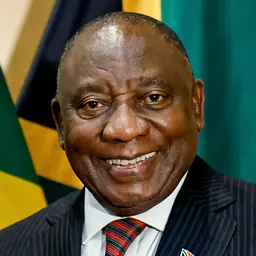
COSATU leadership In 1981, Barayi met Cyril Ramaphosa, and this inspired him to become a founding member of the National Union of Mineworkers (NUM). He was elected as a shaft steward, and then in 1983 as the union's vice president.
Barayi's legacy continues in South Africa's democracy. His push for non-racial unions and international solidarity continues to be a principle in the Congress of South African Trade Unions and in other labor unions across the world.
Don’t just read it —
keep it.
Full-length biographies made to live with: read them, listen on the way to work, watch them tonight.
- E-book
- Audio
- Video
Instant download · yours to keep · every purchase keeps this site free
Important facts
People in Elijah Barayi's life
Named in this biography and alive at the same time



Contemporaries
People whose lives overlapped Elijah Barayi's

Frequently asked questions
Who was Elijah Barayi?
South African trade union leader
When was Elijah Barayi born?
Elijah Barayi was born in 1930.
When did Elijah Barayi die?
Elijah Barayi died in 1994.
Sources & further reading
Cite this page
APA: Biography.guide. (2026). Elijah Barayi. https://biography.guide/elijah-barayi/
MLA: "Elijah Barayi." Biography.guide, https://biography.guide/elijah-barayi/.
Chicago: "Elijah Barayi." Biography.guide. https://biography.guide/elijah-barayi/.
Data last updated: 2026-09-20 · Spot an error? Report a correction.
Page generated 2026-09-27 05:15 UTC