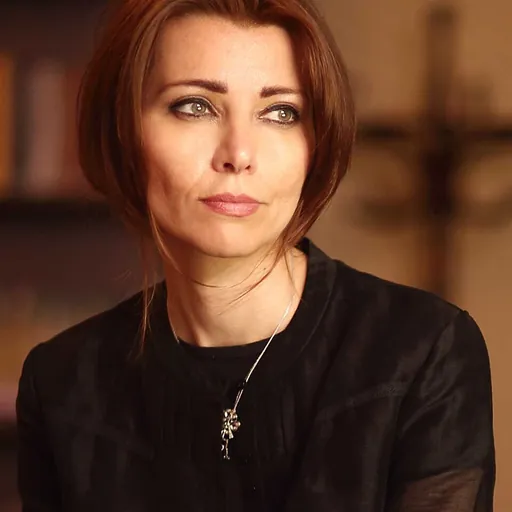
About Elif Şafak
Born 1971. Elif Şafak is a Turkish writer, novelist, journalist, essayist and public speaker.
Elif Shafak ( ; née Bilgin; born 25 October 1971) is a Turkish-British novelist, essayist, public speaker, political scientist, and activist.
Shafak writes in Turkish and English, and has published 21 books. She is best known for her novels, which include The Bastard of Istanbul, The Forty Rules of Love, Three Daughters of Eve, 10 Minutes 38 Seconds in This Strange World, and The Island of Missing Trees. , her work had been translated into almost sixty languages, with several of her works having been bestsellers in Turkey and internationally.
Her works have prominently featured the city of Istanbul, and dealt with themes of Eastern and Western culture, roles of women in society, and human rights issues. Certain politically challenging topics addressed in her novels, such as child abuse and the Armenian genocide, have led to legal action from authorities in Turkey In December 2025, she was named as the new president of the Royal Society of Literature, taking over the role from Bernardine Evaristo.
Early life and education Shafak was born in Strasbourg, France, to Nuri Bilgin, a professor of Social Psychology, and Şafak Atayman, who later became a diplomat. After her parents separated, Shafak returned to Ankara, Turkey, where she was raised by her mother and maternal grandmother. She says that growing up in a dysfunctional family was difficult, but that growing up in a non-patriarchal environment had a beneficial impact on her. Having grown up without her father, she met her half-brothers for the first time when she was in her mid-twenties.
Shafak added her mother's first name, Turkish for "dawn", to her own when constructing her pen name at the age of eighteen. Shafak spent her teenage years in Madrid, Jordan and Germany. She holds a PhD in political science. She has taught at universities in Turkey. Later emigrating to the United States, she was a fellow at Mount Holyoke College, a visiting professor at the University of Michigan, and was a tenured professor at the University of Arizona in Near Eastern studies.
In the UK, for the 2017–2018 academic year, she held the Weidenfeld Visiting Professorship in Comparative European Literature at St Anne's College, University of Oxford, where she is an honorary fellow. The governing body of Hertford College, Oxford, elected her as a visiting fellow in 2024.
Career Shafak has published 21 books, fiction and nonfiction.
Fiction Shafak's first novel, Pinhan, was awarded the Rumi Prize in 1998, a Turkish literary prize.
Shafak's 1999 novel Mahrem (The Gaze) was awarded "Best Novel" by the Turkish Authors' Association in 2000.
Her next novel, Bit Palas (The Flea Palace, 2002), was shortlisted for The Independent Foreign Fiction Prize in 2005. After 22 years, in January 2024 Shafak was found guilty of plagiarism in her book Bit Palas in Turkey. However, 130 prominent figures from the literary world came together to issue a statement emphasising that this was not a real case. Both Shafak and her publisher in Turkey have appealed the decision.
Shafak released her first novel in English, The Saint of Incipient Insanities, in 2004. It addresses the Armenian genocide, which is denied by the Turkish government. Shafak was prosecuted in July 2006 on charges of "insulting Turkishness" (Article 301 of the Turkish Penal Code) for discussing the genocide in the novel. Had she been convicted, she would have faced a maximum prison sentence of three years. The Guardian commented that The Bastard of Istanbul may be the first Turkish novel to address the genocide. She was acquitted of these charges in September 2006 at the prosecutor's request.
Shafak's novel The Forty Rules of Love (Aşk in Turkish) became a bestseller in Turkey upon its release; it sold more than 200,000 copies by 2009, surpassing a previous record of 120,000 copies set by Orhan Pamuk's The New Life (1994). In France, Shafak's novel was awarded a Prix ALEF* – Mention Spéciale Littérature Etrangère. It was also nominated for the 2012 International IMPAC Dublin Literary Award. In 2019, it was listed by the BBC as one of the 100 "most inspiring" novels and one of the "100 novels that shaped our world".
Her 2012 novel Honour, which focuses on an honour killing, was nominated for the 2012 Man Asian Literary Prize and 2013 Women's Prize for Fiction, followed by The Architect's Apprentice, a historical fiction novel about a fictional apprentice to Mimar Sinan, in 2014. was chosen by London Mayor Sadiq Khan as his favourite book of the year. American writer Siri Hustvedt also praised the book. The book explores themes of secular versus orthodox religious practice, conservative versus liberal politics and modern Turkish attitudes towards these .
Following Margaret Atwood, David Mitchell and Sjon, Shafak was selected as the 2017 writer for the Future Library project. Her work The Last Taboo is the fourth part of a collection of 100 literary works that will not be published until 2114.
Shafak's 2019 novel 10 Minutes 38 Seconds in This Strange World, revolving around the life of an Istanbul sex worker, was shortlisted for the Booker Prize. In 2019, Shafak was investigated by Turkish prosecutors for addressing child abuse and sexual violence in her fiction writing.
Shafak released her twelfth novel The Island of Missing Trees in 2021.
Her 2024 novel is There are Rivers in the Sky, a split-timeline novel about water, that reaches from the Assyrian king Ashurbanipal to a hydrologist in present-day London and addresses the persecution, and 2014 massacre, of the Yazidi.
Non-fiction Shafak's non-fiction essays in Turkish have been collected in four books: Med-Cezir (2005), Firarperest (2010), Şemspare (2012) and Sanma ki Yalnızsın (2017).
In 2020, Shafak published How to Stay Sane in an Age of Division. La Repubblica, The New Yorker, The New York Times, Der Spiegel and New Statesman.
Shafak has been a panellist or commentator on BBC World, Euronews and Al Jazeera English.
Until 2009, when she transferred to Habertürk, Shafak was a writer for the newspaper Zaman, which was known for its affiliation with Fethullah Gülen.
In July 2017, Elif Shafak was chosen as a "castaway" on BBC Radio 4's Desert Island Discs.
Shafak has been a TEDGlobal speaker twice receiving standing ovation.
Themes Istanbul Istanbul has been prominent in Shafak's writing. She depicts the city as a melting pot of different cultures and various contradictions. Shafak has remarked: "Istanbul makes one comprehend, perhaps not intellectually but intuitively, that East and West are ultimately imaginary concepts, and can thereby be de-imagined and re-imagined." In the same essay written for Time magazine Shafak says: "East and West is no water and oil. They do mix. And in a city like Istanbul they mix intensely, incessantly, amazingly."
Eastern and Western cultures Shafak blends Eastern and Western ways of storytelling, and draws on oral and written culture. In The Washington Post, Ron Charles Wrote: "Shafak speaks in a multivalent voice that captures the roiling tides of diverse cultures." Mysticism and specifically Sufism has also been a theme in her work, particularly in The Forty Rules of Love.
Human rights Shafak's novels have explored human rights issues, particularly those in Turkey. She has said: "What literature tries to do is to re-humanize people who have been dehumanized ... People whose voices we never hear. That's a big part of my work". Specific topics have included persecution of Yazidis, the Armenian genocide She signed an open letter in protest against Turkey's Twitter ban in 2014, commenting: "the very core of democracy ... is lacking in today's Turkey".
Shafak has spoken and written about various global political trends. In the 2010s, she drew parallels between Turkish political history and political developments in Europe and the United States.
Personal life Shafak had lived in Istanbul, and in the United States before moving to the UK. Shafak has lived in London since 2013, but speaks of "carrying Istanbul in her soul". As of 2019, Shafak had been in self-imposed exile from Turkey due to fear of prosecution.
Shafak is married to the Turkish journalist Eyüp Can Sağlık, a former editor of the liberal newspaper Radikal, with whom she has a daughter and a son. In 2017, Shafak came out as bisexual.
Following the birth of her daughter in 2006, Shafak suffered from postnatal depression, a period she addressed in her memoir Black Milk.
Awards and recognition
Book awards
1998: Pinhan, The Great Rumi Award, Turkey. 2011: Soufi, mon amour (Phébus, 2011), Prix ALEF – Mention Spéciale Littérature Etrangère. 2012: The Forty Rules of Love, nominated for the International IMPAC Dublin Literary Award. 2013: Crime d'honneur (Phébus, 2013), Prix Relay des voyageurs. 2014: Honour, second place for the Prix Escapade, France. 2015: The Architect's Apprentice, shortlisted for RSL Ondaatje Prize. 2019: 10 Minutes 38 Seconds in This Strange World, shortlisted for the Booker Prize. 2021: The Island of Missing Trees, shortlisted for the Costa Book Award. 2021: Halldór Laxness International Literature Prize. 2011: The Island of Missing Trees, shortlisted for the Women's Prize for Fiction. 2022: The Island of Missing Trees, shortlisted for the Edward Stanford Travel Writing Awards. 2023: The Island of Missing Trees, shortlisted for the British Book Awards. 2025: There Are Rivers in The Sky, Fiction with a Sense of Place Award at the Edward Stanford Travel Writing Awards. 2025: There Are Rivers in The Sky, Gordon Bowker Volcano Prize from the Society of Authors. 2025: There Are Rivers in The Sky, Prix Femina Etranger finalist. 2026: There Are Rivers in The Sky, translated by Dominique Goy-Blanquet into French (Éditions Flammarion), Prix Fragonard de Littérature Étrangère.
Other recognition
Maria Grazia Cutuli Award – International Journalism Prize, Italy 2006. Turkish Journalists and Writers Foundation "The Art of Coexistence Award, 2009". Marka Conference 2010 Award. Women To Watch Award, Mediacat & Advertising Age, March 2014. Asian Women of Achievement Awards 2015: Global Empowerment Award. 2016 GTF Awards for Excellence in Promoting Gender Equality. Elected Fellow of the Royal Society of Literature (FRSL), 2019. BBC's 100 most inspiring and influential women, 2021. British Academy President's Medal, 2024. Speaking at the launch of the Frankfurt International Book Fair, 2024.
Don’t just read it —
keep it.
Full-length biographies made to live with: read them, listen on the way to work, watch them tonight.
- E-book
- Audio
- Video
Instant download · yours to keep · every purchase keeps this site free
Important facts
People in Elif Şafak's life
Named in this biography and alive at the same time








Related people
Same field, nearest in time


Contemporaries
People whose lives overlapped Elif Şafak's



Frequently asked questions
Who is Elif Şafak?
Turkish writer (born 1971)
When was Elif Şafak born?
Elif Şafak was born on 25 October 1971 in Strasbourg.
What is Elif Şafak's occupation?
Elif Şafak is a writer, novelist, journalist, essayist and public speaker.
What nationality is Elif Şafak?
Elif Şafak is Turkish.
Sources & further reading
Cite this page
APA: Biography.guide. (2026). Elif Şafak. https://biography.guide/elif-safak/
MLA: "Elif Şafak." Biography.guide, https://biography.guide/elif-safak/.
Chicago: "Elif Şafak." Biography.guide. https://biography.guide/elif-safak/.
Data last updated: 2026-09-22 · Spot an error? Report a correction.
Portrait: Wikimedia Commons · author & licence
Page generated 2026-09-27 05:02 UTC