
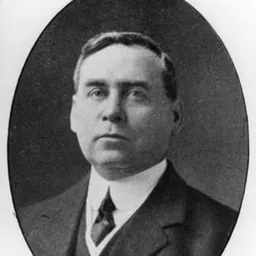
Elias Abu Shabaki
Lebanese author, poet, editor, translator, and critic.
About Elias Abu Shabaki
Lived 1903 – 1947 (aged 43). Elias Abu Shabaki was an American and Lebanese journalist, writer, poet and interpreter.
Elias Abu Shabaki (also spelled Ilyas Abu Shabaka; , May 3, 1903 – January 27, 1947) was a Lebanese writer, poet, editor, translator, and literary critic. He was one of the founders of the literary League of Ten and is considered a leading figure of the Arabic Nahda Movement. Elias' mother came from a family well known for its poetic gifts, and both Nayla's brother and maternal uncle (Elias Ferzan) were established poets.
In 1914, while Elias' father was visiting his estates in the Khartoum region in Sudan, he was attacked by bandits who stripped him of his belongings and killed him; the loss of his father left young Elias in a state of emotional distress and depression that would mark the rest of his life. The orphaned Elias continued his education at Aintoura until the outbreak of the Great War when he had to quit the school due to financial problems, though the school was later forced to close by the Ottoman authorities. Elias resumed his studies at the College Central in Jounieh which was run then by the Marist Brothers before returning a year later to Saint Joseph's, but he never graduated as a result of a quarrel he had with one of his teachers; nevertheless, he continued his self-education and read religious books and French Romantic literature extensively, which inspired his first literary efforts. Among the French authors, Elias was particularly fond of the works of Charles Baudelaire and Alfred de Musset. Elias had had an affinity for journalism since his youth, and he eked a meager living through his contributions to a number of Lebanese publications (Al Adib, Al Bayrak, Al Bayan, Al Nida, Al Ma'rad, Al 'assifa, Lisan al Hal, Al Joumhour, Al Makshouf and Sawt Al Ahrar), also publishing a significant number of journalistic articles on various topics. Elias also corresponded with a number of Egyptian newspapers such as Al Muqtataf and Al Masa. His next book Afa'i al-Firdaws (Serpents of Paradise), published in 1938, is lauded by many as Abu Shabaki's best work and one of the best accomplishments of romantic poetry in modern Lebanese and Arabic literature. Afa'i al Firdaws and Elias' latter works would play an influential role in the development of modern Arabic poetry and literature. argue that Elias was a misogynist
Elias epitomized beautiful lewd women as diabolical creatures, cunning temptresses causing man's downfall and "Serpents of Paradise"; this bitter and ironical antithesis is an allusion to danger and evil that is brought upon by lust and sin.
Writing Abu Shabaki was a prolific writer, publishing a wide variety of works, including poems, journal articles, and literary studies. Widely seen as his most important work was Afa'i al-Firdaws (1938). Elias' writing is characterized by powerful imagery, realism, and often a striking carnality and obsession with the pleasures of the flesh. Elias believed that the purest art evolves from emotion, which he thought was the source of authentic and aesthetic experience; he set a high value for inspiration and denounced rationalism and the role of conscious control in writing poetry. In one poem, Abu Shabaki wrote that truthful poetry is the best, contrary to the old Arabic saying that the best poetry is that which feigns most.
Influences The many hardships and emotional challenges that Abu Shabaki endured, from growing up fatherless amid the First World War to losing his only born son, influenced his gloomy poetry which conveys a strong sense of the presence of evil in the world and an effort to find an escape in love or in the innocence of childhood and nature. Elias' often pessimistic writings evoked a concern for the body and its lust, greatly affected by Romantic works he had read during his youth which commended loneliness, sorrow, passion, pain and death and denounced the materialism and lewdness of city life.
League of ten In 1930, Abu Shabaki, along with Michel Abou Shahla, Khalil Takieddin and Fouad Hobeish, co-founded a literary society conveniently dubbed the "League of Ten" since it at first included ten literary and artistic figures. In addition to the four founding members, the league consisted of Karam Ali Melhem Karam, Youssef Ibrahim Yazbek, Takieddin al-Solh, Toufic Youssef Awwad, Abdallah Lahoud, and Michel Asmar. The league waged an assiduous attack on literary figures and the political establishment through articles published in the periodical al-Maarad, which was subsequently forced to close by the government. The league's aim was to promote literary renewal and modernization of Arab literature.
Publications
Al-Kithara Elias' first Diwan, al-Kithara (The Lyre), was published in 1926 by Sader publishers. Al-Kithara was Elias' earliest work, attesting of the young poet's inexperience while revealing his great poetic potential. The juvenilia that showed the influence of classical Arab poets such as Abu Nuwas was described as gloomy and pretentious. It contained a number of poems translated from French and was dedicated to the spirit of Abu Shabaki's dead father; the dedication established the melancholy and pessimistic mood that pervades the Diwan.
Al-Marid as-samet Al-Marid as-samet (The Silent Invalid) was Elias' second juvenilia. It was published in 1928 and was the poet's first trial at narrative poetry. and Adunis.
Don’t just read it —
keep it.
Full-length biographies made to live with: read them, listen on the way to work, watch them tonight.
- E-book
- Audio
- Video
Instant download · yours to keep · every purchase keeps this site free
Important facts
People in Elias Abu Shabaki's life
Named in this biography and alive at the same time

Related people
Same field, nearest in time



Contemporaries
People whose lives overlapped Elias Abu Shabaki's

Frequently asked questions
Who was Elias Abu Shabaki?
Lebanese author, poet, editor, translator, and critic. (1903–1947)
When was Elias Abu Shabaki born?
Elias Abu Shabaki was born on 3 May 1903 in Providence.
When did Elias Abu Shabaki die?
Elias Abu Shabaki died on 27 January 1947 in Beirut.
What was Elias Abu Shabaki's occupation?
Elias Abu Shabaki was a journalist, writer, poet and interpreter.
What nationality was Elias Abu Shabaki?
Elias Abu Shabaki was American and Lebanese.
Sources & further reading
· Wikipedia: Elias Abu Shabaki
Cite this page
APA: Biography.guide. (2026). Elias Abu Shabaki. https://biography.guide/elias-abu-shabaki/
MLA: "Elias Abu Shabaki." Biography.guide, https://biography.guide/elias-abu-shabaki/.
Chicago: "Elias Abu Shabaki." Biography.guide. https://biography.guide/elias-abu-shabaki/.
Data last updated: 2026-09-20 · Spot an error? Report a correction.
Page generated 2026-09-27 05:17 UTC