
About Electra Havemeyer Webb
Lived 1888 – 1960 (aged 72). Electra Havemeyer Webb was an American art collector and philanthropist.
Electra Havemeyer Webb (August 16, 1888 – November 19, 1960) was a collector of American antiques and founder of the Shelburne Museum.
Early life Electra Havemeyer was born on August 16, 1888. She was the youngest child of Henry Osborne Havemeyer (1847–1907), President of the American Sugar Refining Company, and Louisine Elder (1855–1929). She had two older siblings, Adaline Havemeyer (1884–1963), who married Peter Hood Ballantine Frelinghuysen, and Horace Havemeyer (1886–1956), who married Doris Dick Havemeyer.
Her paternal grandparents were Frederick Christian Havemeyer Jr. (1807-1891), and Sarah Louise Henderson Havemeyer (1812-1851). Her maternal grandparents were merchant George W. Elder (1831–1873) and his wife, Matilda Adelaide Waldron (1834–1907).
She attended Miss Spence's School and traveled with her family to the American West, France, Italy, Spain, Egypt, Greece and Austria.
Collector Although she spent her youth examples of European and Asian material culture, Webb's own collecting took a different approach. Webb lived with more than twenty extremely fine Impressionist works from her parents' collection in a penthouse at 740 Park Avenue during part of the year. She decorated a small pink farmhouse on portion of her in-laws' estate with simple New England furniture and craftwork. Quilts, tiger maple furniture and hooked rugs filled the homey rooms of her country house. Webb's Vermont home was modest and comfortable in scale. Her "Brick House" survives today as a rare and intact example of the Colonial Revival, providing an intimate glimpse into the life of a pioneer collector of America and founder of the Shelburne Museum. The home was in the Webb family until 2000 when the structure and its contents were acquired by the museum. Following a 4.4 million dollar campaign by the museum to restore the home to Mrs. Webb's decor, the museum was recognized by Preservation Trust of Vermont in 2005 for their efforts in preserving the Brick House. Since 2004, it has been open to the public by reservation for guided tours during the summer months.
Shelburne Museum
Louisine Havemeyer and her Daughter Electra, 1895 pastel on paper by Mary Cassatt. Collection of Shelburne Museum The closing of one of the Webb's other homes near the polo grounds at Old Westbury unintentionally birthed a museum. In 1947 Webb gathered with her friends to create Shelburne Museum. Located on U.S. Route 7 in Shelburne, Vermont, Webb's museum housed various handmade objects including weathervanes, trade signs, portraits carriages, sleighs, and furniture.
Rather than confine her eclectic collections to a single modern gallery, Webb chose to create an institution that would showcase her "collection of collections" in examples of early American homes and public buildings. A general store, meeting house, log cabin, and a steamship occupy the grounds. The entire museum reflects Webb's passion for American art and design, as she treasured a variety of objects. Five rooms from her Park Avenue apartment were installed in a Greek Revival memorial building after her death in 1960, bringing Webb's collection of works by Monet, Manet, and Degas to the museum grounds.
Webb began collecting in 1911, before the founding of Colonial Williamsburg and decades before authentic American antiques returned to the major rooms of the White House. At the time, the National Register of Historic Places did not exist. Webb was a prominent and ambitious collector of Americana. She collaborated with leading antique dealers of the era, including Edith Halpert and Harry Newman, to assemble extensive and unique collections of American material culture. Drawn to the authenticity of everyday objects, Webb used her resources to preserve them, and today the museum’s Americana collection is considered one of the finest in the world.
Deaccession Controversy In 1996 the museum sold $30 million of her artwork, deemed non-essential to the collection, which had been in storage not visible to the public for years to create a collections care endowment, to better preserve and secure the items in the collection. While the board had considered other ways to care for the items, including mergers and loaning out the collection, the final choice received some backlash in the art community. The president of the American Association of Museums refused to endorse the move arguing that the museum was unfairly conflating care for the items with security, while the director at the time argued it set a dangerous precedent for other museums doing the same. of the Vanderbilt family in an elaborate society wedding at St. Bartholomew's Episcopal Church, New York. He was a son of William Seward Webb and Eliza Osgood Vanderbilt.
Electra Webb (1910–1982) Samuel Webb (1912–1988) Lila Webb(1913–1961) James Watson Webb, Jr. (1916–2000) Harry Webb (1922–1975). She was the fifth woman to be recognized in this manner.
She died on November 19, 1960, at Mary Fletcher Hospital in Burlington, Vermont.
Shelburne Farms
Webb's parents-in-law Dr. William Seward Webb and Eliza Osgood Vanderbilt had transformed a collection of rambling lakeside farms on the shore of Vermont's Lake Champlain into a model country estate. The core of property, the Shelburne Farms, survives today as a nonprofit education center for sustainability. Recalling her first visit to the Webb estate as a young girl, Webb declared: "I felt as though I was in dreamland"; she was smitten by the beauty of Vermont's Champlain Valley. On the Webb estate she enjoyed horseback riding, the 113-foot steam yacht and one of America's first private nine-hole golf courses. The pastoral landscape and lush grounds of Shelburne Farms would be replicated at Electra Havemeyer Webb's museum. Shelburne Museum is well known for its fine collection of lilacs, peonies and New England perennials.
Don’t just read it —
keep it.
Full-length biographies made to live with: read them, listen on the way to work, watch them tonight.
- E-book
- Audio
- Video
Instant download · yours to keep · every purchase keeps this site free
Important facts
Family & relationships
People in Electra Havemeyer Webb's life
Named in this biography and alive at the same time


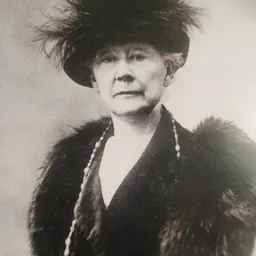
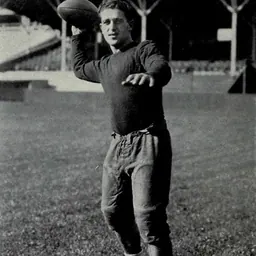
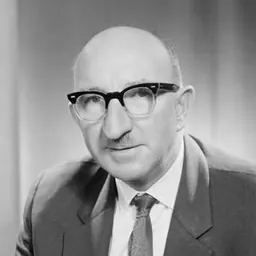


Related people
Same field, nearest in time


Contemporaries
People whose lives overlapped Electra Havemeyer Webb's

Frequently asked questions
Who was Electra Havemeyer Webb?
American antique collector (1888-1960)
When was Electra Havemeyer Webb born?
Electra Havemeyer Webb was born on 16 August 1888 in New York City.
When did Electra Havemeyer Webb die?
Electra Havemeyer Webb died on 19 November 1960 in New York City.
What was Electra Havemeyer Webb's occupation?
Electra Havemeyer Webb was an art collector and philanthropist.
What nationality was Electra Havemeyer Webb?
Electra Havemeyer Webb was American.
Sources & further reading
· Wikipedia: Electra Havemeyer Webb
· DBpedia: Electra Havemeyer Webb
Cite this page
APA: Biography.guide. (2026). Electra Havemeyer Webb. https://biography.guide/electra-havemeyer-webb/
MLA: "Electra Havemeyer Webb." Biography.guide, https://biography.guide/electra-havemeyer-webb/.
Chicago: "Electra Havemeyer Webb." Biography.guide. https://biography.guide/electra-havemeyer-webb/.
Data last updated: 2026-09-26 · Spot an error? Report a correction.
Page generated 2026-09-27 05:13 UTC