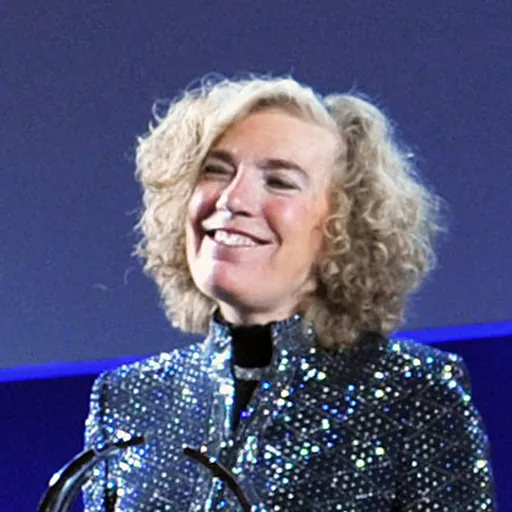
About Elaine Fuchs
Born 1950. Elaine Fuchs is an American biologist and university teacher.
Elaine V. Fuchs is an American cell biologist known for her work on the biology and molecular mechanisms of mammalian skin and skin diseases, who helped lead the modernization of dermatology. Fuchs pioneered reverse genetics approaches, which assess protein function first and then assess its role in development and disease. In particular, Fuchs researches skin stem cells and their production of hair and skin. She is an investigator at the Howard Hughes Medical Institute and the Rebecca C. Lancefield Professor of Mammalian Cell Biology and Development at The Rockefeller University.
Early life and education Fuchs grew up outside Chicago, in a family of scientists—her father, aunt, and sister were also scientists, and her family encouraged her to pursue higher education. She said those influences were especially important to her as a child. During an interview with Faiza Elmasry in 2010, Fuchs said, "I think like many of the children in our world, I got interested in science just from having a butterfly net and from having a few strainers and some boots and going down to the streams and creeks and being out in the fields." Even her mother, who was a homemaker, inspired her to pursue her interest in science at a time when not many women went into scientific fields. "She was a housewife but she took pride in everything that she did. She encouraged my sister and me in all different ways. My mom always said, 'You're a good cook, you'll make a fine scientist,' when I told her that I like science. So I think those kinds of little things maybe are more important that any of the bigger things."
Fuchs earned her Ph.D. in biochemical sciences from Princeton University in 1977. Her doctoral dissertation was titled "The biosynthesis and assembly of the peptidoglycan sacculus of Bacillus Megatorium." Fuchs began her work on skin biology during her postdoctoral work with Howard Green at MIT. In Green's lab she studied the mechanisms underlying growth and differentiation in epidermal keratinocytes.
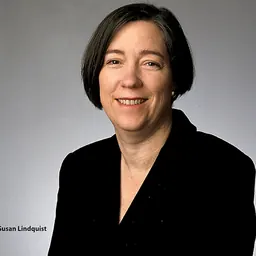
Career and research Fuchs accepted a faculty position at the University of Chicago in 1980 and was the first woman in the biochemistry department. Her first publications there reported the first cloning and sequencing of keratin cDNAs that characterized the two types of keratins. At the University of Chicago she was mentored and befriended by Janet Rowley and Susan Lindquist; they eventually all joined the reorganized Department of Molecular Genetics and Cell Biology, in which Fuchs was ultimately appointed the Amgen Professor of Molecular Genetics and Cell Biology. In 2002, Fuchs accepted a position at Rockefeller University, where she is currently the Rebecca C. Lancefield Professor of Mammalian Cell Biology and Development and an investigator at the Howard Hughes Medical Institute. Fuchs is known for her study of skin, identifying the molecular mechanisms underlying skin disease, developing the field of skin stem cells, and pioneering reverse genetics. Her research group uses laboratory mice and mammalian epithelial stem cell culture as model systems. Recently, she has been devoting her research to studies on the role stem cells play in the regeneration of tissue, as well as the competing demands of proliferation and differentiation in maintaining enough stem cells.
Fuchs currently sits on the board of the Damon Runyon Cancer Research Foundation. She was elected president of the American Society for Cell Biology in 2001. In 2009 Fuchs was awarded the United States’ highest honor for scientific contributions, the National Medal of Science, by President Barack Obama.
In 2015 she was awarded the American Society for Cell Biology's highest scientific honor, the E.B Wilson Medal. In 2020 she received the Canada Gairdner International Award.
Reverse genetics Fuchs developed the reverse genetics approach when she began as an assistant professor at the University of Chicago. Reverse genetics seeks to understand the genetic basis of a disease by examining how specific genetic modifications (such as the use of transgenes) affect phenotype, as opposed to forward genetics, which searches for genetic explanations to a specific phenotype. Fuchs first applied the technique by engineering a gene that affected keratin function and disrupted the framework of cells. Inserting this mutant keratin into transgenic mice caused heavy epidermal blistering; analysis showed this blistering to be nearly identical to the dermatological disorder epidermolysis bullosa simplex. Subsequent collaboration with dermatologists to obtain skin samples from patients with the dermatological disorder revealed that a similar mutation in keratin genes indeed underlies the condition.
Stem cells in squamous cell carcinomas Fuchs and her team have conducted research on how cancerous stem cells called squamous cell carcinomas (SCCs), some of the most common and dangerous cancers worldwide, interact with their microenvironments. By examining skin cancer in mice, she concluded that the speed at which stem cells will divide and how they divide is dependent on their niche. She examined the inhibitory signaling molecule TGF-β, which is found near the blood vessels of a tumor. Although the effects of TGF-β and how it restrains normal skin cell growth had been studied by researchers before Fuchs, she specifically looked at the intermediate steps of tumor progression by creating a TGF-β reporter system. She accomplished this by developing tumor cells that expressed a gene commonly found in skin cancer cells, HRasD12V. Her research demonstrated that cancerous stem cells lacking the TGF-β signal proliferate more quickly but are sensitive to antiproliferative drugs. In contrast, cancerous stem cells that received the TGF-β signal proliferated at a slower rate than those lacking the TGF-β signal but were resistant to antiproliferative drugs. Fuchs determined that both the factors internal to the cell and the cell's external surrounding environment have an effect on the stem cells’ niche in both their ability to divide and how they divide.
Personal life Fuchs is married to a fellow academic, David Hansen, a faculty member at Teachers College, Columbia University. Her interests include travel, art, and photography.
Support for women in science Throughout her career, Fuchs has made a point of supporting young female scientists. Fellow, American Association for the Advancement of Science (2008) Foreign Member, European Molecular Biology Organization (2010) Fellow, Academy of the American Association for Cancer Research (2013) Pontifical Academy of Sciences (2018) Foreign Member, The Royal Society (2019)
Awards
Senior Women's Career Achievement Award (American Society of Cell Biology, 1997) Richard Lounsbery Award (National Academy of Sciences, 2001) Dickson Prize in Medicine (2004) National Medal of Science (2009) L'Oréal-UNESCO Awards for Women in Science (2010) Passano Award (2011) Albany Medical Center Prize (2011) March of Dimes Prize in Developmental Biology (2012) American Skin Association Lifetime Achievement Award (2013) Pasarow Award (2013) Pezcoller Foundation-AACR International Award for Extraordinary Achievement in Cancer Research (2014) E.B. Wilson Medal, ASCB (2015) International Society for Stem Cell Research Innovation Award (2017) Canada Gairdner International Award (2020) Benjamin Franklin Medal in Life Science (2023) American Federation for Aging Research Glenn Foundation for Medical Research Discovery Award (2025)
Don’t just read it —
keep it.
Full-length biographies made to live with: read them, listen on the way to work, watch them tonight.
- E-book
- Audio
- Video
Instant download · yours to keep · every purchase keeps this site free
Important facts
Family & relationships
People in Elaine Fuchs's life
Named in this biography and alive at the same time





Related people
Same field, nearest in time

Contemporaries
People whose lives overlapped Elaine Fuchs's



Frequently asked questions
Who is Elaine Fuchs?
American biologist
When was Elaine Fuchs born?
Elaine Fuchs was born on 5 May 1950 in Hinsdale.
What is Elaine Fuchs's occupation?
Elaine Fuchs is a biologist and university teacher.
What nationality is Elaine Fuchs?
Elaine Fuchs is American.
Sources & further reading
Cite this page
APA: Biography.guide. (2026). Elaine Fuchs. https://biography.guide/elaine-fuchs/
MLA: "Elaine Fuchs." Biography.guide, https://biography.guide/elaine-fuchs/.
Chicago: "Elaine Fuchs." Biography.guide. https://biography.guide/elaine-fuchs/.
Data last updated: 2026-09-23 · Spot an error? Report a correction.
Portrait: Wikimedia Commons · author & licence
Page generated 2026-09-27 05:06 UTC