
Eidu
Manchu officer and a member of the Niohuru clan, close ally of Nurhaci; first of the Five Founding Ministers of the Later Jin (Qing) dynasty
About Eidu
Lived 1562 – 1621 (aged 58–59). Eidu was a politician.
Eidu Baturu (1562–1622) was a Manchu officer and a member of the Niohuru clan.
Early life
Eidu's grandfather had established a home in a valley of the Yengge ("wild grape") mountain range, which formed the easternmost spur of the Changbai Mountains, in the southeast area of the present-day Jilin.
Eidu's parents were murdered in a feud when he was very young, and he escaped only through the protection of a neighbour. At the age of twelve, he took revenge by killing his parents' murderer, after which he fled to the home of an aunt, who was married to the chieftain of the fortress of Giyamuhu. Here he became a close friend of the chieftain's son, Gahasan Hashu, who later married Nurhaci's sister.
Military career In 1580, Nurhaci, then twenty-one years old, passed through Giyamuhu and stopped at the chieftain's home. The eighteen-year-old Eidu was so impressed by his qualities of leadership that he attached himself to Nurhaci and remained his close associate for more than forty years.
In 1583, he accompanied Nurhaci and proved himself an able fighter. Four years later he captured the town of Barda, and received from Nurhaci the title of baturu, "conquering hero." After a long and successful career of military achievement, he joined the Bordered Yellow Banner in 1615 and was appointed as one of the five principal dignitaries in government the following year. In 1617 he captured a number of Ming fortresses in company with Anfiyanggu, and in 1619, was at the forefront of the decisive battles waged by Nurhaci against the three armies of Yang Hao. As a reward for his services, he was given a sister of Nurhaci as one of his wives.
Eidu's second son, Daki, was brought up in the royal establishment and married the fifth daughter of Nurhaci. When Daki spoke out against Nurhaci's sons, Eidu put him to death, prompting Nurhaci to call Eidu his most patriotic officer.
Death and legacy Eidu died in 1621. In 1634, he was posthumously awarded the rank of a viscount, which was inherited by his sixteenth son, Ebilun. In 1636, his rank was raised to that of duke (non-hereditary). His name was entered in the Imperial Ancestral Temple, his tomb was moved to a location near that of Nurhaci. A stone tablet was erected in front of the tomb in 1654. The rank of viscount was taken from Ebilun in 1637, due to a misdemeanour, but was restored in 1713 and given to his son, Yende. After Yende was made a duke in 1724, the title of viscount was inherited by other branches of Eidu's family.
Eidu had sixteen sons, among whom the most prominent were the youngest, Ebilun, and the eighth, Turgei, who took part in many military campaigns during Hong Taiji's reign and was highly regarded for his bravery. Among the grandsons of Eidu the most notable was Centai, who served as a Grand Secretary in 1651, and was made a viscount while commanding the Manchu forces in Hunan against Ming generals. Many other descendants of Eidu held office throughout the Qing period.
Family Madame (夫人), of a certain clan (某氏) Banxi (班席), first son Tuerxi (图尔席), ninth son Madame (夫人), of the Gioro clan (觉罗氏) Daqi (达启), second son Cherge (车尔格), third son Dalong'ai (达隆), sixth son Maohai (冒海), seventh son Turgei (图尔格; d. 1645), eight son Yierdeng (益而登), tenth son Esēn (额森), twelfth son Chahao'er (超哈而), thirteenth son Ge'erte (格而特), fourteenth son Suohuan (索欢), fifteenth son Madame (夫人), of the Tongyin clan (佟殷氏) Handai (涵岱), fourth aom Adahai (阿达海), fifth son Madame (夫人), of the Aisin-Gioro clan (愛新覺羅氏; 1595 – June/July 1659), personal Mukushen (穆庫什), daughter of Nurhaci Ebilun (遏必隆, d. 1673), sixteen son; the Kangxi Emperor's regent Fiyanggū (费扬古), seventeen son Lady Niohuru (钮祜禄氏), second daughter Married Nikan of the Aisin-Gioro clan, son of Cuyen Concubine (妾), of the Shi clan (室氏) Aode (熬德), eleventh son Unknown Consort Yuan (钮祜禄氏; 1593–1612), first daughter Married Hong Taiji of the Aisin-Gioro clan, and had issues (one son) Lady Niohuru (钮祜禄氏), third daughter Lady Niohuru (钮祜禄氏), fourth daughter Married Jirgalang of the Aisin-Gioro clan, and had no issue Lady Niohuru (钮祜禄氏), fifth daughter Lady Niohuru (钮祜禄氏), sixth daughter Lady Niohuru (钮祜禄氏), seventh daughter Lady Niohuru (钮祜禄氏), eight daughter
Don’t just read it —
keep it.
Full-length biographies made to live with: read them, listen on the way to work, watch them tonight.
- E-book
- Audio
- Video
Instant download · yours to keep · every purchase keeps this site free
Important facts
People in Eidu's life
Named in this biography and alive at the same time
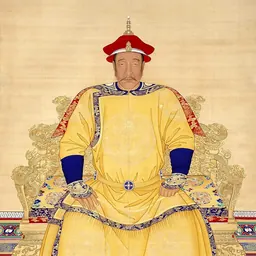
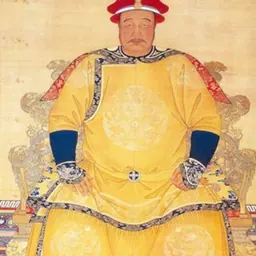

Related people
Same field, nearest in time



Contemporaries
People whose lives overlapped Eidu's



Frequently asked questions
Who was Eidu?
Manchu officer and a member of the Niohuru clan, close ally of Nurhaci; first of the Five Founding Ministers of the Later Jin (Qing) dynasty
When was Eidu born?
Eidu was born in 1562.
When did Eidu die?
Eidu died in 1621.
What was Eidu's occupation?
Eidu was a politician.
What nationality was Eidu?
Eidu's recorded nationality: Later Jin (1616-1636).
Sources & further reading
Cite this page
APA: Biography.guide. (2026). Eidu. https://biography.guide/eidu/
MLA: "Eidu." Biography.guide, https://biography.guide/eidu/.
Chicago: "Eidu." Biography.guide. https://biography.guide/eidu/.
Data last updated: 2026-09-20 · Spot an error? Report a correction.
Page generated 2026-09-27 05:09 UTC