
Efua Theodora Sutherland
Ghanaian writer, publisher, educationalist and cultural activist
About Efua Theodora Sutherland
Lived 1924 – 1996 (aged 71). Efua Theodora Sutherland was a Ghanaian poet, writer, playwright, educator, children's writer and academic.
Efua Theodora Sutherland (born 27 June 1924 – 2 January 1996) was a Ghanaian playwright, director, dramatist, children's author, poet, educationalist, researcher, child advocate, and cultural activist. Her works include the plays Foriwa, Edufa (1967), and The Marriage of Anansewa (1975). She founded the Ghana Drama Studio, the Ghana Society of Writers, the Ghana Experimental Theatre, and a community project called the Kodzidan (Story House). As Ghana's earliest playwright-director, she was an influential figure in the development of modern Ghanaian theatre, and helped to introduce the study of African performance traditions at university level. She was also a pioneering African publisher, establishing the company Afram Publications in Accra in the 1970s. Sutherland was instrumental in nurturing a new generation of Ghanaian playwrights and poets through the Drama Studio, many of whom went on to shape modern West African literature.
She was a cultural advocate for children from the early 1950s until her death, and played a role in developing educational curricula, literature, theatre and film for and about Ghanaian children.
Sutherland's pan-Africanism was reflected in her support for its principles and her collaborations with African and African diaspora personalities in a range of disciplines, including interactions with Chinua Achebe, Ama Ata Aidoo, Maya Angelou, W. E. B. Du Bois and Shirley Graham Du Bois, Margaret Busby, Tom Feelings, Langston Hughes, Martin Luther King and Coretta Scott King, Femi Osofisan, Félix Morisseau-Leroy, Es'kia Mphahlele, Wole Soyinka and Ngugi wa Thiong'o. Having in 1980 written an original proposal for a pan-African historical theatre festival in Ghana as a cultural vehicle for bringing together Africans around the globe, Sutherland was the inspiration behind the biennial Pan-African festival of theatre arts known as PANAFEST, first held in 1992.
Efua Sutherland died in Accra aged 71 in 1996. She then went to England to continue her education, earning a BA degree at Homerton College, Cambridge University — one of the first African women to study there — and studying linguistics at the School of Oriental and African Studies (SOAS), University of London.
Returning to Ghana in 1951, she taught first at Fijai Secondary School at Sekondi, then at St. Monica's School (1951–54), and also began writing for children. They had three children – educationalist Esi Sutherland-Addy, architect Ralph Sutherland, and lawyer Amowi Sutherland Phillips) – and she helped her husband in the establishment of a school in the Transvolta area.
Literary production When the Gold Coast became the independent nation of Ghana in 1957, Efua Sutherland organised the Ghana Society of Writers (later the Ghana Association of Writers), which in 1960 brought out the first issue of the literary magazine Okyeame, with Sutherland eventually becoming editor.
Sutherland experimented creatively with storytelling and other dramatic forms from indigenous Ghanaian traditions. Her plays were often based on traditional stories, but also borrowed from Western literature, transforming African folktale conventions into modern dramatic theatre techniques. and were subsequently published in his 1958 anthology Voices of Ghana. The 1960 first issue of Okyeame magazine contains her short story "Samantaase", a retelling of a folktale. she brought along with her the Ghana Drama Studio, which became an off-campus training space, called the University of Ghana Drama Studio. Sutherland, in addition to her field research and teaching in African Dramatic Forms, was a core member of the team that conceptualised and established the School of Performing Arts. Also concerned with traditional storytelling and developing community theatre, she founded the Kodzidan (Story House) in Ekumfi-Atwia, Central Region, which was recognised worldwide as a pioneering model in theatre for development.
Sutherland mentored and was in turn inspired by many of Ghana's accomplished writers, including Ama Ata Aidoo, Kofi Anyidoho and Meshack Asare.
In the early 1970s, Sutherland co-founded the publishing company Afram Publications, which was incorporated in 1973, and in March 1974 began operating from her private studio in "Araba Mansa", her compound at Dzorwulu, Accra. Sutherland remained involved in Afram's editorial work until her death.
Cultural activism and pan-Africanism Sutherland's work attracted the attention of creatives from the global African world. Maya Angelou's fifth volume of memoirs All God's Children Need Traveling Shoes testifies to the emotional support and entrée into Ghanaian society afforded her in the 1960s by Efua Sutherland who became a close friend.
Sutherland had met Dr W. E. B. Du Bois when she led the Ghana delegation to the 1958 Afro-Asian Writers Conference in Tashkent (now the capital of Uzbekistan). She was to personally intervene, at his death in Accra, Ghana in 1963, to support Mrs Shirley Du Bois. In the 1980s Sutherland was instrumental in establishing the W.E.B. Du Bois Memorial Centre for Pan African Culture and mausoleum at the Du Bois' Accra home.
In 1980, Sutherland wrote a paper entitled "Proposal for a Historical Drama Festival in Cape Coast", underscoring the significance she attached to connections between Africa and its Diaspora. This inspired the venture that came to fruition as the state-sponsored PANAFEST, the first Pan-African Historical Theater Festival, which was held in Cape Coast, Elmina and Accra, Ghana, from 12 to 19 December 1992, under the theme "The Re-emergence of African Civilization". In 2012 the Playtime in Africa Initiative, inspired by her eponymous 1961 book, was launched to revitalise child-friendly public space advocacy.
Her final most significant work at the Institute of African Studies, Legon, was her Children's Drama Development Project, which was aimed at developing materials, methods and staff for programmes of creative dramatics in and out of school. Sutherland was invited by UNICEF to join a worldwide network of scholars to consider a code of human rights for the protection of children.
Florence Laast, founder of Accra's St Martin de Porres School, speaking of how her own life had been impacted by Sutherland's mentorship, described her as "one of the greatest thinkers of our time" who believed that "the home is our first classroom, and our parents the first teachers".
Legacy Following the 1992 construction of the National Theatre of Ghana on the site occupied by the Drama Studio, a replica of the Studio was constructed on the campus of the University of Ghana as part of the facilities of the School of Performing Arts. On the occasion of the 50th anniversary of the university, the Studio was renamed the Efua Sutherland Drama Studio. Efua Sutherland Children's Park. Located near the centre of Accra, this 12-acre public space was secured by Sutherland in the 1980s as a park for all children. A 12-acre space in central Accra reserved as a children's park in central Accra through the advocacy of Efua Sutherlandstraat is one of a number of streets in an area of Amsterdam, The Netherlands, named after significant women writers and activists. Active since 1997, Mmofra Foundation was established by Efua Sutherland in her final years and is dedicated to enriching the cultural and intellectual lives of all children in Ghana. For over 20 years, thousands of children have benefited from its literary, nature-sensitive and creativity-oriented programmes. A green cultural space/park called Mmofra Place in the Dzorwulu area of Accra is open to children of all backgrounds, thanks to the estate of Efua T. Sutherland. Efua Sutherland Hall is a student hall of residence at Ashesi University, Berekuso, Ghana. The Legacy of Efua Sutherland: Pan African Cultural Activism, a volume in her honour was published in 2007, edited by Anne V. Adams and Esi Sutherland-Addy.
Works briefly annotated Sutherland experimented creatively with storytelling and other dramatic forms from indigenous Ghanaian traditions. Her plays were often based on traditional stories, but also borrowed from Western literature, transforming African folktale conventions into modern dramatic theatre techniques. Not only was it published three years after Ghana's independence it was the first documentation of children's play culture in Ghana. The book presented the nuances of children's lives to forefront of society and it also ushered in an indigenous movement in writing for children, along with publishing and development through drama for children.
A Voice in the Forest is a text that powerfully portrays the political, economic, and social complexity of colonialism and cultural relativism in Ghana in regards to children. The text is a retelling of an Akan folktale and deals with traditional cultural values through the role of the trickster figure. It tells the story of a man named Bempong who unknowingly discovers a Samanta, a wood nymph, and brings her back to his village. Initially Bempong believes the Samanta is a lost girl, wandering alone through the forest. For the first half of the story the Samanta refuses to speak. It is not until Bempong cuts off her hair, in an effort to tame her outgrown hair, that Bempong realizes this girl is a Samanta, a wood nymph—"a creature of strange magical powers". Finding her voice in a moment of anger, the Samanta curses the village, leaving them with no food until she has her hair back. The hero of the book is Afrum, Bempong's son, who is regarded as the village fool. Sutherland's choice to celebrate the fool is a part of a longer lineage of uses of the trickster figure in African literature.
Honours
Sutherland was honoured with a Google Doodle on 27 June 2018, which would have been her 94th birthday.
In 2020, at an event marking International Women's Day, Sutherland was honoured by 3Music Awards for her achievements in the entertainment industry.
In March 2024, the estate of Efua Sutherland launched a centenary celebration of her life and legacy in Accra, unveiling plans to commemorate the year in which she would have turned 100.
Selected bibliography with Willis E. Bell, Playtime in Africa (for children), Accra: Self-published, 1960 with Willis E. Bell, The Roadmakers: a picture book of Ghana (for children). Accra: Ghana Information Services / London: Newman Neame, 1961, 1963 with Willis E. Bell, Playtime in Africa (for children), New York: Atheneum, 1962 Edufa (play), Longman, 1967 Foriwa: A Play in Three Acts, Accra-Tema: State Publishing Corporation, 1967 Tahinta (1968) Vulture! Vulture! and Tahina: Two Rhythm Plays, Tema: Ghana Publishing House, 1968 Odasani (play), Accra: Anowuo Educational Publications, 1969 with Willis Bell, The Original Bob: The Story of Bob Johnson, Ghana's Ace Comedian (play), Accra: Anowuo Educational Publications, 1970 Anansegoro: Story-Telling Drama in Ghana, Accra: Afram, 1975 The Marriage of Anansewa (play), London: Longman, 1977, 1980; Washington, DC: Three Continents Press, 1980 The Voice in the Forest: A Tale from Ghana, Philomel Books, 1983
Don’t just read it —
keep it.
Full-length biographies made to live with: read them, listen on the way to work, watch them tonight.
- E-book
- Audio
- Video
Instant download · yours to keep · every purchase keeps this site free
Important facts
Family & relationships
People in Efua Theodora Sutherland's life
Named in this biography and alive at the same time
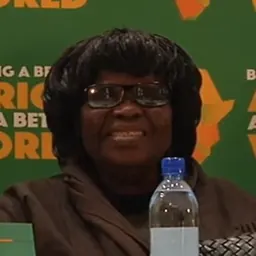
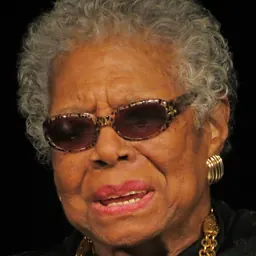

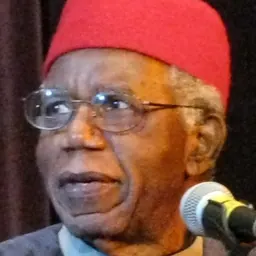
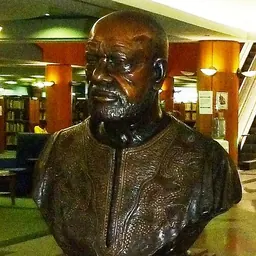


Related people
Same field, nearest in time


Contemporaries
People whose lives overlapped Efua Theodora Sutherland's



Frequently asked questions
Who was Efua Theodora Sutherland?
Ghanaian writer, publisher, educationalist and cultural activist (1924–1996)
When was Efua Theodora Sutherland born?
Efua Theodora Sutherland was born on 27 June 1924 in Cape Coast.
When did Efua Theodora Sutherland die?
Efua Theodora Sutherland died on 2 January 1996 in Accra.
What was Efua Theodora Sutherland's occupation?
Efua Theodora Sutherland was a poet, writer, playwright, educator, children's writer and academic.
What nationality was Efua Theodora Sutherland?
Efua Theodora Sutherland was Ghanaian.
Sources & further reading
· Wikipedia: Efua Theodora Sutherland
Cite this page
APA: Biography.guide. (2026). Efua Theodora Sutherland. https://biography.guide/efua-theodora-sutherland/
MLA: "Efua Theodora Sutherland." Biography.guide, https://biography.guide/efua-theodora-sutherland/.
Chicago: "Efua Theodora Sutherland." Biography.guide. https://biography.guide/efua-theodora-sutherland/.
Data last updated: 2026-09-20 · Spot an error? Report a correction.
Page generated 2026-09-27 05:11 UTC