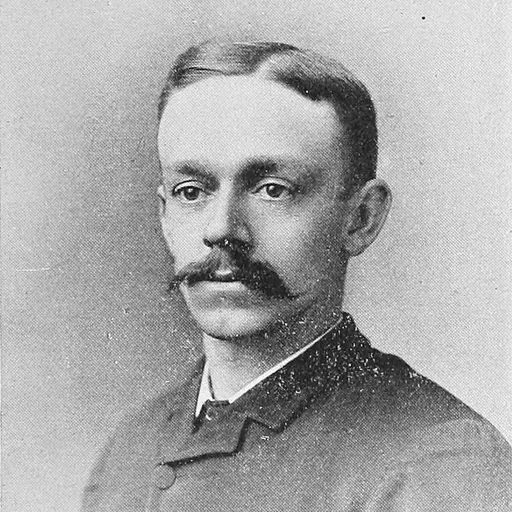
About Edwin S. Votey
Lived 1856 – 1931 (aged 74). Edwin S. Votey was an American entrepreneur and inventor.
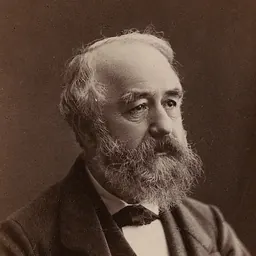
Edwin Scott Votey (June 8, 1856 – January 21, 1931) was an American businessman, inventor, industrial designer, and manufacturer of pianos and organs. He worked in the organ field all his adult life and had over twenty patents. He invented or co-invented several inventions for World War I. One was a pilotless airplane that was going to be used to drop bombs on the enemy but was never used.
He invented the first practical piano player in 1895. It was a cabinet-like box mechanism attached to a conventional piano that automatically played the piano. It was foot operated and played a song through a programmed perforated paper roll. The mechanism was given the name Pianola and was made commercially available to the public in 1898. The original was given to the Smithsonian Museum.
Early life
Votey was born in Ovid, New York, on June 8, 1856. His father was Charles Votey, a Baptist pastor. Votey moved with his family to West Brattleboro, Vermont in April 1873. His father had been put in charge of a newly established Baptist church there. He lived in this town until 1879. Votey went to the local public schools in Ovid and West Brattleboro for his initial formal education.
Mid life
Votey started his first full-time job as a clerk for the Estey Organ Company in Brattleboro in 1873. He became a salesman for them in 1877. Votey's interest in organs and their construction was sparked with this company. He moved to Detroit in 1883 to become a mechanical engineer and salesman for the newly formed Whitney Organ Company. He was in a management position. Clark J. Whitney and Votey were the initial owners of the company. William R. Farrand joined them a few months after the company was organized and became the company's Secretary/Treasurer. Whitney sold all of his equity interest in the firm to Votey and Farrand in 1890. The Detroit company reorganized to become Farrand & Votey Organ Company. It bought out Granville Wood Pipe Organ Company at that time. Votey took off six months for the interest of his company in 1890 and went to Europe to study the construction of pipe and reed organs. His reed organ manufacturing company then had added pipe organs to its line of products.
Inventions
Votey had over twenty patents on pianos and organs and related items. One of note was a pilotless airplane that was going to be used to drop bombs and explosives on the German army had the war continued beyond 1918. The cabinet device could be attached to and removed from a typical piano. Prototype testing for manufacturing the product started at the end of 1896 by Aeolian Company. In 1897, at the age of 41, Votey became vice president of the company. It was a mechanical piano player and received the name Pianola by the Aeolian Company, which was their trademark. The company came out with their first Pianola catalog in 1898 that introduced their new line of Pianola products. Votey's first Pianola piano player was given to the Smithsonian Museum in Washington, D.C., on December 2, 1922.
The large as a piano device was a cabinet-like box mechanism that was pushed up to and attached to a conventional piano. The piano player mechanism was operated by the performer with their feet pushing pedals for the power needed to make the device work by generating suction. The inside of the device consisted of a set of small pneumatics that were exposed to this suction as a result of air passing through the holes of the rolled paper. The air received on the other side from a particular hole in the perforated scroll roll activated a valve to expose the pneumatic to suction, and through a set of linkage arms to ultimately trigger a small felt covered wooden lever, acting like a finger, that struck the corresponding correct piano key. As the roll of perforated paper spun around on its axis the small punched out holes patterned for a music piece passed the air through that triggered the mechanical fingers that played the music.
Several examples of Votey's player piano products may be seen and heard at the Musical Museum in Brentford, London, England.
Personal life
Votey was a director at the Detroit First National Bank and Trust Company. He was a board member at the Detroit National Lock Washer Company. Votey was an officer at the State Title and Mortgage Company. He retired from business in April 1930 and went to his vacation summer home at Lake Dunmore in July. Soon after arriving he became ill and went to the Porter Hospital at Middlebury, Vermont. In September 1930, he returned to his permanent residence in Summit, New Jersey. Votey's health continued to deteriorate from then on. He died at his home in Summit on January 21, 1931. Votey was married in 1878 to Annie M. Gray and they had three children, Charles, Fanny, and Edwina.
Don’t just read it —
keep it.
Full-length biographies made to live with: read them, listen on the way to work, watch them tonight.
- E-book
- Audio
- Video
Instant download · yours to keep · every purchase keeps this site free
Important facts
People in Edwin S. Votey's life
Named in this biography and alive at the same time

Related people
Same field, nearest in time



Contemporaries
People whose lives overlapped Edwin S. Votey's





Frequently asked questions
Who was Edwin S. Votey?
American entrepreneur
When was Edwin S. Votey born?
Edwin S. Votey was born on 8 June 1856 in Ovid.
When did Edwin S. Votey die?
Edwin S. Votey died on 21 January 1931 in Summit.
What was Edwin S. Votey's occupation?
Edwin S. Votey was an entrepreneur and inventor.
What nationality was Edwin S. Votey?
Edwin S. Votey was American.
Sources & further reading
Cite this page
APA: Biography.guide. (2026). Edwin S. Votey. https://biography.guide/edwin-s-votey/
MLA: "Edwin S. Votey." Biography.guide, https://biography.guide/edwin-s-votey/.
Chicago: "Edwin S. Votey." Biography.guide. https://biography.guide/edwin-s-votey/.
Data last updated: 2026-09-23 · Spot an error? Report a correction.
Portrait: Wikimedia Commons · author & licence
Page generated 2026-09-27 05:08 UTC