
About Edwin Gaustad
Lived 1923 – 2011 (aged 87). Edwin Gaustad was an American historian, university teacher and religious studies scholar.
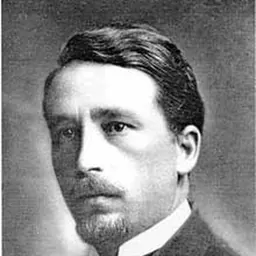
Edwin Scott Gaustad (November 14, 1923 – March 25, 2011) was a professor of history at the University of California, Riverside. He achieved fame with his study of the genealogy of religion in the United States, Historical atlas of religion in America. The 1972 edition of this work has been used in secular histories of Mainline Protestantism and the Emergent church movement (denominationalism) for decades, and his a Religious History of America was a standard text for college students. A graduate of Baylor University and Brown University, Gaustad dedicated his career to sharing his expansive research on religious history. Gaustad was president of the American Society of Church History. Gaustad died March 25, 2011, in Santa Fe, New Mexico at the age of 87.
Life Gaustad was born in Rowley, Iowa, but grew up in Houston, Texas. During the Second World War Gaustad served as a 1st lieutenant in the Army Air Corps. From 1943 to 1945 he served in Italy as a bombardier and navigator on over 30 missions. Gaustad graduated from Baylor University in 1947 with a BA in history. At Brown, Gaustad studied under Edmund Morgan,
A running theme in Gaustad's scholarship was religious dissent in America. Touching on this subject, Gaustad wrote several biographies on significant figures including Roger Williams, George Berkeley, Thomas Jefferson, and Benjamin Franklin. In addition to his biographies, Gaustad wrote several histories of religion in America, including Dissent in American Religion (1973), Faith of Our Fathers: Religion and the New Nation (1987), and A Religious History of America (2002). In his concluding essay, Gaustad defended the American tradition of the local church, remarking thatThe history of Christianity is replete with examples of those groups who, especially in their early years, manifest a zealous assurance and unique strength that seems strikingly different from the casual or inherited religious affiliation all around them. To persecute this zeal is to rob Christianity of the reforming impetus that it has always required... From my observation, I conclude that the Local Church stands in the tradition of evangelical Christianity, of the Protestant emphasis on biblical authority, of the great Christian mystics’ and pietists’ concern for the inner life, of the millennia-old expectation of a New Age, and of born-again, experiential religion. They meet together, pray together, sing and study together, and grow together. They labor to be loyal to their particular vision of the Christian life. It seems enough. It also sounds very much like the free exercise of religion. In 1998, he publicly opposed Rep. Ernest Istook's proposed constitutional amendment to permit forms of government-sponsored prayer and tax-financed religious activities. Gaustad came up with the slogan "Istook is Mistook," a phrase that would become popular in the campaign against the amendment.
Gaustad also served as an expert witness in 2002 for the Federal court case Glassroth v. Moore, which concerned the placement of a stone Ten Commandments monument in the rotunda of the Heflin-Torbert Judicial Building in Montgomery, Alabama. In his testimony, Gaustad referenced Thomas Jefferson's "undying anxiety of anything that would bring church and state together." Gaustad concluded that moving the monument from the courthouse to private property According to Americans United for the Separation of Church and State, his testimony was significant for their case against Moore.
Beliefs Gaustad was a prolific writer that believed in the separation of church and state education. However, he still thought that both were important, even saying that the Great Awakening not only helped religion, but also helped the thought process in America. He is quoted to have said that "Religion involves both the heart and the mind. Education, likewise, involves both the heart and the mind." He believed that education and religion were wonderful things—just not when one puts them together.
Legacy
Religious dissent
According to the Baptist History & Heritage Society, Gaustad's work influenced "a new generation of baptist historians."At a time when many Baptists in America turned their backs on their denomination’s freedom legacy, Gaustad clearly and consistently articulated Baptists’ historical foundations of religious liberty and church/state separation. Gaustad reminded Baptists and the world that the American commitment to religious liberty and church/state separation enshrined in the First Amendment was first articulated and put into practice by Roger Williams and other early Baptists. He dedicated his voice and pen to the preservation of the best of Baptist principles, and demonstrated time and timeagain that American history cannot be fully understood apart from inclusion of the religious dimension of the American story.Throughout his scholarship, Gaustad sought to remind Americans that understanding religious dissent is necessary both for understanding and for living the America's religious experience. In Dissent in American Religion, Gaustad wrote that "In the first century, amidst a plethora of fresh dissent, the sober counsel was 'Test everything; hold fast what is good.' It is sober counsel for every century, and every generation." The collection is housed in Moody Library as a scholar's collection. Most of the books in his collection pertain to church history and American history, and his personal papers include manuscripts, correspondence, and his research notes. These papers will remain sealed until 2022.
Don’t just read it —
keep it.
Full-length biographies made to live with: read them, listen on the way to work, watch them tonight.
- E-book
- Audio
- Video
Instant download · yours to keep · every purchase keeps this site free
Important facts
People in Edwin Gaustad's life
Named in this biography and alive at the same time





Related people
Same field, nearest in time

Contemporaries
People whose lives overlapped Edwin Gaustad's
Frequently asked questions
Who was Edwin Gaustad?
American historian (1923-2011)
When was Edwin Gaustad born?
Edwin Gaustad was born on 14 November 1923 in Rowley.
When did Edwin Gaustad die?
Edwin Gaustad died on 25 March 2011 in Santa Fe, New Mexico.
What was Edwin Gaustad's occupation?
Edwin Gaustad was a historian, university teacher and religious studies scholar.
What nationality was Edwin Gaustad?
Edwin Gaustad was American.
Sources & further reading
Cite this page
APA: Biography.guide. (2026). Edwin Gaustad. https://biography.guide/edwin-gaustad/
MLA: "Edwin Gaustad." Biography.guide, https://biography.guide/edwin-gaustad/.
Chicago: "Edwin Gaustad." Biography.guide. https://biography.guide/edwin-gaustad/.
Data last updated: 2026-09-22 · Spot an error? Report a correction.
Page generated 2026-09-27 05:03 UTC