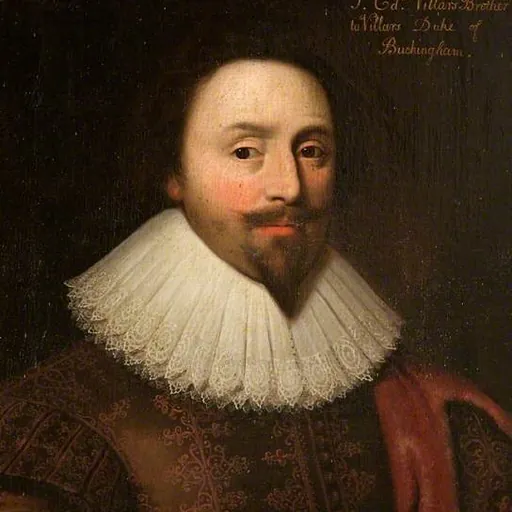
Edward Villiers
English diplomat, office-holder and politician who sat in the House of Commons from 1621 to 1625.;
About Edward Villiers
Lived 1585 – 1626 (aged 40–41). Edward Villiers was an English politician.
Sir Edward Villiers (c. 1585 – 7 September 1626) was an English nobleman from Leicestershire and member of the Villiers family, whose younger half-brother George Villiers, 1st Duke of Buckingham, was a favourite of both James VI and I and his son Charles. Through his influence, Sir Edward gained various positions, including Master of the Mint, Member of Parliament for Westminster and Lord President of Munster. He died in Ireland in September 1626.
Family
Edward Villiers, born about 1585, was the second son of Sir George Villiers by his first wife, Audrey Saunders (d. 1587), the daughter and heir of William Saunders (d. 14 July 1582) of Harrington, Northamptonshire, by Frances Zouche, the daughter of William Zouche of Bulwick, Northamptonshire, son of John Zouche, 7th Baron Zouche (c. 1440–1527) of Harringworth, who fought for King Richard III at Bosworth Field.
He had an elder brother, Sir William Villiers (d. 12 June 1629), created a baronet in 1619, who married Rebecca Roper, daughter and co-heir of Robert Roper, esquire, by Elizabeth Nott, the daughter of William Nott, esquire, of Thames Ditton; and three sisters, Elizabeth Villiers (d. 1654), who married John Boteler, 1st Baron Boteler of Brantfield; Anne Villiers, who married Sir William Washington, brother of Lawrence Washington, ancestor of George Washington; and Frances Villiers, who died without issue.
By his father's second marriage he was a half-brother of King James I's favourite, George Villiers, 1st Duke of Buckingham; John Villiers, 1st Viscount Purbeck; Christopher Villiers, 1st Earl of Anglesey; and Susan Fielding (née Villiers), Countess of Denbigh who was Henrietta Maria's First Lady of the Bedchamber.
Career Villiers was knighted on 7 September 1616. In October 1617, he succeeded Sir Richard Martin as Master of the Mint (until 1623), and in November 1618 he became comptroller of the Court of Wards. From 1623 until his death he was Warden of the Mint.
On 30 December 1620 Villiers was elected as one of the members of parliament for Westminster. In the same month he was sent to Elector Frederick V of the Palatinate, to say that assistance would be given to him, but only on condition that he entered into an agreement to relinquish the crown of Bohemia. Villiers returned before May and took his seat in parliament, but was in that month temporarily excluded from the house for attempting to speak on the question of a patent, in which he was personally interested (the gold and silver patent in which Villiers had invested £4,000 in 1617, and from which he derived an income of £500 annually). His conduct was vindicated in the inquiry by the House of Lords in June, and Villiers was allowed to resume his seat in the Commons. In September he was again sent to the Elector Frederick, then serving with the Dutch army, to persuade him to withdraw from it and submit to the Holy Roman Emperor. On 23 September 1622, he was granted a lease of the customs and subsidies on gold and silver thread on condition of surrendering the mastership of the mint, but the latter office was restored to him in July 1624. He was re-elected as a member of parliament for Westminster on 22 January 1624 to sit in what became known as the Happy Parliament, and on 25 April 1625 to sit in the Useless Parliament. In August 1625 he asked the Commons to prevent a dissolution by desisting from its attack on his half-brother Buckingham. by whom he had ten children.
Villiers's wife was the niece of Oliver St John, created Viscount Grandison on 3 January 1612. Grandison had no issue, and Villiers's half-brother, Buckingham, arranged for Villiers and his sons to inherit the Grandison title.
Villiers's eldest son William Villiers, who succeeded as 2nd Viscount Grandison in 1630, and was the father of Barbara Villiers, Duchess of Cleveland, mistress of King Charles II. Villiers's second and third sons, John Villiers (1616-1659) and George Villiers (1618-1699), succeeded as 3rd and 4th Viscounts Grandison. His fourth son, Sir Edward Villiers, was the father of Edward Villiers, 1st Earl of Jersey.
Villiers's widow, Barbara, died in 1672.
Don’t just read it —
keep it.
Full-length biographies made to live with: read them, listen on the way to work, watch them tonight.
- E-book
- Audio
- Video
Instant download · yours to keep · every purchase keeps this site free
Important facts
Family & relationships
People in Edward Villiers's life
Named in this biography and alive at the same time
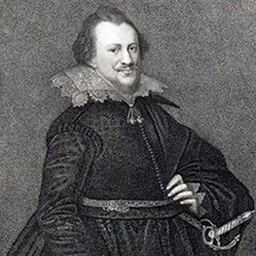


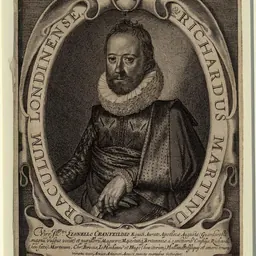
Related people
Same field, nearest in time
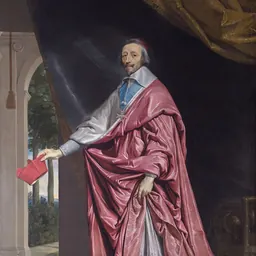

Contemporaries
People whose lives overlapped Edward Villiers's





Frequently asked questions
Who was Edward Villiers?
English diplomat, office-holder and politician who sat in the House of Commons from 1621 to 1625.; (1585-1626)
When was Edward Villiers born?
Edward Villiers was born in 1585 in Kingdom of England.
When did Edward Villiers die?
Edward Villiers died on 7 September 1626 in Collegiate Church of St Mary, Youghal.
What was Edward Villiers's occupation?
Edward Villiers was a politician.
What nationality was Edward Villiers?
Edward Villiers was English.
Sources & further reading
· DBpedia: Edward Villiers (Master of the Mint)
Cite this page
APA: Biography.guide. (2026). Edward Villiers. https://biography.guide/edward-villiers/
MLA: "Edward Villiers." Biography.guide, https://biography.guide/edward-villiers/.
Chicago: "Edward Villiers." Biography.guide. https://biography.guide/edward-villiers/.
Data last updated: 2026-09-20 · Spot an error? Report a correction.
Page generated 2026-09-27 05:10 UTC