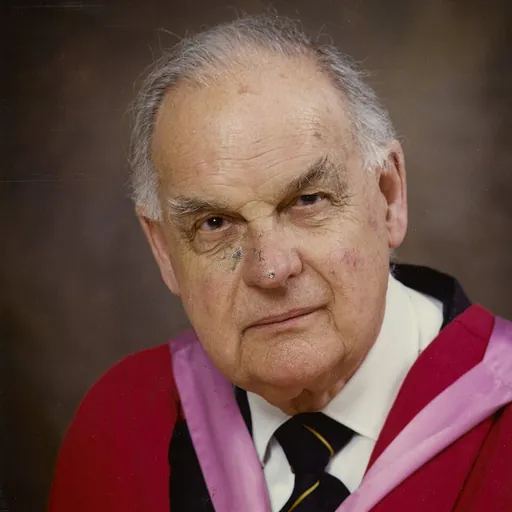
Edward Sayers
New Zealand doctor, parasitologist, missionary, and medical and academic administrator
About Edward Sayers
Lived 1902 – 1985 (aged 82). Edward Sayers was a New Zealand physician and parasitologist, known for Malaria and Solomon Islands.
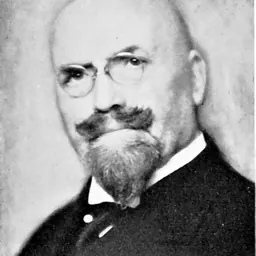
Sir Edward George Sayers (10 September 190212 May 1985) was a New Zealand medical doctor, parasitologist, Methodist missionary, military medical administrator, consultant physician and, from 1958 to 1968, Dean of the University of Otago, School of Medicine. Having trained as a doctor, from 1927 to 1934 he worked at the Methodist mission in the Solomon Islands where he carried out fieldwork in the treatment of malaria. The significance of this work became apparent when Sayers used his knowledge to reduce deaths of American, Australia and New Zealand military forces during the invasion of Pacific Islands during World War II. He served as a doctor with the 2nd Division 2 NZEF during 1941–42 in Greece and North Africa. In 1942 he was transferred to the Pacific to serve with the 3rd Division, 2 NZEF IP.
His 1943 handbook on malaria control, Malaria in the South Pacific, became a standard text. As a specialist in tropical diseases (malaria, dengue fever, sand-fly fever and dysentery) his work contributed to minimising deaths in the New Zealand army. The pre-war experience and malaria records of Sayers was also helpful to the United States forces in reducing malaria rates during the Solomon Islands campaign. His contribution was acknowledged by the award of the Legion of Merit by the United States.
Early life Sayers was born in New Brighton, Christchurch, on 10 September 1902. His mother was Amelia Ruth Blandford; his father was Henry Hind Sayers, a cabinet maker from Sussex, England, who suffered from T.B. spine and became paraplegic after an accident.
Medical training With the assistance of his church Sayers was able to attend university. The relationship with the colonial administrators of the British Solomon Island Protectorate were also fraught with difficulty due to Goldie's effective control over the Western Solomon Islands. He enlisted with the rank of captain and on 1 May 1940 he was sent to the Middle East with No. 1 New Zealand General Hospital, as a physician and adviser on tropical medicine. In the chaotic withdrawal of troops from Greece the sisters, staff, and patients of No. 1 General Hospital were to be evacuated from the port of Piraeus. The officers and men embarked on MV Rawnsley on 19 April, but the ship missed its convoy and was machine-gunned and bombed by German aircraft. Captains Sayers and King accompanied the nurses, although they actually took much longer to leave Greece than the officers and men; the nurses expect to join the hospital ship Aba, but it left Piraeus before the designated time to avoid air attacks. The MV Rawnsley and the hospital ship Aba arrived in Alexandria on 23 April 1941. The nursing sisters, with Captains Sayers and King, arrived in Cairo on 1 May 1941, having travelled via Crete.
As a consequence of the loss of medical personnel in 2 NZEF during the Greece campaign, No. 1 General Hospital was not reformed as an active hospital until new personnel arrived. On 10 August 1941 Sayers, promoted to major, was placed in charge of the medical division of No. 1 General Hospital, which was located in the Cairo zone at Helwan, with the hospital acting as a base hospital during the North African campaigns of 1941–42.
Sayers was promoted to lieutenant-colonel and in November 1942 he was transferred from the Middle East to the Pacific to take charge of the medical division of No. 4 New Zealand General Hospital which was deployed to New Caledonia. Sayers' contribution to the minimisation of deaths from malaria is acknowledged in the Official Histories of World War 2 of the New Zealand Forces He was elected a Fellow of the Royal Society of New Zealand in 1961, and he was made a Knight Bachelor in the 1965 New Year Honours. Later that same year he was appointed a Knight of the Order of St John. He was also an Honorary Fellow of the Royal College of Physicians of Edinburgh and an Honorary Fellow of the American College of Physicians.
He retired from the University of Otago in 1968, although he continued with a consulting practice and was the chairman of the medical research distribution committee lottery fund and of the scientific committee of the National Heart Foundation.
Publications Sayers, E. G. ( 1943) Malaria in the South Pacific with Special Reference to the Solomon Islands. New Zealand Government Printing Office (24 pages) Sayers, E. G. (1966) The staffing of clinical departments of the Medical School (44 pages) Sayers, E. G. Observations on Doctor Price's Revolution Sermon, University of Otago: graduation address ( 7 December 1967), Published 1970, University of Otago (66 pages)
Don’t just read it —
keep it.
Full-length biographies made to live with: read them, listen on the way to work, watch them tonight.
- E-book
- Audio
- Video
Instant download · yours to keep · every purchase keeps this site free
Important facts
People in Edward Sayers's life
Named in this biography and alive at the same time

Related people
Same field, nearest in time


Contemporaries
People whose lives overlapped Edward Sayers's




Frequently asked questions
Who was Edward Sayers?
New Zealand doctor, parasitologist, missionary, and medical and academic administrator (1902–1985)
When was Edward Sayers born?
Edward Sayers was born on 10 September 1902 in New Brighton.
When did Edward Sayers die?
Edward Sayers died on 12 May 1985 in Dunedin.
What was Edward Sayers's occupation?
Edward Sayers was a physician and parasitologist.
What was Edward Sayers known for?
Edward Sayers was known for Malaria and Solomon Islands.
What nationality was Edward Sayers?
Edward Sayers was New Zealand.
Sources & further reading
· DBpedia: Edward Sayers (parasitologist)
Cite this page
APA: Biography.guide. (2026). Edward Sayers. https://biography.guide/edward-sayers-physician/
MLA: "Edward Sayers." Biography.guide, https://biography.guide/edward-sayers-physician/.
Chicago: "Edward Sayers." Biography.guide. https://biography.guide/edward-sayers-physician/.
Data last updated: 2026-09-20 · Spot an error? Report a correction.
Portrait: Wikimedia Commons · author & licence
Page generated 2026-09-27 04:58 UTC