
About Edward Rubenstein
Lived 1924 – 2019 (aged 94). Edward Rubenstein was an American physician, chemist and physicist.
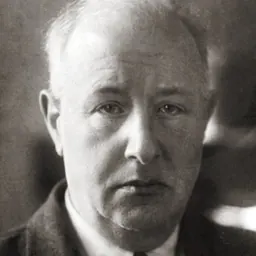
Edward Rubenstein (December 5, 1924 – March 11, 2019) was an American doctor of internal medicine, with major contributions in the fields of medical education, research (physics, biophysics and biochemistry), and the arts.
Mechanisms of blood clotting Edward Rubenstein was an Internal Medicine physician, with areas of expertise which included clotting disorders that predispose to pulmonary embolism.
Stanford Synchrotron Radiation Project
In the early 1970s Stanford University marked a landmark period in particle physics research with the creation of the colliding beam storage ring, called the Stanford Positron Electron Accelerating Ring (SPEAR) in 1972. Among the famous discoveries were the J/psi and tau particles. A byproduct of the ring's operation was an intense beam of synchrotron radiation. Rubenstein and his colleagues E. Barrie Hughes and Robert Hofstadter posited that there may be numerous applications of this intensely powerful, tuneable, and linearly polarized radiation to biomedical imaging, including intravenous coronary arteriography. They devised a synchrotron radiation based imaging system which has been used worldwide.
Rubenstein proposed that the polarized synchrotron light which is emitted by relativistic electrons orbiting neutron stars (linear in the plane of rotation, with opposite helicity above and below the plane) would selectively photolyze chiral molecules floating on grains in nearby space. This mechanism would produce an enantiomeric excess of either right- or left-handed molecules which can be delivered to Earth by passing comets.
Nonprotein amino acids In addition, Rubenstein pioneered research on the consequences of the misincorporation of nonprotein amino acids, especially the lower homologue of proline, azetidine-2-carboxylic acid (Aze). This compound eludes the gate-keeping function of the prolyl tRNAs, and enters a wide range of proteins. For instance, the central region in a consensus epitope of myelin basic protein consists of the sequence: proline, arginine, threonine, proline, proline, proline. Dairy milk from cattle fed sugar beet byproducts is high in Aze, therefore infants fed such milk are exposed to Aze in their diets.
Editorships and authorships
Rubenstein contributed numerous book publications in the medical and physics literature. The volume entitled Introduction to Molecular Medicine was selected by the British Medical Association as the Best Book Published in Medicine in 1995.
Editorships Editorial advisory board, Current Contents / Clinical Practice, 1973-1986. Founding editor-in-chief, Scientific American MEDICINE, 1978-1994. Editor, Synchrotron Radiation Handbook, Vol. IV, North-Holland Publishing Co., 1990. Co-editor, Synchrotron Radiation in Life Sciences, Oxford University Press, 1994. Series editor, Molecular Medicine, Scientific, American, Inc., New York, 1994.
Textbooks Rubenstein E. Intensive Medical Care: Edward Rubenstein McGraw Hill, 1971. Tavares BM, Rubenstein E, Scott, AA, Paras M, Wilson A, Ney W. Tratamento Intensivo Technicas de Atendimento, Rio de Janeiro, 1975. Ebashi S, Rubenstein E, Koch M. Volume Editors, Handbook on Synchrotron Radiation, North-Holland Physics Publishing, Amsterdam, 1990. Huxley H, Ebashi S, Mitsui T, Schmahl G, Rubenstein E, Goodhead DT, Sasaki T, eds. Synchrotron Radiation in the Life Sciences, Volume 2, Oxford University Press, Oxford, 1994. Rubenstein E. Introduction to Molecular Medicine, Scientific American Medicine, New York, 1994. Haber E. ed., Rubenstein E, vol. ed. Molecular Cardiovascular Medicine, Scientific American Medicine, New York, 1995. Bishop JM, Weinberg RA, eds., Rubenstein E., vol. ed. Molecular Oncology, Scientific American Medicine, New York, 1996. Martin JB, ed., Rubenstein E, vol. ed. Molecular Neurology, Scientific American Medicine, New York, 1998.
Don’t just read it —
keep it.
Full-length biographies made to live with: read them, listen on the way to work, watch them tonight.
- E-book
- Audio
- Video
Instant download · yours to keep · every purchase keeps this site free
Important facts
People in Edward Rubenstein's life
Named in this biography and alive at the same time

Related people
Same field, nearest in time

Contemporaries
People whose lives overlapped Edward Rubenstein's


Frequently asked questions
Who was Edward Rubenstein?
US physician and physicist (1924-2019)
When was Edward Rubenstein born?
Edward Rubenstein was born on 5 December 1924 in Cincinnati.
When did Edward Rubenstein die?
Edward Rubenstein died on 11 March 2019.
What was Edward Rubenstein's occupation?
Edward Rubenstein was a physician, chemist and physicist.
What nationality was Edward Rubenstein?
Edward Rubenstein was American.
Sources & further reading
· Wikipedia: Edward Rubenstein
Cite this page
APA: Biography.guide. (2026). Edward Rubenstein. https://biography.guide/edward-rubenstein/
MLA: "Edward Rubenstein." Biography.guide, https://biography.guide/edward-rubenstein/.
Chicago: "Edward Rubenstein." Biography.guide. https://biography.guide/edward-rubenstein/.
Data last updated: 2026-09-27 · Spot an error? Report a correction.
Page generated 2026-09-27 05:17 UTC